

Understanding PoE Adapter Design Standards
Through a Huawei-Certified Power Supply
Introduction
In applications such as communication equipment, network surveillance, and wireless coverage, Power over Ethernet (PoE) technology is becoming increasingly prevalent. By transmitting both data and power through a single Ethernet cable, PoE greatly simplifies device deployment. As the critical component that converts AC mains into PoE-standard DC power, the PoE adapter (or PoE power supply) - and the quality of its design - directly determines the stability of the entire system.
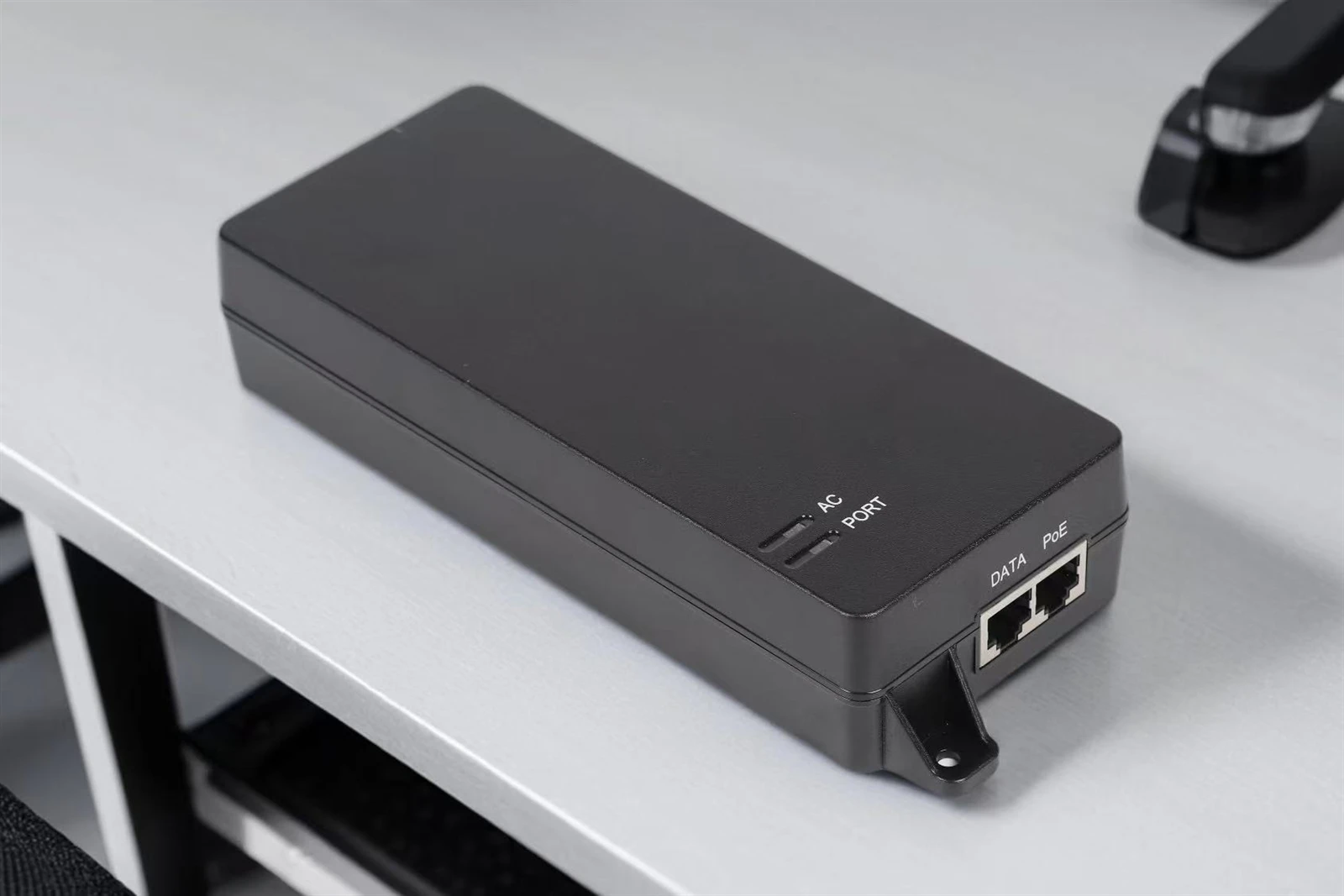
The TPT90S56POE power adapter, custom-developed by TOPOW Electronics for Huawei Technologies, provides an excellent window into the design requirements of high-end PoE adapters.
1. PoE Technology Fundamentals: From Standards to Implementation
PoE technology enables power delivery to terminal devices over Ethernet cables, eliminating the need for separate power cabling. Since the IEEE released the first PoE standard (802.3af) in 2003, the technology has undergone multiple evolutionary steps.
| PoE Standard | PSE Output Power | PD Available Power | Powering Pairs |
|---|---|---|---|
| IEEE 802.3af (PoE) | 15.4W | 13W | 2 pairs |
| IEEE 802.3at (PoE+) | 30W | 25.5W | 2 pairs |
| IEEE 802.3bt (PoE++) | 90W | 71.3W | 4 pairs |
The IEEE 802.3bt standard (released in 2018) marked a significant milestone. For the first time, it utilizes all four pairs of conductors in an Ethernet cable for power transmission, boosting available power from 30W to 90W. This breakthrough enables PoE to support higher-power devices such as 5G micro-base stations, multi-band wireless APs, digital signage, and PoE lighting.
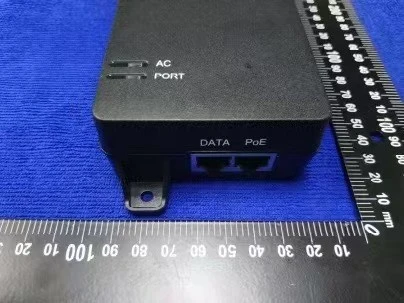
The TPT90S56POE adapter is fully compliant with IEEE 802.3bt, supporting up to 90W output and capable of powering Type 3 and Type 4 high-power Powered Devices (PDs).
2. Design Considerations in Electrical Specifications
2.1 Wide Voltage Input and Global Compatibility
The TPT90S56POE supports a wide input voltage range of 90Vac to 290Vac, covering the grid standards of the vast majority of countries and regions worldwide. A wide-input design means the same adapter can be sold globally without requiring region-specific versions - significantly reducing inventory and certification costs.
Notably, the adapter remains undamaged even when input voltage reaches 318Vac (verified through 4-hour testing). This demonstrates substantial design margin for regions with significant grid fluctuations, such as parts of Southeast Asia and Latin America.
2.2 Output Voltage Aligned with PoE Standards
The adapter delivers a rated output voltage of 55.5Vdc, which falls within the PoE-specified PSE output voltage range of 44V to 57V. This voltage selection balances transmission loss and safety: higher voltage means lower current for the same power - and therefore lower line loss. At the same time, 55.5V stays below the 60V SELV (Safety Extra-Low Voltage) limit, placing it within the ES1 classification defined by IEC 62368-1, meaning there is no risk of electric shock even with direct contact.
2.3 Efficiency and Energy Performance
The adapter requires an average output efficiency of ≥85% (averaged across 25%, 50%, 75%, and 100% loads). This aligns with international energy efficiency standards such as the US DoE Level VI and EU CoC Tier 2. Higher efficiency translates to lower heat generation and longer service life - a particularly critical factor for PoE adapters installed in enclosed spaces.
2.4 Stringent Ripple and Noise Control
Output ripple and noise directly affect the stable operation of powered devices. The adapter requires output ripple + noise (peak-to-peak) ≤ 200mV (measured with a 20MHz bandwidth). For applications powering sensitive equipment like wireless APs and switches, this provides ample headroom for reliable operation.
2.5 PoE Handshake Timing
The specification defines a PoE handshake time - the period from PSE input voltage establishment to PoE port voltage reaching 100% of Vout - of ≤5 seconds. During the handshake, the adapter must complete detection, classification, and power-up sequences with the PD device in compliance with IEEE 802.3bt timing requirements. A fast and reliable handshake ensures that powered devices start up promptly, avoiding system anomalies caused by power delivery delays.
3. Safety and EMC: The Invisible Lines of Quality Defense
3.1 Multi-Country Certification Requirements
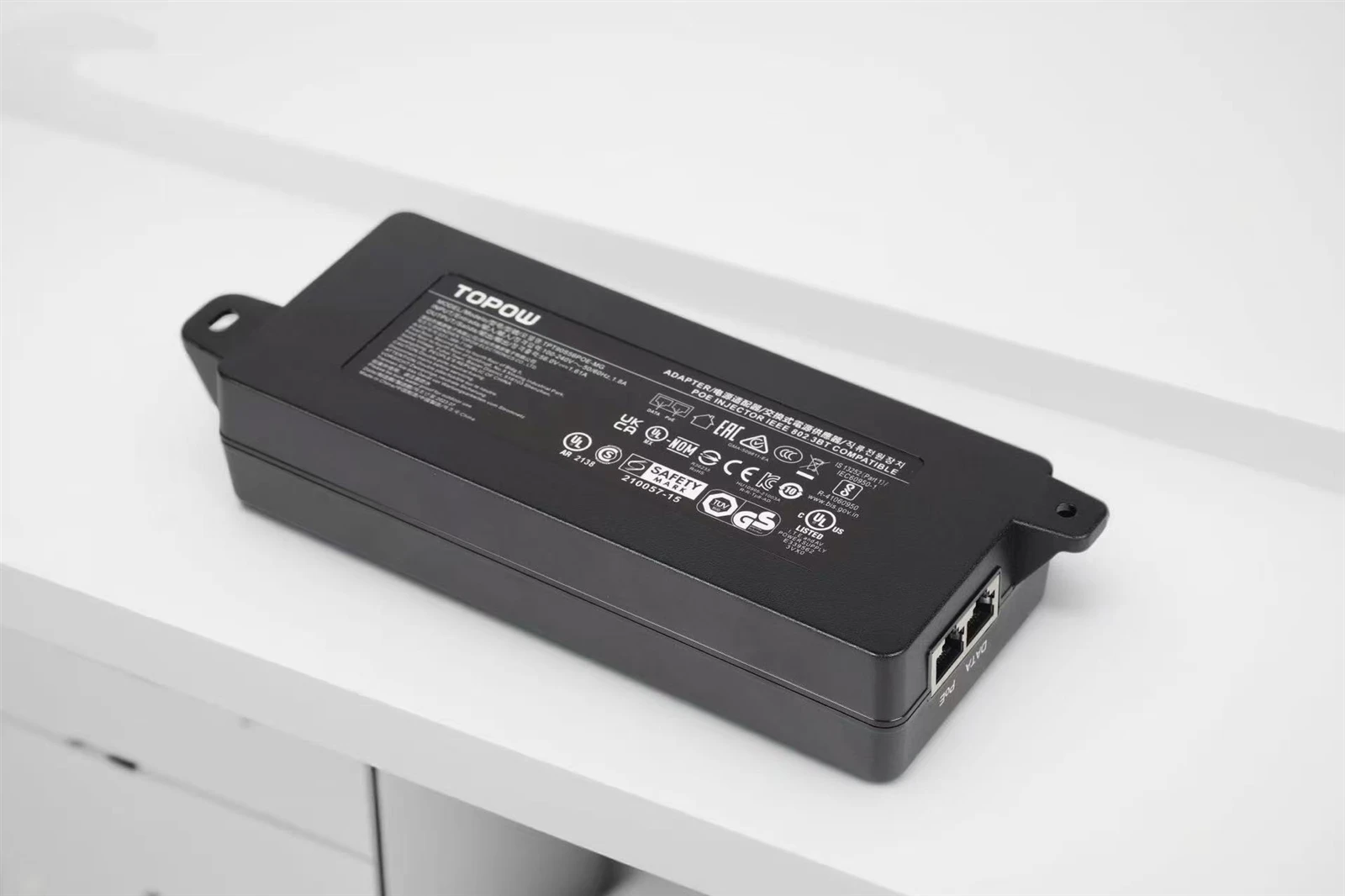
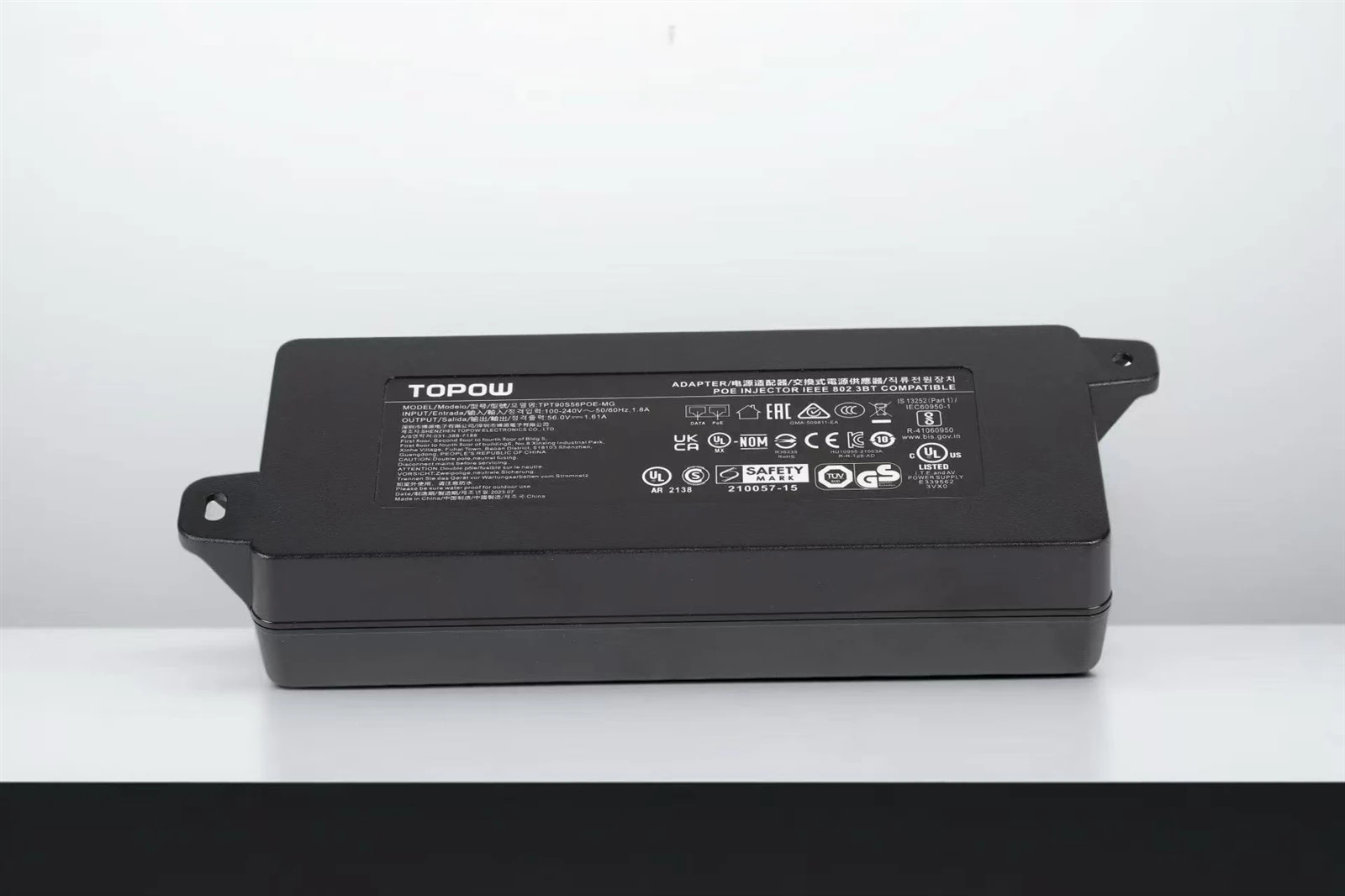
As a product custom-developed for Huawei, the TPT90S56POE is required to obtain safety certifications covering all major global markets: CCC, CB, CE, TÜV-GS, UL, EAC, BSMI, NOM, PSB, RCM, KC, BIS, PSE, and more.
This extensive certification coverage means the adapter has passed rigorous safety testing across different countries and regions - a strong testament to product quality and design margin. For customers intending to sell their equipment globally, choosing an adapter with comprehensive certifications significantly reduces the compliance risk of the end product.
3.2 Safety Standards: Transitioning from 60950 to 62368
Notably, the adapter is required to comply with both IEC/EN 60950-1 and IEC/EN 62368-1. IEC 62368-1 is the next-generation safety standard based on the "hazard-based engineering" philosophy, gradually replacing the legacy 60950-1 and 60065 standards. It requires products to classify energy sources by hazard level (power levels PS1/PS2/PS3, voltage levels ES1/ES2/ES3) and implement corresponding safeguards accordingly.
3.3 Surge Protection Levels
The EMC section of the specification imposes extremely high surge immunity requirements:
AC input port: Differential mode 6kV, common mode 6kV (1.2/50us waveform)
With external surge protection device: Differential mode 20kA, common mode 20kA (8/20us impulse current)
This protection level far exceeds that of typical consumer power supplies (usually differential mode 2kV, common mode 4kV), targeting outdoor or semi-outdoor deployment scenarios - PoE adapters are frequently used to power surveillance cameras, outdoor APs, and other equipment exposed to lightning surge threats.
3.4 Rigorous EMC Margin Requirements
The adapter requires 6dB margin at the R&D stage and 4dB margin at mass production for both conducted and radiated emissions testing. These margins mean the product is designed with sufficient headroom to accommodate manufacturing variations, component batch differences, and aging factors - ensuring not only that every unit passes certification but also that reliability is maintained in real-world complex electromagnetic environments.
4. Environment and Reliability: "Extreme Testing" Beyond Ordinary Power Supplies
Extremely Wide Operating Temperature Range
The adapter requires an operating temperature range of -40°C to 65°C, with storage temperature from -40°C to 70°C. This range far exceeds that of typical consumer power supplies (usually 0°C to 40°C), meaning the adapter can be deployed in freezing or high-temperature environments - such as outdoor cabinets in northern Chinese winters or telecom base stations in the Middle East.
Among these, -40°C cold start is the most challenging metric - the power supply must start up properly and deliver stable output even at extreme low temperatures.
Stringent Reliability Requirements
The adapter mandates an MTBF (Mean Time Between Failures) of 250,000 hours (approximately 28.5 years), with electrolytic capacitor life meeting 5 years (at 40°C) / 8 years (at 30°C) . These figures are derived from actual temperature measurements of the electrolytic capacitors, demonstrating meticulous control over the operating conditions of critical components.
Electrolytic capacitors are the most aging-prone components in power supplies, with lifespan directly tied to operating temperature. Quantifying capacitor life requirements means that thermal design, layout, and capacitor selection must all be fully optimized during the design phase.
Conformal Coating Application
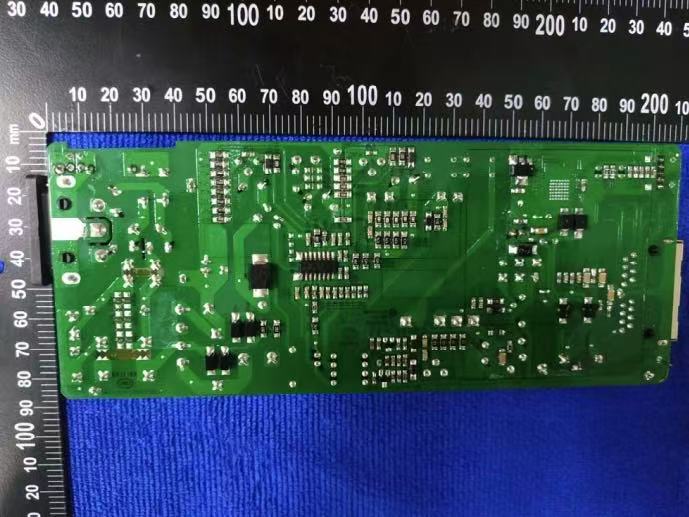
The documentation explicitly requires PCB conformal coating, with this requirement specifically noted in the change history. Conformal coating is a protective film applied to the PCB surface, providing protection against moisture, salt spray, fungus, dust, and corrosion. For PoE adapters that may be deployed in harsh environments such as outdoor cabinets or coastal base stations, conformal coating is a critical process step for ensuring long-term reliability.
5. Component Selection and Process Requirements: The Pursuit of Excellence
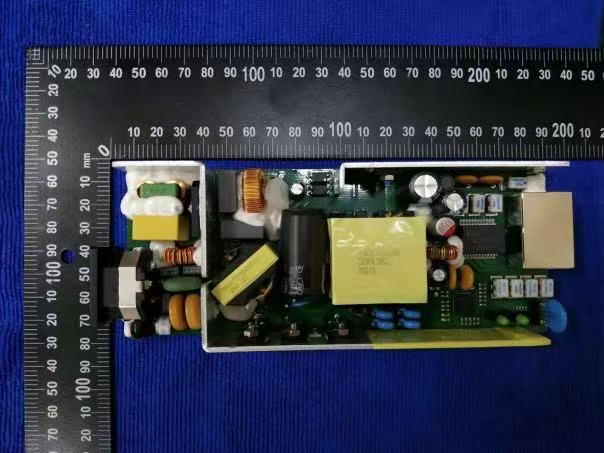
An examination of the adapter's Bill of Materials (BOM) reveals the exacting standards applied to component selection:
Brand Control for Key Components
Electrolytic capacitors: First-tier suppliers such as Jianghai / Zhongyuan
Transformers and inductors: Outeng / Xinmao
PSE controller IC: Realtek RTL8239
Optocouplers: Everlight / Lite-On
Automation Rate and Process Control
The specification requires an automation rate of 80%, 100% lead-free PCB assembly (no manual lead trimming), and PCB conformal coating. Automated production ensures consistency and traceability, while lead-free design reduces reliability risks introduced by manual operations.
PCB Safety Clearance
Copper traces must meet 200Vrms/mm under rated input voltage - a design constraint directly related to high-voltage creepage distance and the safety insulation performance of the power supply.
Conclusion
The design standards embodied in the TOPOW TPT90S56POE adapter reflect the quality level required to develop products for first-tier customers like Huawei. From IEEE 802.3bt PoE standard compliance to an exceptionally wide operating temperature range; from robust surge protection to globally recognized safety certifications - every detail underscores the industry axiom that "quality is the entry ticket."
For power adapter manufacturers, successfully passing the rigorous technical review and quality certification of a customer like Huawei serves as a powerful endorsement of R&D capability, manufacturing excellence, and quality management systems. TOPOW Electronics' two decades of deep cultivation in the power supply industry - built on precise mastery of every technical specification and unwavering respect for every customer requirement - is precisely what enables the company to steadily advance in an intensely competitive global market.


