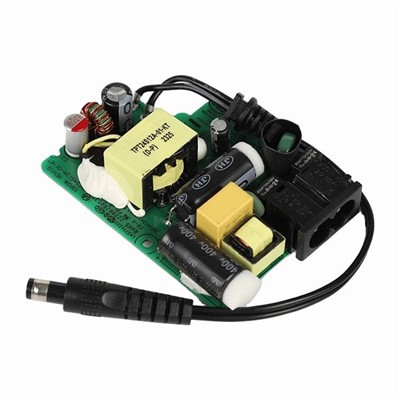

Hey there! As a supplier of single rail power supplies, I've dealt with my fair share of troubleshooting scenarios. In this blog, I'll walk you through the process of troubleshooting a single rail power supply, sharing some tips and tricks I've picked up over the years.
Understanding the Basics
Before we dive into troubleshooting, let's quickly go over what a single rail power supply is. A single rail power supply is a type of power supply that provides a single output voltage. It's commonly used in a variety of applications, from small electronic devices to larger industrial equipment.
The main components of a single rail power supply include a transformer, rectifier, filter, and regulator. The transformer steps down the input voltage to a lower level, the rectifier converts the AC voltage to DC, the filter smooths out the DC voltage, and the regulator maintains a stable output voltage.
Common Issues and Troubleshooting Steps
No Output Voltage
One of the most common issues with a single rail power supply is no output voltage. Here's how you can troubleshoot this problem:


-
Check the Input Power
- First, make sure the power supply is properly connected to the input power source. Check the power cord for any signs of damage, and ensure that the outlet is working by plugging in another device.
- If you're using a battery-powered device, check the battery voltage to make sure it's within the specified range.
-
Inspect the Fuse
- Many single rail power supplies have a fuse to protect the circuit from overcurrent. Check the fuse to see if it's blown. If it is, replace it with a fuse of the same rating.
- Be careful when handling fuses, as they can be easily damaged. Use a fuse tester or a multimeter to check the continuity of the fuse.
-
Test the Transformer
- The transformer is a critical component of the power supply. Use a multimeter to check the input and output voltages of the transformer. If the input voltage is present but there's no output voltage, the transformer may be faulty and need to be replaced.
- Make sure to follow the proper safety procedures when testing the transformer, as it can carry high voltages.
-
Check the Rectifier and Filter
- The rectifier and filter are responsible for converting the AC voltage to DC and smoothing out the voltage. Use a multimeter to check the output voltage of the rectifier and filter. If the voltage is not within the specified range, there may be a problem with these components.
- Look for any signs of damage, such as burnt components or leaking capacitors. Replace any faulty components as needed.
Low Output Voltage
If the output voltage of the single rail power supply is lower than the specified value, here's what you can do:
-
Check the Load
- A heavy load can cause the output voltage to drop. Make sure the load connected to the power supply is within the specified rating. If the load is too high, try reducing it or using a power supply with a higher output capacity.
- You can use a multimeter to measure the current drawn by the load and compare it to the power supply's rated current.
-
Inspect the Regulator
- The regulator is responsible for maintaining a stable output voltage. Check the regulator to see if it's working properly. Use a multimeter to measure the output voltage while varying the load. If the output voltage changes significantly, the regulator may be faulty.
- Look for any signs of damage or overheating on the regulator. Replace it if necessary.
-
Check for Leakage Current
- Leakage current can cause the output voltage to drop. Use a multimeter to measure the leakage current between the output terminals and the ground. If the leakage current is too high, there may be a problem with the insulation or a short circuit in the circuit.
- Inspect the circuit board for any signs of damage or corrosion, and repair any issues as needed.
High Output Voltage
On the other hand, if the output voltage is higher than the specified value, here's how you can troubleshoot it:
-
Check the Feedback Circuit
- The feedback circuit is responsible for regulating the output voltage. Check the feedback circuit to see if it's working properly. Look for any loose connections, damaged components, or incorrect resistor values.
- Use a multimeter to measure the voltage at different points in the feedback circuit to identify the problem.
-
Inspect the Regulator
- Similar to the low output voltage issue, the regulator may be faulty if the output voltage is too high. Check the regulator for any signs of damage or overheating, and replace it if necessary.
- Make sure to use a regulator with the correct specifications for your power supply.
-
Check for Component Failure
- Other components in the power supply, such as capacitors or resistors, may also cause the output voltage to increase. Inspect these components for any signs of damage or incorrect values, and replace them as needed.
Additional Tips and Resources
Here are some additional tips to keep in mind when troubleshooting a single rail power supply:
-
Use the Right Tools
- Make sure you have the necessary tools, such as a multimeter, soldering iron, and screwdrivers, to perform the troubleshooting tasks. Using the right tools will make the process easier and more accurate.
-
Refer to the Documentation
- Always refer to the power supply's user manual or datasheet for specific troubleshooting instructions and technical specifications. The documentation can provide valuable information about the power supply's operation and maintenance.
-
Seek Professional Help
- If you're unable to troubleshoot the problem on your own, don't hesitate to seek professional help. A qualified technician can diagnose and repair the power supply more efficiently.
If you're in the market for a single rail power supply, we offer a wide range of products, including the 90W Single Output Open Frame Power Supply, LED Driver Power Board, and 12V3A Bare Board. Our products are designed to meet the highest quality standards and provide reliable performance.
If you have any questions or would like to discuss your power supply needs, feel free to reach out to us for a purchase negotiation. We're here to help you find the right solution for your application.
References
- Electronics textbooks on power supply design and troubleshooting
- Manufacturer's datasheets and user manuals for single rail power supplies