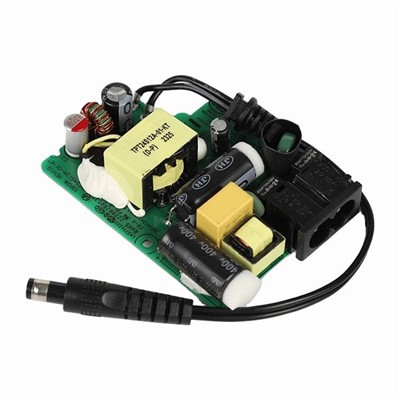

Hey there, fellow telecom enthusiasts! I'm a supplier of Telecom PSUs (Power Supply Units), and today I'm gonna dive deep into the question: What is the efficiency of a Telecom PSU?
Let's start by understanding what efficiency means in the context of a telecom PSU. Efficiency is basically a measure of how well a power supply unit converts the incoming electrical power into usable output power. In simpler terms, it shows how much of the electricity you're putting in actually gets used to power your telecom equipment, and how much is wasted as heat.
Now, why is this efficiency thing so important? Well, in the telecom industry, where equipment runs 24/7, even a small improvement in PSU efficiency can lead to significant cost savings over time. Not to mention, it's also better for the environment. A more efficient PSU means less energy consumption, which in turn reduces your carbon footprint.
So, how do we calculate the efficiency of a Telecom PSU? It's actually pretty straightforward. You take the output power (the power that's actually going to your telecom devices) and divide it by the input power (the power coming from the electrical grid). Then you multiply that result by 100 to get a percentage. For example, if a PSU has an input power of 100 watts and an output power of 90 watts, its efficiency would be (90 / 100) * 100 = 90%.
On average, modern Telecom PSUs have an efficiency ranging from about 85% to 95%. However, this can vary depending on a few factors.
One of the biggest factors affecting PSU efficiency is the load. The load refers to the amount of power that your telecom equipment is actually using. A PSU is generally most efficient when it's operating at a medium to high load. When the load is too low, the PSU has to use some power just to keep itself running, which can lower its overall efficiency. On the other hand, if the load is too high, the PSU might start to overheat, and that can also cause a drop in efficiency.
Another factor is the design of the PSU. High - quality components and advanced circuit designs can significantly improve efficiency. For instance, the use of synchronous rectification technology can reduce power losses in the rectifier stage of the PSU, leading to better overall efficiency. Also, the right choice of magnetic materials in transformers can minimize energy losses due to magnetic hysteresis.
The quality of the input power can also play a role. If the incoming power has a lot of voltage fluctuations or harmonics, the PSU has to work harder to convert it into stable output power. This extra work can lead to reduced efficiency.
As a Telecom PSU supplier, we offer a range of products with high efficiency. For example, our Telecom PSU is designed with state - of - the - art technology to ensure maximum efficiency across different load conditions. It's built using high - quality components that are carefully selected to minimize power losses.
Our 250W Dual Output Power Module is another great option. It's perfect for telecom applications that require a stable and efficient power supply. With its dual output capabilities, it can power multiple devices simultaneously while maintaining high efficiency.
And if you're looking for something more robust, our Heavy - Duty Switching Power Module is the way to go. It's designed to handle heavy loads and is built to last. Despite its heavy - duty nature, it still manages to maintain a high level of efficiency, thanks to its advanced design.


When evaluating the efficiency of a Telecom PSU, it's also important to consider the long - term implications. A more efficient PSU may cost a bit more upfront, but the savings in energy costs over its lifespan can far outweigh the initial investment. And with increasing energy prices and growing environmental concerns, investing in a high - efficiency PSU is a smart move.
In addition to efficiency, reliability is also crucial in the telecom industry. You don't want your power supply to fail, as it can lead to costly downtime for your telecom operations. That's why our PSUs are rigorously tested for reliability. We subject them to a series of tests, including temperature cycling, humidity testing, and shock and vibration testing, to ensure that they can withstand the harsh conditions often found in telecom environments.
Another aspect to think about is the ease of integration. Our Telecom PSUs are designed to be easily integrated into existing telecom systems. They come with standard interfaces and form factors, which means you don't have to make major modifications to your equipment to use them. This simplifies the installation process and reduces the time and cost associated with system upgrades.
So, if you're in the market for a Telecom PSU, it's important to look beyond just the price. Consider the efficiency, reliability, and ease of integration of the product. And if you're interested in learning more about our Telecom PSUs, or if you have any questions about power supply efficiency, don't hesitate to reach out. We're here to help you make the best decision for your telecom needs. Whether you're a small telecom operator or a large enterprise, we have the right PSU solutions for you. Let's start a conversation about how we can power your telecom operations more efficiently and reliably!
References
- "Principles of Power Electronics". Erickson, Robert W., and Dragan Maksimovic. Springer Science & Business Media, 2001.
- "Power Electronics: Converters, Applications, and Design". Mohan, Ned, Tore M. Undeland, and William P. Robbins. John Wiley & Sons, 2012.