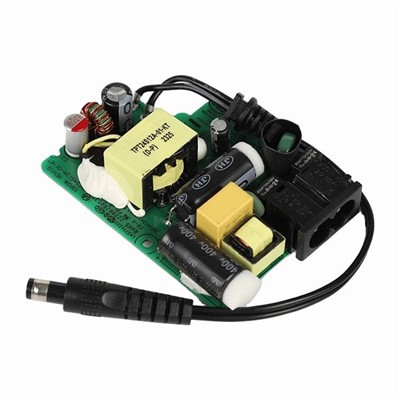

Hey there! As a supplier of single rail power supplies, I've seen firsthand how crucial it is for these power sources to handle power fluctuations. In this blog, I'll break down how single rail power supplies deal with those pesky power variations and why it matters.
First off, let's understand what power fluctuations are. Power fluctuations are changes in the electrical voltage or current that can occur due to various reasons. These can include sudden surges or drops in the power grid, equipment malfunctions, or even natural phenomena like lightning strikes. When these fluctuations happen, they can cause problems for electronic devices, such as damage to components, data loss, or even complete system failure.
So, how does a single rail power supply step up to the plate and handle these fluctuations? Well, one of the key features of a single rail power supply is its voltage regulation capabilities. Voltage regulation is the process of maintaining a stable output voltage, even when the input voltage varies. Most single rail power supplies use a combination of components, such as transformers, rectifiers, and voltage regulators, to ensure that the output voltage remains within a specified range.
Transformers play a vital role in the power supply. They are used to step up or step down the input voltage to the desired level. By adjusting the turns ratio of the transformer, the power supply can convert the high-voltage AC input from the power grid into a lower-voltage AC output. This lower-voltage AC is then passed through a rectifier, which converts it into DC.
The rectifier is usually a set of diodes that allow the current to flow in only one direction. This converts the AC voltage into a pulsating DC voltage. To smooth out this pulsating DC, a filter capacitor is used. The capacitor stores electrical energy during the peaks of the pulsating DC and releases it during the valleys, resulting in a more stable DC voltage.
But that's not all. After the rectification and filtering process, a voltage regulator is used to fine-tune the output voltage. Voltage regulators come in different types, such as linear regulators and switching regulators. Linear regulators work by dissipating excess voltage as heat, while switching regulators are more efficient and work by rapidly switching the input voltage on and off.
Switching regulators are commonly used in modern single rail power supplies because of their high efficiency and ability to handle a wide range of input voltages. They use a switching transistor to control the flow of current and a feedback mechanism to adjust the output voltage. This feedback mechanism continuously monitors the output voltage and makes adjustments to the switching transistor to keep the output voltage stable.
Another important aspect of handling power fluctuations is surge protection. Surges are sudden, short-duration increases in voltage that can occur due to lightning strikes, power grid switching, or other electrical disturbances. Single rail power supplies often include surge protection devices, such as metal oxide varistors (MOVs) or transient voltage suppressors (TVSs), to protect the power supply and the connected devices from these surges.
MOVs are nonlinear resistors that have a low resistance when the voltage across them is below a certain threshold and a high resistance when the voltage exceeds that threshold. When a surge occurs, the MOV conducts the excess current to the ground, protecting the power supply and the connected devices. TVSs are similar to MOVs but are designed to respond more quickly to surges and can handle higher peak currents.
In addition to voltage regulation and surge protection, single rail power supplies also need to be able to handle short circuits and overloading. Short circuits occur when there is a direct connection between the positive and negative terminals of the power supply, causing a large amount of current to flow. Overloading occurs when the power supply is asked to provide more current than it is rated for.
To protect against short circuits and overloading, single rail power supplies often include current-limiting circuits and overcurrent protection devices. Current-limiting circuits limit the amount of current that can flow through the power supply, while overcurrent protection devices, such as fuses or circuit breakers, automatically disconnect the power supply from the circuit when the current exceeds a certain level.
Now, let's talk about some of the specific types of single rail power supplies that we offer. We have a great selection of AC-DC Switching Power Supply that are designed to provide a stable and efficient power source for a wide range of applications. These power supplies are available in different power ratings and output voltages, so you can find the one that best suits your needs.

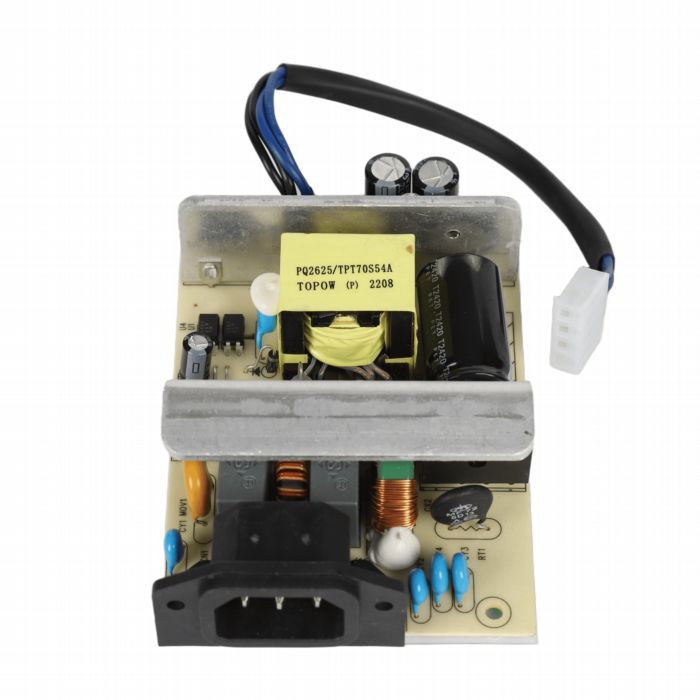
If you're looking for a high-power single rail power supply, our 90W Single Output Open Frame Power Supply is a great option. It offers a high level of power delivery and excellent voltage regulation, making it suitable for use in industrial, commercial, and consumer applications.
For applications where space is limited, we also offer PCB Mount Power Supply. These power supplies are designed to be mounted directly on a printed circuit board, saving valuable space and reducing the overall size of the system.
In conclusion, single rail power supplies are designed to handle power fluctuations through a combination of voltage regulation, surge protection, and current-limiting features. By using high-quality components and advanced technologies, these power supplies can provide a stable and reliable power source for a wide range of electronic devices.
If you're in the market for a single rail power supply, we'd love to hear from you. Our team of experts is always ready to help you find the right power supply for your application. Whether you have questions about our products, need technical support, or want to discuss a custom power supply solution, feel free to reach out to us. We're here to make sure you get the best power supply for your needs.
References
- Fundamentals of Power Electronics, by Robert W. Erickson and Dragan Maksimovic
- Power Supply Design Handbook, by Marty Brown