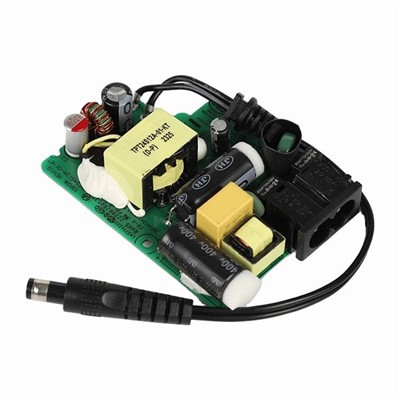

Hey there! As a long - time desktop power adapter supplier, I've seen it all when it comes to the market of these essential gadgets. With so many counterfeit products out there, it's crucial for consumers and businesses alike to know how to check if a desktop power adapter is genuine. In this blog, I'm gonna share some tips that I've gathered over the years.
Packaging and Labeling
First things first, let's talk about the packaging. A genuine desktop power adapter usually comes in a well - made box. The printing on the box should be clear, sharp, and free of smudges or misspellings. Counterfeiters often cut corners here, so if you notice any blurry text or incorrect grammar on the packaging, that's a red flag.
The label on the adapter itself is also super important. It should have all the necessary information, like the voltage, current, and wattage ratings. For example, if you're looking at a 150w Power Adapter, the label should clearly state "150W". And the font on the label should be consistent and evenly spaced. Some fake adapters might have labels that are peeling off or have a different color scheme compared to the official ones.


Build Quality
The build quality of a power adapter can tell you a lot about its authenticity. A genuine adapter is usually made of high - quality materials. The plastic casing should feel sturdy and not too flimsy. When you pick it up, it should have a certain heft to it, which indicates that it's well - constructed.
Check the edges of the adapter. They should be smooth and well - finished. Counterfeit adapters often have rough edges or uneven surfaces. Also, take a look at the ports. The pins inside the ports should be straight, clean, and evenly spaced. Bent or dirty pins are signs that the adapter might be a fake.
Branding and Logo
Branding is a key factor in determining the authenticity of a desktop power adapter. Look closely at the brand logo on the adapter. A genuine logo will be well - defined, with clear lines and no signs of distortion. Some counterfeiters try to copy the logo, but they often do a poor job. The colors might be off, or the shape might be slightly different.
If the adapter claims to be from a well - known brand, do some research on what the official logo looks like. You can visit the brand's official website to get a clear picture. And if the logo on the adapter looks like it's been printed or stamped on poorly, that's a big warning sign.
Safety Certifications
A genuine desktop power adapter should have proper safety certifications. These certifications are a sign that the adapter has been tested and meets certain safety standards. Look for marks like UL (Underwriters Laboratories), CE (Conformité Européene), or FCC (Federal Communications Commission).
These certifications are usually printed on the adapter or its packaging. If an adapter doesn't have any of these certifications, it could be a counterfeit product. And using an uncertified adapter can be extremely dangerous, as it might not have the proper safety features to protect your desktop and yourself.
Performance Testing
One of the best ways to check if a power adapter is genuine is to test its performance. Plug the adapter into your desktop and see how it works. A genuine adapter should power up your desktop smoothly without any issues. If you notice any flickering lights on your desktop or if it takes a long time to boot up, that could mean there's something wrong with the adapter.
You can also use a multimeter to measure the voltage output of the adapter. Compare the measured voltage with the rated voltage on the adapter's label. If there's a significant difference, then the adapter might be a fake.
Price
Price can also be a clue when it comes to identifying a genuine desktop power adapter. If you see an adapter that's priced significantly lower than the average market price for that brand and model, it's probably too good to be true. Counterfeiters often sell their products at lower prices to attract customers.
But don't assume that a high - priced adapter is always genuine. Some scammers might try to charge a high price for a fake product, so you still need to do your due diligence.
Buying from Reputable Sources
To minimize the risk of getting a counterfeit adapter, always buy from reputable sources. If you're looking for a Gaming PC Adapter or a Home Use Desktop Power Adapter, make sure to purchase from authorized retailers or the brand's official website.
Avoid buying from street vendors or unknown online sellers, as they are more likely to sell counterfeit products.
In conclusion, checking if a desktop power adapter is genuine requires a combination of careful inspection and common sense. By paying attention to the packaging, build quality, branding, safety certifications, performance, price, and the source of purchase, you can protect yourself from buying a fake adapter.
If you're in the market for high - quality, genuine desktop power adapters, I'd love to have a chat with you. Whether you're a business looking to stock up or an individual in need of a new adapter, we've got a wide range of products to meet your needs. Reach out to us for a procurement discussion, and let's find the perfect power adapter for you.
References
- General knowledge from years of experience in the desktop power adapter supply industry.
- Industry standards and guidelines for power adapter manufacturing.