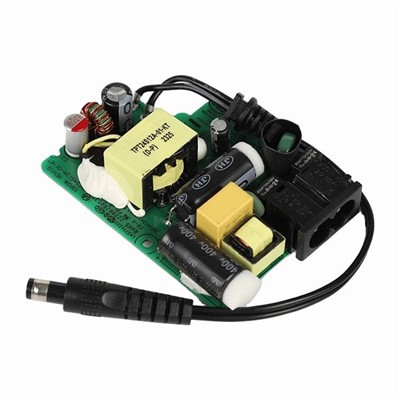

As a provider of AC - DC Switching Power Supply, I've witnessed firsthand the challenges that come with ensuring high - quality performance in multi - output power supplies. One of the most critical issues in this field is cross - regulation. Cross - regulation refers to the ability of a multi - output power supply to maintain stable output voltages on all outputs when the load changes on one or more of the outputs. In this blog, I'll share some effective strategies to improve the cross - regulation of a multi - output AC - DC switching power supply.
Understanding the Basics of Cross - Regulation
Before diving into the improvement methods, it's essential to understand why cross - regulation is a challenge. In a multi - output power supply, all outputs are derived from a common power source. When the load on one output changes, it can affect the voltage regulation of other outputs. This is because the power supply's control loop is typically designed to regulate one primary output, and the other outputs are regulated to a certain extent based on the coupling between the windings in the transformer.
The main factors that influence cross - regulation include the transformer design, the type of feedback control used, and the load characteristics. A poorly designed transformer can lead to significant cross - regulation issues, as the coupling between the windings may not be optimal. Similarly, an ineffective feedback control system may not be able to respond quickly enough to load changes on the secondary outputs.
Transformer Design Optimization
The transformer is the heart of an AC - DC switching power supply, and its design plays a crucial role in cross - regulation. Here are some key considerations for optimizing the transformer design:
Winding Arrangement
The way the windings are arranged in the transformer can have a significant impact on cross - regulation. For example, interleaving the windings can improve the coupling between them, reducing the leakage inductance. Leakage inductance is a major cause of cross - regulation problems, as it can cause voltage spikes and variations when the load changes. By minimizing the leakage inductance, the power supply can better maintain stable output voltages on all outputs.
Turns Ratio Selection
The turns ratio of the transformer determines the output voltages. When designing a multi - output power supply, it's important to select the turns ratio carefully to ensure that the cross - regulation is within acceptable limits. A proper turns ratio can help balance the power distribution between the different outputs, reducing the impact of load changes on cross - regulation.
Core Material Selection
The core material of the transformer also affects cross - regulation. Different core materials have different magnetic properties, such as permeability and saturation flux density. Choosing a core material with low core loss and high permeability can improve the efficiency of the transformer and reduce the impact of load changes on the output voltages.
Feedback Control Strategies
The feedback control system is responsible for regulating the output voltages of the power supply. There are several feedback control strategies that can be used to improve cross - regulation in a multi - output power supply:
Primary - Side Regulation (PSR)
PSR is a popular feedback control method in AC - DC switching power supplies. In a PSR system, the output voltage is regulated by sensing the voltage on the primary side of the transformer. This method is relatively simple and cost - effective, but it may not provide the best cross - regulation performance, especially for power supplies with multiple outputs. However, with the development of advanced PSR techniques, such as secondary - side compensation and digital control, the cross - regulation performance of PSR - based power supplies has been significantly improved.
Secondary - Side Regulation (SSR)
SSR involves sensing the output voltage directly on the secondary side of the transformer. This method provides more accurate voltage regulation and better cross - regulation performance compared to PSR. In an SSR system, a feedback signal is sent from the secondary side to the primary side through an optocoupler or other isolation devices. The primary - side controller then adjusts the switching duty cycle based on the feedback signal to maintain the output voltage at the desired level.
Digital Control
Digital control is becoming increasingly popular in power supply design. A digital controller can use advanced algorithms to adjust the switching parameters in real - time based on the load conditions. This allows for more precise control of the output voltages and better cross - regulation performance. Digital control also enables features such as adaptive control and fault protection, which can improve the reliability and performance of the power supply.
Load Management
The load characteristics can also have a significant impact on cross - regulation. Here are some load management techniques that can help improve cross - regulation:

Load Balancing
In a multi - output power supply, it's important to balance the loads on the different outputs as much as possible. Uneven load distribution can cause significant cross - regulation problems, as the power supply may not be able to regulate the output voltages effectively. By distributing the loads evenly, the power supply can better handle load changes and maintain stable output voltages on all outputs.
Soft - Start and Soft - Stop
Implementing soft - start and soft - stop functions can reduce the impact of sudden load changes on cross - regulation. A soft - start function gradually increases the output voltage when the power supply is turned on, while a soft - stop function gradually decreases the output voltage when the power supply is turned off. This helps to prevent voltage spikes and overshoots, which can affect the cross - regulation performance.
Case Studies and Practical Examples
Let's take a look at some practical examples of how these strategies can be applied to improve cross - regulation in a multi - output AC - DC switching power supply.
Example 1: A 90W Single Output Open Frame Power Supply with Multiple Auxiliary Outputs
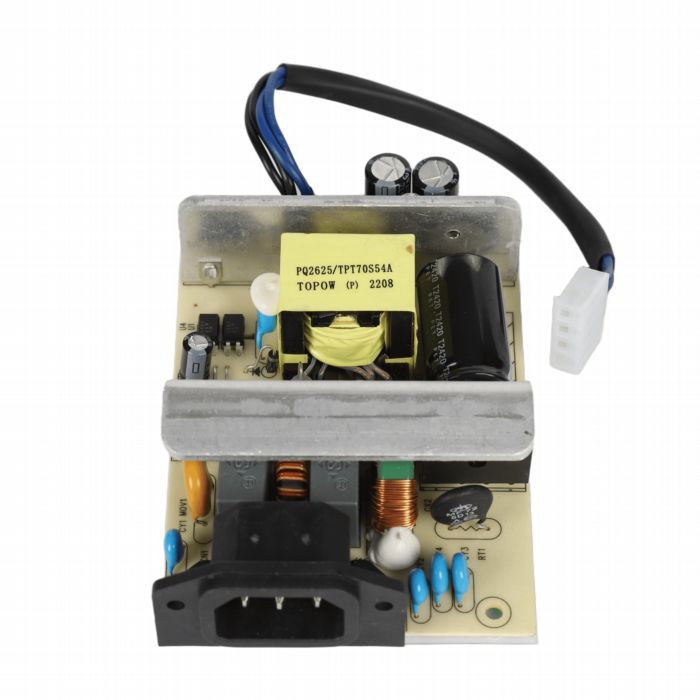
In this case, the power supply is designed to provide a primary output of 90W and several auxiliary outputs. By optimizing the transformer design, using a secondary - side regulation feedback control system, and implementing load balancing techniques, the cross - regulation performance of the power supply was significantly improved. The transformer was designed with interleaved windings to reduce the leakage inductance, and the turns ratio was carefully selected to balance the power distribution between the different outputs. The secondary - side regulation system provided accurate voltage regulation, and the load balancing helped to ensure that the power supply could handle load changes on all outputs without significant cross - regulation issues. You can learn more about our 90W Single Output Open Frame Power Supply.
Example 2: A PCB Mount Power Supply with Multiple Outputs
For a PCB mount power supply, space is often limited, which can make it challenging to design a transformer with optimal cross - regulation performance. However, by using a high - performance core material and a digital control system, the cross - regulation of the power supply was improved. The digital controller was able to adjust the switching parameters in real - time based on the load conditions, providing more precise control of the output voltages. You can find more information about our PCB Mount Power Supply.
Conclusion
Improving the cross - regulation of a multi - output AC - DC switching power supply requires a comprehensive approach that involves optimizing the transformer design, selecting the appropriate feedback control strategy, and managing the load characteristics. By implementing these strategies, power supply manufacturers can produce high - quality products with excellent cross - regulation performance.
If you're in the market for a reliable AC - DC Switching Power Supply, we're here to help. Our team of experts can work with you to understand your specific requirements and provide customized solutions to meet your needs. Whether you need a power supply for industrial, commercial, or consumer applications, we have the expertise and experience to deliver the right product. Contact us today to start a procurement discussion and take your project to the next level.
References
- Erickson, Robert W., and Dragan Maksimovic. Fundamentals of Power Electronics. Springer, 2001.
- Pressman, Abraham I. Switching Power Supply Design. McGraw - Hill, 2009.
- Mohan, Ned, Tore M. Undeland, and William P. Robbins. Power Electronics: Converters, Applications, and Design. Wiley, 2012.