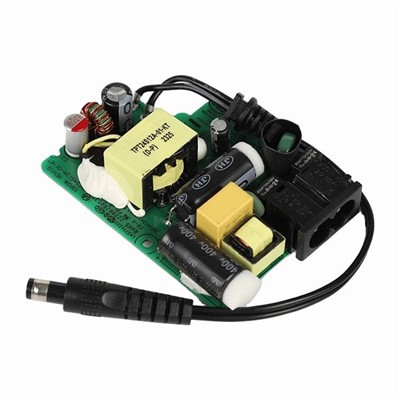

As a reliable desktop power adapter supplier, I've witnessed the inner workings and challenges these essential devices face firsthand. Desktop power adapters are critical to the operation of computers, converting and regulating electrical power to provide a stable energy supply. However, like any electronic component, they are prone to certain failure modes. Understanding these common issues is essential for both manufacturers and users to ensure the durability and reliability of desktop computers.
Overheating
Overheating is perhaps the most prevalent failure mode in desktop power adapters. It occurs when the adapter generates more heat than it can dissipate. Adapters consume electrical energy to convert it into the appropriate voltage and current for desktop computers. During this process, a significant amount of energy is inevitably lost in the form of heat. If the heat is not effectively removed, the internal temperature of the adapter will continue to rise, leading to various problems.
One of the main causes of overheating is poor ventilation. When the power adapter is placed in an enclosed space or surrounded by other heat - generating devices, the airflow around it is restricted. This prevents the heat from being carried away, causing a rapid increase in temperature. For instance, if a user places the adapter under a stack of papers or in a crowded desk drawer, the lack of ventilation will exacerbate the overheating issue.
Another contributing factor is component degradation over time. As the adapter is used, its internal components, such as capacitors and resistors, gradually wear out. This can increase resistance in the circuit, causing more energy to be converted into heat. In addition, excessive power consumption can also lead to overheating. If the connected desktop computer has high - power components, such as a high - end gaming graphics card, and the adapter is not rated for sufficient power, it will be forced to work beyond its capacity, generating excessive heat.
Overheating can cause significant damage to the adapter. High temperatures can accelerate the aging of electronic components, reducing their lifespan. For example, capacitors can dry out and lose their ability to store and release electrical charge properly. In severe cases, overheating can even lead to short - circuits, causing the adapter to fail completely and potentially damaging the connected desktop computer.
Electrical Component Failure
The internal electrical components of a desktop power adapter are complex and delicate. Each component plays a crucial role in the proper functioning of the adapter, and the failure of any one of them can lead to the breakdown of the entire device.
Capacitors are among the most common components to fail. They are responsible for storing and releasing electrical energy to smooth out voltage fluctuations. Over time, capacitors can degrade due to factors such as high temperature, voltage stress, and manufacturing defects. When a capacitor fails, it may bulge, leak electrolyte, or lose its capacitance. This can cause instability in the power output of the adapter, leading to issues such as power surges or drops, which can damage the connected desktop computer.
Diodes are another important component in power adapters. They allow current to flow in only one direction, rectifying the alternating current (AC) from the power source into direct current (DC) suitable for the computer. If a diode fails, it can disrupt the rectification process, resulting in incorrect power output. A short - circuited diode may cause excessive current to flow through the circuit, while an open - circuited diode can prevent the adapter from providing any power at all.
Transformers are also prone to failure. They are used to step up or step down the voltage to the appropriate level for the computer. Physical damage, such as a broken winding, or electrical problems, such as insulation breakdown, can cause a transformer to malfunction. When a transformer fails, it can lead to a complete loss of power or incorrect voltage output, which can have a serious impact on the performance of the desktop computer.
Power Surges and Spikes
Power surges and spikes are sudden, brief increases in electrical voltage. They can occur due to various reasons, such as lightning strikes, power grid fluctuations, or the sudden turning off of high - power devices in the same electrical circuit.
A power surge can carry a much higher voltage than the adapter is rated to handle. When such a surge occurs, it can overwhelm the protection mechanisms in the adapter and cause damage to its internal components. For example, a severe power surge can blow fuses, damage semiconductors, and even cause permanent damage to the circuit board.
Power spikes, although shorter in duration, can also be extremely damaging. They can cause instantaneous over - voltage conditions that are difficult for the adapter's protection circuits to handle. Even a single power spike can cause latent damage to the adapter, weakening its components and reducing its overall lifespan.
To protect against power surges and spikes, many desktop power adapters are equipped with surge protection circuits. These circuits are designed to divert excess voltage away from the adapter and the connected computer. However, these protection circuits have their limitations. In the event of a particularly large surge or spike, they may not be able to provide complete protection, and the adapter may still be damaged.
Physical Damage
Physical damage can occur during the manufacturing, transportation, or normal use of the desktop power adapter. Dropping the adapter, bending the power cord, or subjecting it to excessive pressure can all cause physical damage.
A damaged power cord is a common form of physical damage. The cord may be cut, frayed, or have exposed wires. This not only poses a safety hazard but can also disrupt the flow of electricity to the adapter. If the cord is damaged, the adapter may not receive the proper power supply, leading to intermittent operation or complete failure.
The adapter's casing can also be damaged. A cracked or broken casing can expose the internal components to dust, moisture, and physical impact. Dust can accumulate on the components, reducing their ability to dissipate heat and potentially causing short - circuits. Moisture, on the other hand, can corrode the components, leading to their failure over time.
Connectivity Issues
Connectivity issues are another common failure mode in desktop power adapters. These issues can occur at both ends of the adapter: the connection to the power source and the connection to the desktop computer.
At the power source end, a loose or faulty plug can cause intermittent power supply. If the plug does not fit securely into the electrical outlet, it can create a poor electrical connection. This can result in power fluctuations, which can damage the adapter and the connected computer over time. In addition, corrosion or dirt on the plug or outlet can also impede the flow of electricity, leading to connectivity problems.
At the computer end, a loose or damaged connector can cause similar issues. If the adapter's connector does not fit properly into the computer's power input port, the computer may not receive the correct power supply. This can lead to problems such as the computer not starting up, shutting down unexpectedly, or experiencing performance issues.
Conclusion
As a desktop power adapter supplier, I understand the importance of addressing these common failure modes. By providing high - quality adapters with robust protection mechanisms and educating users about proper usage and maintenance, we can significantly reduce the occurrence of these issues.
If you are in the market for a reliable desktop power adapter, we offer a wide range of products to meet your needs. Our Gaming PC Adapter is specifically designed for high - performance gaming computers, providing stable and efficient power supply. The AC Adapter For Pc is a versatile option suitable for most desktop computers. And our Home Use Desktop Power Adapter is perfect for everyday home computing.
We are always ready to discuss your specific requirements and provide you with the best power adapter solutions. Contact us for more information and to start a procurement negotiation.


References
- Electronics Fundamentals: Circuits, Devices, and Applications by Thomas L. Floyd
- Power Electronics: Converters, Applications, and Design by Ned Mohan, Tore M. Undeland, and William P. Robbins
- Handbook of Power Electronics by Muhammad H. Rashid