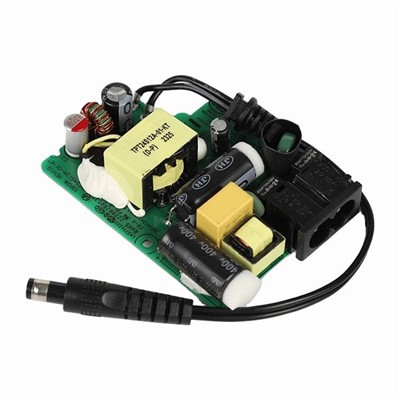

When it comes to building or upgrading a gaming PC, one crucial yet often overlooked component is the power adapter. As a gaming PC adapter supplier, I've witnessed firsthand the significance of ensuring compatibility between the power adapter and different graphics cards. In this blog post, I'll delve into the intricacies of this compatibility, exploring the factors that influence it and providing insights to help you make informed decisions for your gaming setup.
Understanding the Basics of Gaming PC Adapters
Before we dive into the compatibility aspect, let's first understand what a gaming PC adapter is and its role in a gaming system. A gaming PC adapter, also known as a power supply unit (PSU), is responsible for converting the alternating current (AC) from your wall outlet into direct current (DC) that your computer components can use. It provides the necessary power to all the parts of your PC, including the motherboard, CPU, hard drives, and most importantly, the graphics card.
There are various types of gaming PC adapters available in the market, each with different power ratings and features. For home use, you might consider a Home Use Desktop Power Adapter. This type of adapter is designed to meet the power requirements of a typical home gaming setup, providing reliable and stable power. On the other hand, if you're using your PC for daily tasks as well as gaming, a Daily Use Desktop Power Adapter might be more suitable. It offers a balance between power efficiency and performance.
The Importance of Compatibility with Graphics Cards
Graphics cards are one of the most power-hungry components in a gaming PC. They require a significant amount of power to render high-quality graphics and deliver smooth gaming experiences. Therefore, it's essential to ensure that your gaming PC adapter can provide enough power to support your graphics card.
Incompatible power adapters can lead to a range of issues. If the adapter doesn't supply enough power, your graphics card may not function properly, resulting in artifacts, crashes, or even system shutdowns. On the other hand, using an adapter with too much power can be wasteful and may also cause overheating and other problems.
Factors Affecting Compatibility
Several factors influence the compatibility between a gaming PC adapter and a graphics card. Let's take a closer look at each of these factors:
Power Rating
The power rating of a gaming PC adapter is measured in watts (W). It indicates the maximum amount of power the adapter can supply. When choosing an adapter for your graphics card, you need to consider the power requirements of the card. Different graphics cards have different power consumption levels, which can range from a few watts to several hundred watts.
For example, a low-end graphics card might require only 50-100 watts of power, while a high-end gaming graphics card can consume 300 watts or more. As a general rule, it's recommended to choose an adapter with a power rating that is slightly higher than the total power requirements of your PC components, including the graphics card. This ensures that there is enough headroom for power spikes and future upgrades.
If you're using a relatively low-power graphics card, a 150w Power Adapter might be sufficient. However, for high-end graphics cards, you'll need an adapter with a higher power rating, such as 500W, 600W, or even more.
Connector Types
Another important factor to consider is the connector types supported by the gaming PC adapter and the graphics card. Graphics cards typically require specific power connectors to receive power from the adapter. The most common types of power connectors for graphics cards are the 6-pin and 8-pin PCIe connectors.


Some high-end graphics cards may require multiple power connectors to meet their power requirements. For example, a graphics card might need two 8-pin PCIe connectors. Therefore, it's crucial to ensure that your gaming PC adapter has the necessary connectors to support your graphics card.
Efficiency Rating
The efficiency rating of a gaming PC adapter indicates how effectively it converts AC power to DC power. A higher efficiency rating means less power is wasted as heat, resulting in lower energy consumption and reduced operating costs.
When choosing an adapter for your graphics card, it's advisable to select one with a high efficiency rating, such as 80 Plus Bronze, Silver, Gold, or Platinum. These adapters are more energy-efficient and can help you save money in the long run.
Testing Compatibility
Once you've selected a gaming PC adapter and a graphics card, it's a good idea to test their compatibility before installing them in your PC. You can do this by using a power supply calculator, which is available online. These calculators allow you to input the specifications of your PC components, including the graphics card, and calculate the total power requirements.
Based on the results of the power supply calculator, you can determine whether the adapter you've chosen is suitable for your graphics card. If the adapter's power rating is sufficient and it has the necessary connectors, then it should be compatible.
Conclusion
In conclusion, ensuring compatibility between a gaming PC adapter and different graphics cards is crucial for the optimal performance and reliability of your gaming system. By considering factors such as power rating, connector types, and efficiency rating, you can choose the right adapter for your graphics card and avoid potential issues.
As a gaming PC adapter supplier, I'm committed to providing high-quality adapters that are compatible with a wide range of graphics cards. If you have any questions or need assistance in choosing the right adapter for your gaming setup, please don't hesitate to contact me. I'll be more than happy to help you make the best decision for your needs.
References
- "Power Supply Unit (PSU) Guide" - Tom's Hardware
- "Graphics Card Power Requirements" - PC Gamer
- "Efficiency Ratings for Power Supplies" - AnandTech