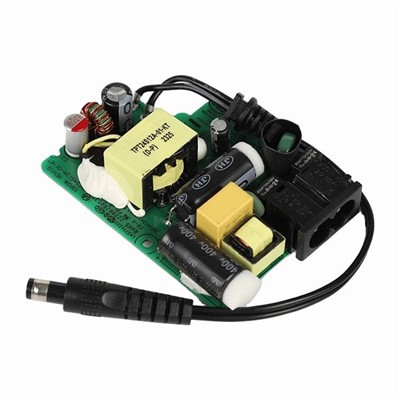

What is the input filter design for an AC - DC switching power supply?
As a leading supplier of AC-DC Switching Power Supply, I've witnessed firsthand the critical role that input filter design plays in the performance and reliability of these power supplies. In this blog post, I'll delve into the intricacies of input filter design for AC - DC switching power supplies, exploring its importance, key components, design considerations, and more.
The Importance of Input Filter Design
The primary function of an input filter in an AC - DC switching power supply is to mitigate electromagnetic interference (EMI) and radio frequency interference (RFI). Switching power supplies, by their very nature, generate high - frequency noise due to the rapid switching of semiconductor devices. This noise can propagate through the input power lines, causing interference with other electronic equipment connected to the same power source. Moreover, it can also radiate into the surrounding environment, potentially violating electromagnetic compatibility (EMC) standards.
An effective input filter helps to suppress this noise, ensuring that the power supply meets the required EMC regulations. This not only allows the power supply to operate without causing interference to other devices but also protects the power supply itself from external EMI/RFI, which could otherwise degrade its performance or even cause malfunctions.
Key Components of an Input Filter
An input filter for an AC - DC switching power supply typically consists of several key components, each serving a specific purpose in the noise suppression process.
Capacitors
Capacitors are used to bypass high - frequency noise to the ground. There are two main types of capacitors commonly used in input filters: X - capacitors and Y - capacitors.
X - capacitors are connected across the input line (line - to - line). They are designed to suppress differential - mode noise, which is the noise that exists between the live and neutral lines. These capacitors are rated to withstand high - voltage transients and are typically made of materials such as ceramic or film.
Y - capacitors, on the other hand, are connected between the input lines and the ground. They are used to suppress common - mode noise, which is the noise that appears on both the live and neutral lines with respect to the ground. Y - capacitors must meet strict safety standards due to their connection to the ground, as a failure in these capacitors could pose a safety hazard.
Inductors
Inductors are used to block high - frequency noise. They work based on the principle that an inductor resists changes in current. In an input filter, inductors are typically used in combination with capacitors to form low - pass filters.
Common - mode inductors are often used to suppress common - mode noise. They consist of two or more windings wound on a common magnetic core. The magnetic fields generated by the currents in the windings oppose each other for differential - mode currents, resulting in a low impedance for differential - mode signals. However, for common - mode currents, the magnetic fields add up, creating a high impedance and thus suppressing the common - mode noise.
Differential - mode inductors are used to suppress differential - mode noise. They are designed to have a high impedance for high - frequency differential - mode currents while allowing the low - frequency power current to pass through with minimal loss.
Design Considerations for Input Filters
When designing an input filter for an AC - DC switching power supply, several factors need to be taken into account.
Noise Spectrum
The first step in designing an input filter is to understand the noise spectrum generated by the power supply. Different power supply topologies and switching frequencies will produce different noise characteristics. By analyzing the noise spectrum, we can determine the frequency range where the noise is most significant and design the filter accordingly.
For example, a power supply with a high switching frequency will generate more high - frequency noise, requiring a filter with a steeper roll - off at high frequencies.
EMC Standards
Compliance with EMC standards is a crucial consideration in input filter design. Different regions and applications have different EMC requirements. For instance, power supplies used in industrial environments may need to meet more stringent EMC standards than those used in consumer electronics.
The filter design must be optimized to ensure that the power supply meets the relevant EMC limits, such as CISPR (International Special Committee on Radio Interference) standards for conducted and radiated emissions.
Power Rating
The power rating of the power supply also affects the input filter design. Higher - power power supplies typically generate more noise and require larger and more robust filter components. Additionally, the filter must be designed to handle the high - current and high - voltage levels associated with the power supply's power rating without introducing excessive power losses.


Size and Cost
In many applications, size and cost are important considerations. A smaller filter size is often desirable, especially for portable or space - constrained devices. However, reducing the size of the filter components may compromise its noise suppression performance.
Cost is also a factor, as more advanced filter components and larger component values can increase the overall cost of the power supply. Therefore, a balance needs to be struck between the filter's performance, size, and cost.
Practical Examples of Input Filter Design
Let's take a look at a practical example of an input filter design for a 90W Single Output Open Frame Power Supply.
For this power supply, we first analyze the noise spectrum generated by the switching circuit. Based on the analysis, we determine that the most significant noise frequencies are in the range of 100 kHz to 10 MHz.
We then select appropriate X - and Y - capacitors to suppress differential - mode and common - mode noise respectively. For the differential - mode noise, we choose an X - capacitor with a capacitance value that provides sufficient bypassing at the relevant frequencies. For the common - mode noise, we select Y - capacitors with the appropriate ratings to ensure safety and effective noise suppression.
Next, we design a common - mode inductor and a differential - mode inductor. The common - mode inductor is designed to have a high impedance at the common - mode noise frequencies, while the differential - mode inductor is optimized for the differential - mode noise frequencies.
After selecting the components, we simulate the filter circuit using circuit simulation software to verify its performance. We adjust the component values as needed to meet the EMC requirements and minimize power losses.
Finally, we build a prototype of the power supply with the designed input filter and test it in a real - world environment. We measure the conducted and radiated emissions to ensure compliance with the relevant EMC standards.
Conclusion
Input filter design is a critical aspect of AC - DC switching power supply design. By understanding the importance of input filters, the key components involved, and the design considerations, we can create effective filters that suppress noise, ensure EMC compliance, and improve the overall performance and reliability of the power supply.
At our company, we have extensive experience in designing and manufacturing high - quality AC - DC switching power supplies with optimized input filters. Our 12V3A Bare Board and other power supply products are designed to meet the highest EMC standards and provide reliable power solutions for a wide range of applications.
If you are interested in our AC - DC switching power supplies or have any questions about input filter design, we encourage you to contact us for further discussion and potential procurement. Our team of experts is ready to assist you in finding the best power supply solutions for your specific needs.
References
- "Electromagnetic Compatibility Engineering" by Henry W. Ott
- "Switching Power Supply Design" by Abraham I. Pressman