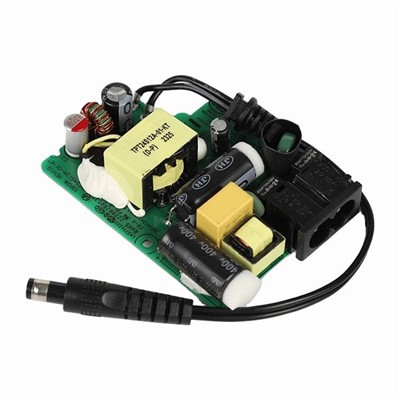

In the realm of power supply technology, the paralleling operation of AC - DC switching power supplies is a topic of significant importance, especially for those in industries that demand high - power and reliable electrical systems. As a leading supplier of AC - DC switching power supplies, I have witnessed firsthand the growing need for understanding and implementing this operation effectively.
Understanding AC - DC Switching Power Supplies
Before delving into the paralleling operation, it's essential to have a clear understanding of AC - DC switching power supplies. These power supplies are designed to convert alternating current (AC) from the mains into direct current (DC) that can be used by electronic devices. They are widely used in various applications, including telecommunications, industrial automation, and consumer electronics, due to their high efficiency, compact size, and excellent voltage regulation.
The basic working principle of an AC - DC switching power supply involves several stages. First, the input AC voltage is rectified to DC. Then, this DC voltage is chopped into high - frequency pulses by a switching circuit. These pulses are then transformed to the desired voltage level through a transformer and finally rectified and filtered to produce a smooth DC output.
What is the Paralleling Operation of AC - DC Switching Power Supplies?
The paralleling operation of AC - DC switching power supplies refers to the connection of two or more power supplies in parallel to increase the total output current capacity while maintaining the same output voltage. This approach is often adopted when a single power supply cannot provide the required amount of current for a particular load.
For example, if a load requires 20A of current, but a single power supply can only provide a maximum of 10A, two such power supplies can be connected in parallel to meet the load's current demand. In a parallel connection, the positive terminals of all power supplies are connected together, and the negative terminals are also connected together.
Advantages of Paralleling Operation
Increased Power Capacity
The most obvious advantage is the ability to increase the power output. By connecting multiple power supplies in parallel, the total current - delivering capacity is the sum of the individual power supplies' current ratings. This allows for the operation of high - power loads that would otherwise require a single, large - capacity power supply, which may be more expensive, larger in size, and less flexible.
Redundancy and Reliability
Parallel operation also provides a level of redundancy. If one power supply fails, the other power supplies can continue to supply power to the load, ensuring that the system remains operational. This is crucial in critical applications such as data centers, medical equipment, and aerospace systems, where any interruption in power can lead to significant losses or even endanger lives.
Flexibility and Scalability
Paralleling operation offers greater flexibility in system design. As the power requirements of a system change over time, additional power supplies can be easily added in parallel to meet the increased demand. This scalability is particularly beneficial in industries where technology is evolving rapidly, and power needs are constantly growing.
Challenges in Paralleling Operation
Current Sharing
One of the main challenges in paralleling AC - DC switching power supplies is ensuring proper current sharing among the power supplies. Ideally, each power supply should contribute an equal amount of current to the load. However, due to differences in the internal characteristics of the power supplies, such as output impedance and voltage regulation, some power supplies may carry more current than others. This can lead to overloading of some power supplies and under - utilization of others, reducing the overall efficiency and reliability of the system.
Voltage Regulation
Maintaining consistent voltage regulation across all parallel - connected power supplies is also crucial. Any significant difference in the output voltage of the power supplies can cause circulating currents between the power supplies, which can lead to additional power losses and potentially damage the power supplies.


Solutions to the Challenges
Current - Sharing Techniques
There are several techniques available to achieve proper current sharing. One common method is the use of droop regulation. In droop regulation, the output voltage of each power supply is slightly adjusted based on the current it is supplying. As the current increases, the output voltage decreases slightly, which helps to balance the current sharing among the power supplies.
Another approach is the use of active current - sharing circuits. These circuits monitor the current of each power supply and adjust the output voltage of the power supplies to ensure equal current sharing.
Precise Voltage Matching
To ensure consistent voltage regulation, high - precision voltage references and feedback control loops are used in the power supplies. These components help to minimize the voltage differences between the power supplies and reduce circulating currents.
Applications of Paralleled AC - DC Switching Power Supplies
Industrial Automation
In industrial automation systems, there are often multiple high - power motors and actuators that require a large amount of current. Paralleling AC - DC switching power supplies allows for the efficient operation of these devices while providing redundancy and scalability. For example, in a robotic assembly line, the power supplies can be paralleled to ensure continuous operation of the robots, even if one power supply fails.
Telecommunications
Telecommunication equipment, such as base stations and data centers, requires a stable and high - power supply. Paralleling power supplies helps to meet the high - current demands of these systems and provides backup in case of power supply failures. This ensures uninterrupted communication services for millions of users.
Our Product Offerings
As a supplier of AC - DC switching power supplies, we offer a wide range of products suitable for paralleling operation. Our PCB Mount Power Supply is a compact and efficient solution that can be easily integrated into various electronic systems. It is designed with advanced current - sharing and voltage - regulation technologies, making it ideal for parallel operation.
Our Regulated Switching Power Module also provides excellent performance and reliability. It features precise voltage regulation and can be paralleled with other modules to increase the power output.
For applications such as LED lighting, our LED Driver Power Board is a great choice. It can be connected in parallel to drive multiple LED arrays, providing bright and uniform lighting.
Contact Us for Purchase and Consultation
If you are interested in our AC - DC switching power supplies or have any questions about the paralleling operation, we encourage you to contact us. Our team of experts is ready to provide you with detailed information, technical support, and customized solutions to meet your specific requirements. Whether you are looking to increase the power capacity of your existing system or design a new high - power system from scratch, we can help.
References
- Pressman, A. I., & MacLean, K. (2009). Switching Power Supply Design. McGraw - Hill.
- Mohan, N., Undeland, T. M., & Robbins, W. P. (2012). Power Electronics: Converters, Applications, and Design. John Wiley & Sons.
- Erickson, R. W., & Maksimovic, D. (2001). Fundamentals of Power Electronics. Springer.