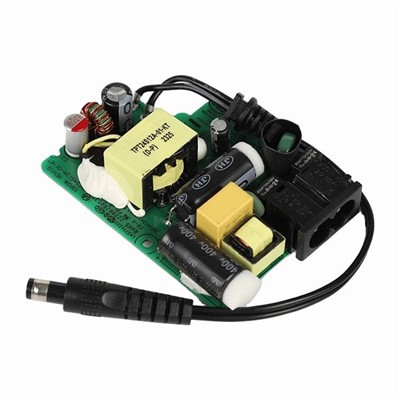

Hey there! As a supplier of single rail power supplies, I often get asked about the power conversion efficiency of these nifty devices. So, let's dive right in and break it down.
First off, what exactly is power conversion efficiency? Well, it's a measure of how effectively a power supply can convert the input power (usually from an AC source) into the output power that your electronic devices can use. In simpler terms, it tells you how much of the electricity you're putting in actually gets turned into useful power, and how much is wasted as heat.
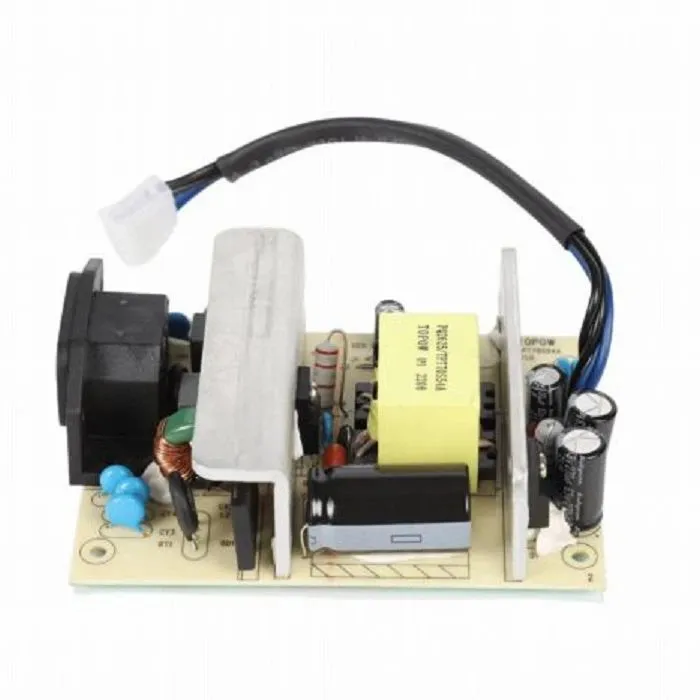

For single rail power supplies, this efficiency is super important. Why? Because a more efficient power supply means less energy is wasted, which translates to lower electricity bills and a smaller carbon footprint. Plus, it can also lead to a longer lifespan for the power supply itself, since it's not working as hard to generate the same amount of output power.
Let's talk numbers. The power conversion efficiency of a single rail power supply is typically expressed as a percentage. For example, if a power supply has an efficiency of 80%, that means 80% of the input power is converted into useful output power, while the remaining 20% is lost as heat.
Now, the actual efficiency of a single rail power supply can vary depending on a few factors. One of the biggest factors is the load on the power supply. In general, a power supply will be most efficient when it's operating at or near its rated load. For instance, if you have a 12V3A Bare Board power supply rated for 36 watts (12V x 3A), it will likely be most efficient when it's supplying around 36 watts of power to your device.
Another factor that can affect efficiency is the type of power supply. There are different types of single rail power supplies, such as linear power supplies and switching power supplies. Switching power supplies, like our AC - DC Switching Power Supply, are generally more efficient than linear power supplies. This is because switching power supplies use a switching regulator to convert the input power, which allows them to operate at a higher frequency and with less power loss.
The quality of the components used in the power supply also plays a role. High - quality capacitors, inductors, and transistors can help improve the efficiency of the power supply. At our company, we use only the best components in our single rail power supplies to ensure maximum efficiency and reliability.
Let's take a closer look at how you can calculate the power conversion efficiency of a single rail power supply. The formula is pretty straightforward:
Efficiency (%) = (Output Power / Input Power) x 100
To measure the output power, you need to know the voltage and current of the power supply's output. You can use a multimeter to measure these values. For example, if your power supply is outputting 12 volts and 2 amps, the output power would be 12V x 2A = 24 watts.
To measure the input power, you can use a power meter. This device will measure the actual power being drawn from the AC source. Let's say the power meter shows that the power supply is drawing 30 watts from the AC source. Using the formula above, the efficiency would be (24 / 30) x 100 = 80%.
Now, why should you care about the power conversion efficiency of a single rail power supply? Well, as I mentioned earlier, a more efficient power supply can save you money on your electricity bills. Over time, these savings can really add up, especially if you're using multiple power supplies or running your devices for long periods.
In addition, a more efficient power supply generates less heat. This is important because excessive heat can damage the components in the power supply and reduce its lifespan. By using a high - efficiency power supply, you can help ensure that your devices run smoothly and reliably for years to come.
Our company offers a wide range of single rail power supplies, including PCB Mount Power Supply options. These power supplies are designed to be highly efficient, reliable, and easy to install. Whether you're working on a small DIY project or a large industrial application, we have the right power supply for you.
If you're in the market for a single rail power supply, I encourage you to consider the power conversion efficiency when making your decision. Don't just focus on the price or the output voltage and current. Look for a power supply that offers high efficiency, as this will save you money in the long run and give you peace of mind knowing that your devices are being powered by a reliable source.
If you have any questions about our single rail power supplies or need help choosing the right one for your application, feel free to reach out. We're here to assist you every step of the way. Whether you're a hobbyist, an engineer, or a business owner, we can provide you with the information and support you need to make an informed decision.
In conclusion, the power conversion efficiency of a single rail power supply is a crucial factor to consider. It affects your energy costs, the lifespan of the power supply, and the overall performance of your electronic devices. By choosing a high - efficiency power supply from our company, you can enjoy the benefits of lower energy consumption, reduced heat generation, and reliable operation. So, why wait? Contact us today to start exploring our range of single rail power supplies and find the perfect solution for your needs.
References
- Electronics textbooks on power supply design and efficiency
- Technical documentation from power supply component manufacturers