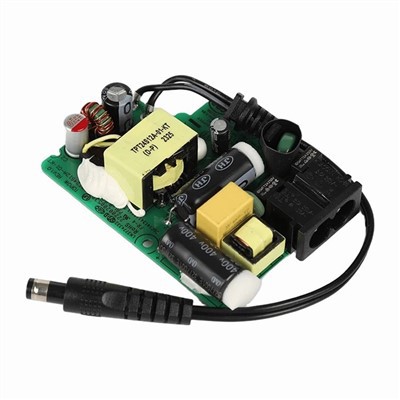

Hey there! As a supplier of PCB Mount Power Supply, I often get asked about the power factor of these nifty little devices. So, I thought I'd take a deep dive into the topic and share what I've learned over the years.
First off, let's talk about what power factor actually is. In simple terms, power factor is a measure of how effectively electrical power is being used in a circuit. It's a ratio that compares the real power (the power that actually does useful work) to the apparent power (the total power supplied to the circuit). The power factor can range from 0 to 1, with 1 being the ideal value. A power factor of 1 means that all the electrical power supplied to the circuit is being used effectively, while a power factor less than 1 indicates that some of the power is being wasted.
Now, why is power factor important in a PCB mount power supply? Well, a high power factor is crucial for several reasons. For starters, it helps to reduce energy consumption. When the power factor is low, more current is required to deliver the same amount of real power, which means more energy is being wasted in the form of heat. By improving the power factor, we can minimize this energy loss and make the power supply more efficient.
Another reason why power factor is important is that it can have an impact on the electrical grid. When a large number of devices with low power factors are connected to the grid, it can cause voltage fluctuations and other power quality issues. Utilities often charge commercial and industrial customers for low power factor, so improving the power factor of your PCB mount power supply can help you save money on your electricity bills.
So, how do we measure the power factor of a PCB mount power supply? There are a few different methods, but one of the most common is to use a power analyzer. A power analyzer can measure the real power, apparent power, and power factor of the power supply, as well as other electrical parameters such as voltage, current, and frequency. By analyzing these measurements, we can determine the efficiency of the power supply and identify any areas where improvements can be made.
Now, let's talk about some of the factors that can affect the power factor of a PCB mount power supply. One of the biggest factors is the type of load that the power supply is connected to. Different types of loads have different power factor characteristics, so it's important to choose a power supply that is compatible with the load. For example, a resistive load (such as a heater or a light bulb) has a power factor of 1, while a reactive load (such as a motor or a transformer) has a power factor less than 1.
Another factor that can affect the power factor is the design of the power supply itself. Some power supplies are designed to have a high power factor, while others are not. For example, a switch-mode power supply (SMPS) typically has a higher power factor than a linear power supply. This is because SMPSs use a switching regulator to convert the input voltage to the output voltage, which is more efficient than the linear regulator used in linear power supplies.
In addition to the type of load and the design of the power supply, there are also some external factors that can affect the power factor. For example, the quality of the electrical grid can have an impact on the power factor. If the grid voltage is unstable or if there are a lot of harmonics present, it can cause the power factor to drop. Similarly, the length and size of the electrical cables can also affect the power factor. Longer cables and smaller cables have higher resistance, which can cause more energy to be wasted in the form of heat.
So, what can we do to improve the power factor of a PCB mount power supply? There are a few different strategies that we can use. One of the most effective strategies is to use a power factor correction (PFC) circuit. A PFC circuit is a type of electronic circuit that is designed to improve the power factor of the power supply by adjusting the input current to match the input voltage. By using a PFC circuit, we can reduce the amount of reactive power in the circuit and improve the power factor.
Another strategy is to choose a power supply that is designed to have a high power factor. As I mentioned earlier, switch-mode power supplies typically have a higher power factor than linear power supplies. So, if you're looking for a power supply with a high power factor, a SMPS is a good choice.

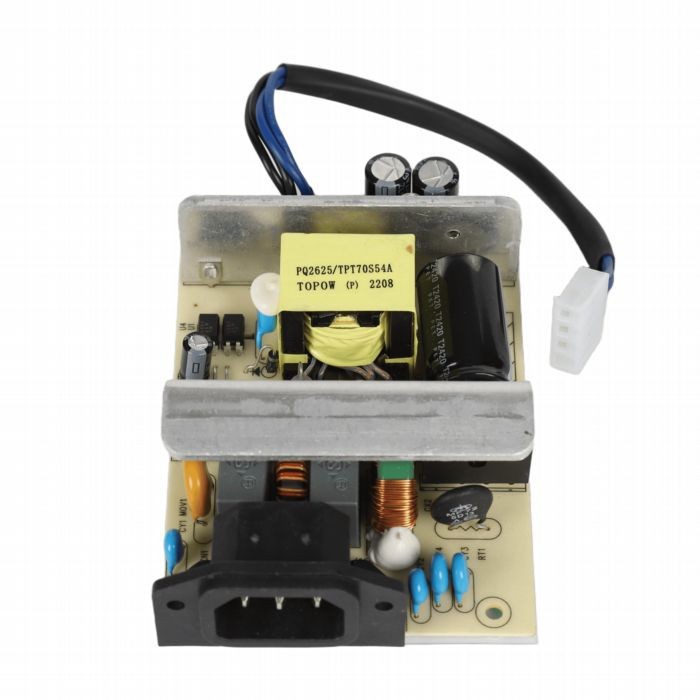
Finally, it's important to make sure that the power supply is properly installed and maintained. This includes using the correct size and type of electrical cables, making sure that the connections are tight and secure, and keeping the power supply clean and free of dust and debris. By taking these steps, we can help to ensure that the power supply is operating at its maximum efficiency and that the power factor is as high as possible.
As a supplier of PCB Mount Power Supply, we understand the importance of power factor and offer a range of products that are designed to have a high power factor. Our Medical Open-Frame Power Supply and 12V3A Bare Board are just a few examples of our high-quality products that are designed to meet the needs of our customers.
If you're interested in learning more about our PCB mount power supplies or if you have any questions about power factor, please don't hesitate to contact us. We'd be happy to help you find the right power supply for your application and answer any questions that you may have.
References
- "Power Factor Basics." Electrical Engineering Portal.
- "Understanding Power Factor." Power Electronics News.
- "Power Factor Correction: What It Is and Why It Matters." Eaton.