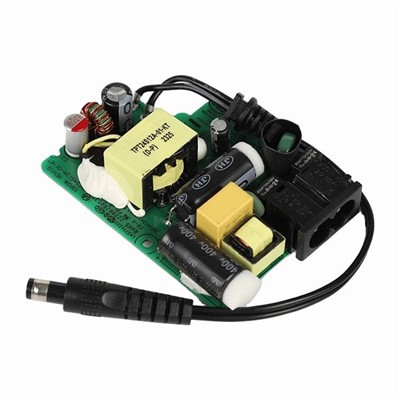

What is the reliability of an AC - DC switching power supply?
In the world of electronic devices, the AC - DC switching power supply stands as a cornerstone for seamless operation. As a seasoned supplier of AC - DC Switching Power Supply, I've witnessed firsthand the pivotal role these power supplies play and the importance of their reliability.
Understanding AC - DC Switching Power Supplies
An AC - DC switching power supply AC - DC Switching Power Supply is designed to convert alternating current (AC) from the mains power into direct current (DC) at a specific voltage and current level required by electronic devices. Unlike linear power supplies, switching power supplies operate by rapidly switching the input power on and off, which allows them to achieve high efficiency and compact size. This makes them ideal for a wide range of applications, from consumer electronics like smartphones and laptops to industrial equipment and telecommunications systems.
The basic working principle of an AC - DC switching power supply involves several stages. First, the input AC voltage is rectified to a DC voltage. Then, this DC voltage is chopped into high - frequency pulses by a switching transistor. The pulses are then passed through a transformer to adjust the voltage level. Finally, the output is filtered to obtain a smooth DC voltage.
Factors Affecting the Reliability of AC - DC Switching Power Supplies
- Component Quality
The quality of the individual components used in the power supply is of utmost importance. Capacitors, for example, are critical components that store and release electrical energy. Low - quality capacitors may have a shorter lifespan, higher equivalent series resistance (ESR), and are more prone to failure due to overheating. Similarly, the switching transistors need to be able to handle high currents and voltages without breaking down. Using high - quality components from reputable manufacturers can significantly improve the reliability of the power supply. - Design and Layout
A well - designed power supply circuit can minimize electromagnetic interference (EMI), reduce power losses, and ensure stable operation. The layout of the printed circuit board (PCB) also plays a crucial role. Proper placement of components, adequate spacing between high - voltage and low - voltage traces, and effective grounding techniques can prevent issues such as cross - talk and short - circuits. For instance, separating the power and signal traces can reduce the risk of noise coupling into the sensitive signal lines. - Operating Conditions
The environment in which the power supply operates has a significant impact on its reliability. High temperatures, humidity, and dust can all degrade the performance of the power supply over time. For example, excessive heat can cause the components to expand and contract, leading to mechanical stress and eventual failure. In addition, high humidity can cause corrosion of the components, while dust can accumulate on the heat sinks and reduce their cooling efficiency. Therefore, it is important to ensure that the power supply is installed in a well - ventilated area with appropriate temperature and humidity control. - Load Conditions
The load connected to the power supply also affects its reliability. Overloading the power supply can cause it to overheat and potentially fail. On the other hand, operating the power supply at a very light load for an extended period can also lead to problems, such as increased ripple voltage and reduced efficiency. It is important to select a power supply with a suitable power rating for the intended application and to ensure that the load remains within the specified range.
Measuring the Reliability of AC - DC Switching Power Supplies
- Mean Time Between Failures (MTBF)
MTBF is one of the most commonly used metrics to measure the reliability of a power supply. It represents the average time between two consecutive failures of a power supply under specific operating conditions. A higher MTBF value indicates a more reliable power supply. However, it is important to note that MTBF is a statistical estimate and does not guarantee the actual lifespan of a particular power supply unit. - Accelerated Life Testing
Accelerated life testing involves subjecting the power supply to more severe operating conditions than normal, such as higher temperatures and voltages, for a shorter period of time. By monitoring the failure rate under these accelerated conditions, it is possible to estimate the reliability of the power supply under normal operating conditions. This method can significantly reduce the testing time and cost. - Field Data Analysis
Analyzing the field data of power supplies that have been in use for a certain period of time can provide valuable insights into their reliability. By collecting data on the number of failures, the operating conditions, and the usage patterns, it is possible to identify potential failure modes and take proactive measures to improve the reliability of future designs.
Our Approach to Ensuring Reliability
As a supplier of AC - DC Switching Power Supplies, we take several steps to ensure the reliability of our products.
- Component Selection
We carefully select high - quality components from trusted suppliers. Our capacitors have low ESR and high ripple current ratings, and our switching transistors are designed to handle high - power applications. We also conduct rigorous incoming inspection of all components to ensure that they meet our quality standards. - Advanced Design and Testing
Our experienced design engineers use the latest simulation tools to optimize the circuit design and minimize EMI. We also conduct thorough testing at every stage of the manufacturing process, including functional testing, burn - in testing, and environmental testing. For example, our power supplies are subjected to a 24 - hour burn - in test at elevated temperatures to identify any early - life failures. - Customization for Different Applications
We understand that different applications have different requirements in terms of reliability. For industrial applications that demand high reliability and long - term stability, we offer Regulated Switching Power Module with redundant power paths and advanced protection features. For consumer electronics applications, we focus on providing cost - effective solutions without compromising on reliability. - Continuous Improvement
We continuously collect and analyze field data from our customers to identify areas for improvement. Based on this feedback, we make design changes and process improvements to enhance the reliability of our power supplies.
Case Study: Our 90W Single Output Open Frame Power Supply
Our 90W Single Output Open Frame Power Supply is a prime example of our commitment to reliability. This power supply is designed for a wide range of applications, including industrial control systems, telecommunications equipment, and test and measurement instruments.
It uses high - quality components and a state - of - the - art circuit design to ensure stable and efficient operation. We have conducted extensive testing on this power supply, including high - temperature testing, humidity testing, and vibration testing. As a result, it has a high MTBF value and can withstand harsh operating conditions.
Importance of Reliable AC - DC Switching Power Supplies
A reliable AC - DC switching power supply is crucial for the proper functioning of electronic devices. In consumer electronics, a faulty power supply can lead to data loss, system crashes, and even damage to the device itself. In industrial applications, power supply failures can cause production downtime, which can result in significant financial losses. In addition, in critical applications such as medical equipment and aerospace systems, power supply reliability is a matter of life and death.
Conclusion
The reliability of an AC - DC switching power supply is influenced by various factors, including component quality, design, operating conditions, and load conditions. As a supplier, we are dedicated to providing high - reliability power supplies through strict component selection, advanced design and testing, customization, and continuous improvement.


If you are in the market for a reliable AC - DC switching power supply, we invite you to contact us for a detailed discussion. Our team of experts can help you select the right power supply for your specific application and provide you with the best - in - class service.
References
- Pressman, A. I. (2009). Switching Power Supply Design. McGraw - Hill.
- Erickson, R. W., & Maksimovic, D. (2001). Fundamentals of Power Electronics. Springer.
- Mohan, N., Undeland, T. M., & Robbins, W. P. (2003). Power Electronics: Converters, Applications, and Design. Wiley.