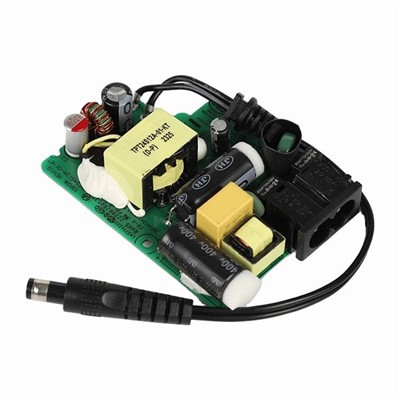

As a supplier of AC adapters for PCs, I often encounter various questions from customers regarding the compatibility and usage of these essential components. One frequently asked question is whether it's possible to use an AC adapter for a PC with a power inverter. In this blog post, I'll delve into this topic, exploring the technical aspects, potential benefits, and considerations to help you make an informed decision.
Understanding AC Adapters for PCs
Before we discuss using an AC adapter with a power inverter, let's first understand what an AC adapter for a PC is. An AC adapter, also known as a power adapter or charger, is a device that converts alternating current (AC) from a power source, such as a wall outlet, into direct current (DC) suitable for powering a PC. These adapters come in different wattages, voltages, and connector types to match the specific requirements of various PC models.
At our company, we offer a wide range of AC adapters for PCs, including Daily Use Desktop Power Adapter, Wifi Router Power Adapter, and Home Use Desktop Power Adapter. Each adapter is designed to provide reliable and efficient power to your PC, ensuring optimal performance.
What is a Power Inverter?
A power inverter is a device that converts DC power, typically from a battery or a solar panel, into AC power. It allows you to use AC-powered devices in locations where only DC power is available, such as in a car, boat, or during a power outage. Power inverters come in different sizes and power ratings, depending on the intended use.
Can I Use an AC Adapter for PC with a Power Inverter?
The short answer is yes, you can use an AC adapter for a PC with a power inverter. However, there are several factors to consider before doing so to ensure compatibility and safety.
Compatibility
The first thing to consider is the compatibility between the power inverter and the AC adapter. You need to make sure that the power inverter can provide the necessary power output to meet the requirements of the AC adapter. Check the power rating (wattage) of the AC adapter and ensure that the power inverter has a higher wattage capacity to handle the load.
For example, if your AC adapter has a power rating of 65 watts, you should choose a power inverter with a wattage capacity of at least 100 watts to allow for some margin of safety. Using a power inverter with a lower wattage capacity than the AC adapter can cause the inverter to overheat or shut down, potentially damaging both the inverter and the AC adapter.
Voltage and Frequency
In addition to the wattage, you also need to consider the voltage and frequency requirements of the AC adapter. Most AC adapters for PCs are designed to work with a specific voltage and frequency, typically 110-240V AC and 50-60Hz. Make sure that the power inverter can provide the correct voltage and frequency to match the requirements of the AC adapter.
Some power inverters allow you to select the output voltage and frequency, while others have a fixed output. If you're using a power inverter with a fixed output, make sure that it matches the voltage and frequency requirements of the AC adapter.
Quality and Safety
When using an AC adapter with a power inverter, it's important to choose high-quality products to ensure safety and reliability. Look for power inverters that are certified by reputable organizations, such as UL (Underwriters Laboratories) or CE (Conformité Européene), to ensure that they meet the necessary safety standards.
Similarly, choose AC adapters from a trusted supplier to ensure that they are designed and manufactured to high-quality standards. Using low-quality or counterfeit products can pose a safety risk and may damage your PC or other devices.
Benefits of Using an AC Adapter for PC with a Power Inverter
There are several benefits to using an AC adapter for a PC with a power inverter:
Portability
One of the main advantages of using a power inverter is the ability to use your PC in locations where there is no access to a traditional AC power source. For example, you can use your PC in a car, boat, or during a camping trip by connecting the AC adapter to a power inverter and a battery.
Emergency Backup
In the event of a power outage, a power inverter can provide a temporary power source for your PC. By connecting the AC adapter to a power inverter and a battery, you can continue to use your PC to access important information, communicate with others, or perform essential tasks.


Energy Efficiency
Using a power inverter with an AC adapter can be more energy-efficient than using a traditional generator. Power inverters are generally more efficient at converting DC power to AC power, which means that they consume less energy and produce less noise and emissions.
Considerations and Precautions
While using an AC adapter for a PC with a power inverter can be a convenient and practical solution, there are some considerations and precautions to keep in mind:
Battery Capacity
If you're using a battery to power the power inverter, make sure that the battery has enough capacity to provide the necessary power for the AC adapter. Check the battery's amp-hour (Ah) rating and calculate the estimated runtime based on the power consumption of the AC adapter.
For example, if your AC adapter has a power rating of 65 watts and your battery has a capacity of 100 Ah at 12V, you can calculate the estimated runtime as follows:
- Convert the battery capacity from Ah to watt-hours (Wh): 100 Ah x 12V = 1200 Wh
- Divide the battery capacity in Wh by the power consumption of the AC adapter in watts: 1200 Wh / 65 W = approximately 18.5 hours
Keep in mind that this is just an estimate, and the actual runtime may vary depending on factors such as the efficiency of the power inverter, the condition of the battery, and the power consumption of the PC.
Heat Dissipation
Both the power inverter and the AC adapter can generate heat during operation. Make sure that there is adequate ventilation around the devices to prevent overheating. Avoid placing the power inverter and the AC adapter in enclosed spaces or on soft surfaces that can block the ventilation openings.
Surge Protection
Consider using a surge protector between the power inverter and the AC adapter to protect your PC from power surges and spikes. A surge protector can help prevent damage to your PC's components in the event of a sudden increase in voltage.
Conclusion
In conclusion, using an AC adapter for a PC with a power inverter is possible, but it requires careful consideration of the compatibility, voltage, frequency, quality, and safety factors. By choosing high-quality products and following the necessary precautions, you can enjoy the benefits of portability, emergency backup, and energy efficiency.
If you have any questions or need further assistance in choosing the right AC adapter or power inverter for your PC, please don't hesitate to contact us. We're a leading supplier of AC adapters for PCs, and we're committed to providing our customers with the best products and services. Whether you're looking for a Daily Use Desktop Power Adapter, Wifi Router Power Adapter, or Home Use Desktop Power Adapter, we have the right solution for you.
Contact us today to discuss your requirements and start the procurement process. We look forward to working with you!
References
- Wikipedia. (n.d.). Power inverter. Retrieved from https://en.wikipedia.org/wiki/Power_inverter
- Electronics Tutorials. (n.d.). AC - DC Power Supplies. Retrieved from https://www.electronics-tutorials.ws/dccircuits/dcp_1.html