
Can micro inverters be used in a solar farm? That's a question I've been asked quite a bit lately, and as a micro inverter supplier, I'm more than happy to dive into this topic.
Let's start with the basics. For those who aren't too familiar, a solar farm is a large - scale photovoltaic power station that generates electricity from sunlight. It usually consists of a vast number of solar panels spread across a large area. On the other hand, micro inverters are small, individual inverters that are attached to each solar panel. They convert the direct current (DC) produced by the solar panel into alternating current (AC) right at the panel level.
Now, the traditional approach in solar farms has been to use string inverters. A string inverter is connected to a series, or "string," of solar panels. It's a big - box solution that's been around for a long time and is well - established in the industry. But there are some limitations to string inverters. For instance, if one panel in a string underperforms due to shading, dirt, or a malfunction, the whole string's output is affected. This is known as the "Christmas light effect," where one bad bulb can dim the whole string.
So, where do micro inverters come in? Well, the beauty of micro inverters is that they operate independently. Each panel has its own inverter, so if one panel isn't performing at its best, it doesn't bring down the performance of the other panels. This can lead to a significant increase in overall energy production in a solar farm.
Think about a large solar farm in a location where there might be partial shading throughout the day, maybe from nearby trees or buildings. With string inverters, those shaded panels would drag down the output of the entire string. But with micro inverters, the unshaded panels can still operate at their maximum capacity, and the overall energy yield of the solar farm can be much higher.
Another advantage of using micro inverters in a solar farm is the ease of monitoring. Since each panel has its own inverter, it's much simpler to keep track of the performance of every single panel. You can quickly identify if a panel is underperforming or has a problem. This real - time monitoring can save a lot of time and money on maintenance and troubleshooting.
Now, I know what you might be thinking. "Okay, micro inverters sound great, but are they cost - effective for a large - scale solar farm?" It's a valid concern. Micro inverters can be more expensive per watt compared to string inverters. However, when you factor in the increased energy production and the long - term savings on maintenance, the cost difference might not be as significant as it seems at first glance.
In addition, as technology advances and the demand for micro inverters grows, the prices are coming down. More and more manufacturers are entering the market, which is driving competition and making micro inverters a more affordable option for solar farms.
Let's also talk about safety. Micro inverters operate at a lower DC voltage compared to string inverters. This lower voltage reduces the risk of electrical fires and makes them safer to install and maintain. In a solar farm, where safety is of the utmost importance, this is a huge plus.
At this point, you might be interested in the specific products we offer. One of our popular options is the 800w Micro Inverter. It's a high - performance micro inverter that's suitable for a variety of solar panel configurations. With its advanced technology, it can maximize the energy output of each panel and is built to last in the harsh outdoor conditions of a solar farm.

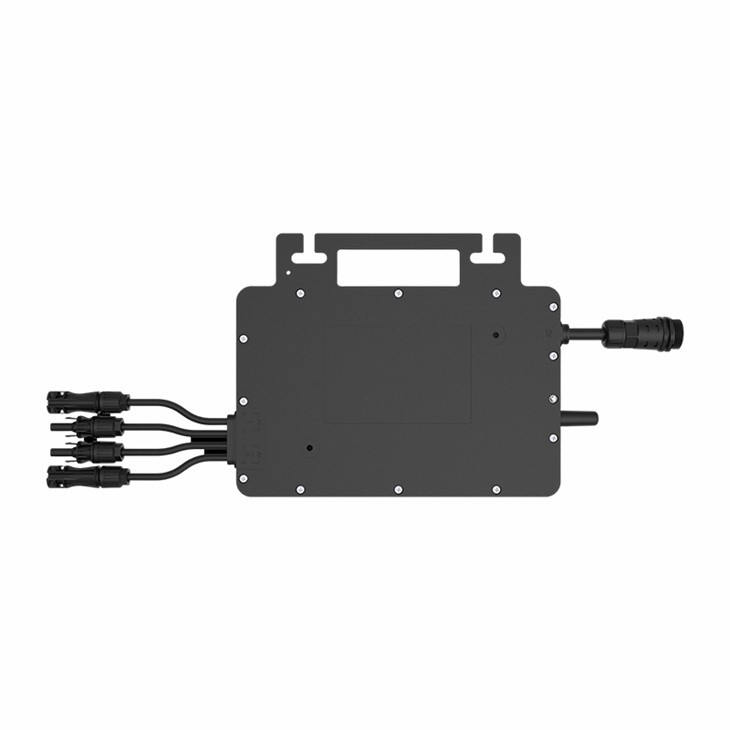
When it comes to installation, micro inverters are generally easier to install than string inverters. Since they're attached directly to the panels, there's less complex wiring involved. This can save a lot of time during the installation process, which is especially important for large - scale solar farms where time is money.
Now, let's look at some real - world examples. There have been several solar farms around the world that have switched from string inverters to micro inverters. In one case, a medium - sized solar farm in a region with variable shading saw a 15% increase in energy production after switching to micro inverters. This increase in energy production translated into a significant increase in revenue for the solar farm owner.
So, to answer the question, "Can micro inverters be used in a solar farm?" The answer is a resounding yes. They offer numerous advantages in terms of energy production, monitoring, safety, and installation.
If you're considering building or upgrading a solar farm and are interested in learning more about how micro inverters can benefit your project, I'd love to have a chat. Whether you have questions about our 800w Micro Inverter or other products in our lineup, feel free to reach out. We can have a detailed discussion about your specific needs and how micro inverters can be the right solution for your solar farm.
In conclusion, the future of solar farms looks bright with the integration of micro inverters. They have the potential to revolutionize the way we generate solar energy on a large scale. So, don't hesitate to explore this option for your next solar project.
References
- Industry research reports on solar inverters
- Case studies of solar farms using micro inverters