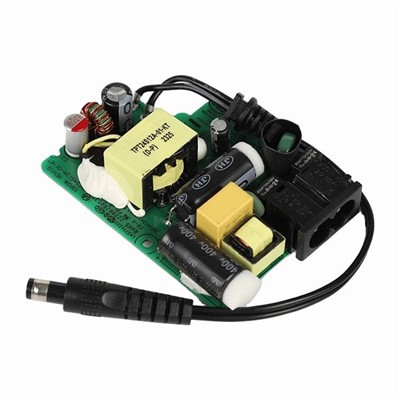

Wall mount power adapters are ubiquitous in our daily lives, powering a wide array of electronic devices from smartphones and tablets to small household appliances. One common concern among users is whether these adapters get hot during use. As a wall mount power adapter supplier, I'd like to delve into this topic, exploring the reasons behind adapter heating, the potential risks, and how to ensure safe and efficient operation.
Why Wall Mount Power Adapters Get Hot
Electrical Resistance
At the most fundamental level, the heating of a wall mount power adapter can be attributed to the principle of electrical resistance. According to Joule's Law, when an electric current passes through a conductor, such as the wires and components inside the adapter, some of the electrical energy is converted into heat. The amount of heat generated (H) is proportional to the square of the current (I), the resistance (R) of the conductor, and the time (t) the current flows, expressed by the formula H = I²Rt.
In a power adapter, the internal components, including the transformer, rectifier, and voltage regulator, all have a certain amount of resistance. As the adapter converts the high - voltage alternating current (AC) from the wall outlet into the low - voltage direct current (DC) required by the device, the flow of current through these components causes them to heat up.
Efficiency Loss
No power adapter is 100% efficient. During the process of power conversion, some energy is inevitably lost in the form of heat. The efficiency of a power adapter is typically expressed as a percentage, representing the ratio of the output power to the input power. For example, if an adapter has an input power of 20 watts and an output power of 18 watts, its efficiency is 90%, and the remaining 10% (2 watts) is lost as heat.
Lower - quality adapters or those operating under heavy loads are more likely to have lower efficiency, resulting in more heat generation. This is why it's important to choose a high - quality adapter that can convert power more efficiently.
Overloading
Another common cause of adapter heating is overloading. Each wall mount power adapter is designed to handle a specific amount of power, which is usually indicated by its output voltage and current ratings. For example, an AC Adapter 12v 1000ma is rated to provide a maximum output of 12 volts and 1 ampere, corresponding to a power of 12 watts.
If you connect a device that requires more power than the adapter can supply, the adapter will be forced to work harder, drawing more current and generating more heat. Over time, this can not only cause the adapter to overheat but also damage the adapter and the connected device.
Potential Risks of Overheating
Reduced Lifespan
Excessive heat can significantly reduce the lifespan of a wall mount power adapter. High temperatures can cause the internal components to degrade more quickly, leading to solder joints cracking, capacitors drying out, and other forms of damage. This can result in intermittent power supply, voltage fluctuations, or even complete failure of the adapter.
Fire Hazard
In extreme cases, an overheating adapter can pose a fire hazard. If the heat is not dissipated properly and the temperature rises to a critical level, it can ignite the flammable materials inside the adapter or nearby. This is a serious safety concern, especially in households with children or in environments where there are flammable substances.
Damage to Connected Devices
Overheating adapters can also damage the connected devices. The voltage fluctuations caused by an overheating adapter may not provide a stable power supply, which can lead to malfunctions, data loss, or permanent damage to the device's internal components.


How to Ensure Safe and Efficient Use
Choose the Right Adapter
When selecting a wall mount power adapter, it's crucial to choose one that is compatible with your device. Check the device's power requirements, including the voltage and current ratings, and choose an adapter that can provide the appropriate power. For example, if your device requires an 18 - watt power supply, an 18w Adapter would be a suitable choice.
Provide Adequate Ventilation
Proper ventilation is essential for dissipating the heat generated by the adapter. Avoid covering the adapter with objects or placing it in enclosed spaces. Make sure there is enough air circulation around the adapter to carry away the heat.
Avoid Overloading
As mentioned earlier, overloading can cause the adapter to overheat. Do not connect multiple high - power devices to a single adapter or use an adapter with a lower power rating than required by the device. If you need to power multiple devices, consider using a power strip with individual switches or a multi - output power adapter.
Regular Inspection
Periodically inspect your wall mount power adapters for signs of damage, such as frayed wires, cracked casings, or discoloration. If you notice any abnormalities, stop using the adapter immediately and replace it with a new one.
Our High - Quality Wall Mount Power Adapters
As a wall mount power adapter supplier, we are committed to providing high - quality products that are safe, efficient, and reliable. Our PD30w adapter, for example, is designed with advanced power conversion technology to ensure high efficiency and low heat generation. It can provide a stable power supply for a variety of devices, including laptops, tablets, and smartphones.
We use high - quality components and strict manufacturing processes to ensure the durability and safety of our adapters. All our products undergo rigorous quality testing before leaving the factory to meet international safety standards.
If you are in the market for wall mount power adapters, whether for personal use or for your business, we invite you to contact us for more information. Our team of experts can help you choose the right adapter for your specific needs and provide you with the best solutions. We are dedicated to providing excellent customer service and look forward to establishing long - term partnerships with our customers.
Conclusion
Wall mount power adapters do get hot during use, which is mainly due to electrical resistance, efficiency loss, and overloading. While some degree of heating is normal, excessive heat can pose risks to the adapter's lifespan, safety, and the connected devices. By choosing the right adapter, providing adequate ventilation, avoiding overloading, and conducting regular inspections, you can ensure the safe and efficient use of your wall mount power adapters.
As a professional wall mount power adapter supplier, we offer a wide range of high - quality products to meet your diverse needs. If you have any questions or are interested in our products, please feel free to contact us for procurement and further discussions.
References
- Serway, R. A., & Jewett, J. W. (2018). Physics for Scientists and Engineers with Modern Physics. Cengage Learning.
- Dorf, R. C., & Svoboda, J. A. (2019). Introduction to Electric Circuits. Wiley.