
Hey there! As a charging solution supplier, I often get asked about how battery-powered charging solutions work. It's a super interesting topic, and I'm stoked to break it down for you in this blog.
Let's start with the basics. A battery-powered charging solution is all about getting energy into a battery safely and efficiently. Whether it's for your phone, an electric vehicle, or an electrical scooter, the fundamental principles are pretty much the same.
The Heart of the Matter: The Battery
First things first, we need to understand the battery itself. Batteries come in different types, like lithium-ion, lead-acid, and nickel-metal hydride. Each type has its own characteristics, but they all work on the principle of electrochemical reactions.
In a lithium-ion battery, for example, there are two electrodes - a cathode and an anode - separated by an electrolyte. When the battery is discharging (i.e., powering your device), lithium ions move from the anode to the cathode through the electrolyte, creating an electric current. When you charge the battery, the process is reversed. The charger applies an external voltage that forces the lithium ions to move back from the cathode to the anode.
The Charger: Making It Happen
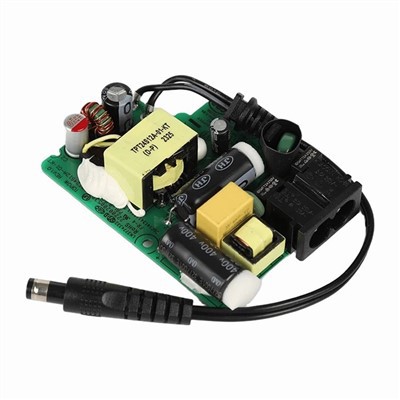
Now, let's talk about the charger. A charger is essentially a device that controls the flow of electricity into the battery. It takes the electrical power from an outlet (usually alternating current or AC) and converts it into direct current (DC), which is what the battery needs.
There are different stages in the charging process. The first stage is usually the constant current (CC) stage. In this stage, the charger supplies a fixed amount of current to the battery. This helps to quickly charge the battery up to a certain level. As the battery voltage increases, the charger then switches to the constant voltage (CV) stage. In this stage, the charger maintains a constant voltage while the current gradually decreases as the battery gets closer to being fully charged.
Safety First: Protection Circuits
One of the most important aspects of a charging solution is safety. That's why chargers are equipped with protection circuits. These circuits prevent overcharging, over-discharging, and short-circuits.
Overcharging can cause the battery to overheat, which can lead to reduced battery life or even a fire hazard. The protection circuit monitors the battery voltage and stops the charging process when the battery reaches its maximum voltage.
Over-discharging, on the other hand, can damage the battery's internal structure. The protection circuit also monitors the battery's state of charge and prevents it from being discharged below a certain level.
Short-circuits can occur if there's a fault in the charging cable or the battery itself. The protection circuit detects the abnormal current flow and cuts off the power to prevent any damage.
Our Charging Solutions
At our company, we offer a wide range of charging solutions to meet different needs. For example, we have the 58V Battery Charger, which is designed for high-voltage batteries. This charger is built with advanced technology to ensure fast and safe charging.
We also have the EV Charger 48v for electric vehicles. This charger is optimized for the specific requirements of EV batteries, providing a reliable and efficient charging solution.
And if you're looking for a charger for your electrical scooter, our Electrical Scooter Charger is the perfect choice. It's compact, lightweight, and designed to deliver a stable charge to your scooter's battery.
The Future of Charging Solutions
The world of charging solutions is constantly evolving. With the increasing demand for electric vehicles and portable electronic devices, there's a growing need for faster, more efficient, and safer charging solutions.
One of the trends we're seeing is the development of wireless charging technology. Wireless chargers use electromagnetic fields to transfer energy from the charger to the battery without the need for a physical connection. This makes charging more convenient and hassle-free.
Another trend is the integration of smart features into chargers. Smart chargers can communicate with the battery and adjust the charging parameters based on the battery's state of charge, temperature, and other factors. This helps to optimize the charging process and extend the battery's lifespan.
Why Choose Us
As a charging solution supplier, we're committed to providing high-quality products and excellent customer service. Our chargers are designed and manufactured to meet the highest standards of safety and performance.
We also offer customized charging solutions to meet the specific needs of our customers. Whether you're a manufacturer looking for a charger for your new product or an individual in need of a replacement charger, we can help.


If you're interested in our charging solutions or have any questions, don't hesitate to reach out to us. We'd love to have a chat and discuss how we can work together to meet your charging needs.
References
- Linden, D., & Reddy, T. B. (2002). Handbook of Batteries. McGraw-Hill.
- Kintner-Meyer, M. C. W., & Pratt, R. G. (2009). Electric Vehicle Charging Infrastructure: Status and Issues. Pacific Northwest National Laboratory.