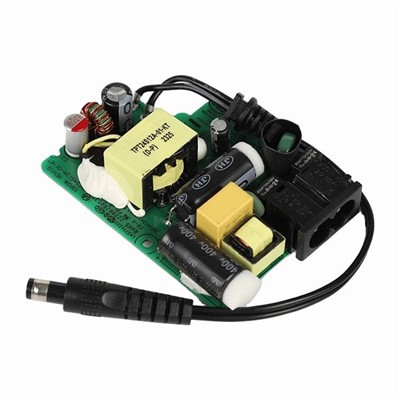

Balancing voltages in a dual rail power supply is crucial for ensuring the stable and efficient operation of electronic devices. As a supplier of dual rail power supplies, I've encountered numerous challenges and found effective solutions over the years. In this blog, I'll share some practical tips on how to achieve voltage balance in a dual rail power supply.
Understanding Dual Rail Power Supplies
Before diving into voltage balancing, let's quickly recap what a dual rail power supply is. A dual rail power supply provides two different voltage outputs, typically a positive and a negative voltage relative to a common ground. These power supplies are widely used in various applications, such as audio amplifiers, operational amplifiers, and other electronic circuits that require both positive and negative voltage sources.
One of the main advantages of using a dual rail power supply is that it allows for more flexibility in circuit design. For example, in an audio amplifier, a dual rail power supply can provide the necessary positive and negative voltages to drive the amplifier's output stage, resulting in better audio quality and performance.
Why Voltage Balancing Matters
Voltage imbalance in a dual rail power supply can lead to a variety of problems, including reduced performance, increased power consumption, and even damage to electronic components. When the positive and negative voltages are not balanced, the circuit may not operate as intended, leading to distorted signals, increased noise, and other issues.
In addition, voltage imbalance can cause excessive stress on electronic components, such as transistors and integrated circuits, which can shorten their lifespan and increase the risk of failure. Therefore, it's essential to ensure that the voltages in a dual rail power supply are balanced to maintain the reliability and performance of the electronic device.
Factors Affecting Voltage Balance
Several factors can affect the voltage balance in a dual rail power supply, including:
- Load Imbalance: When the load on the positive and negative voltage rails is not equal, it can cause a voltage imbalance. For example, if one rail is supplying more power to a load than the other, the voltage on that rail may drop, while the voltage on the other rail may increase.
- Component Tolerances: The components used in a dual rail power supply, such as resistors, capacitors, and voltage regulators, have inherent tolerances that can affect the voltage balance. For example, if the resistance of a resistor in the positive voltage rail is slightly different from the resistance of a corresponding resistor in the negative voltage rail, it can cause a voltage imbalance.
- Temperature Variations: Temperature can also affect the voltage balance in a dual rail power supply. As the temperature changes, the resistance and capacitance of the components can change, which can cause the voltage to fluctuate.
Tips for Balancing Voltages in a Dual Rail Power Supply
Now that we understand the importance of voltage balancing and the factors that can affect it, let's look at some practical tips for achieving voltage balance in a dual rail power supply.
1. Use a Voltage Balancing Circuit
One of the most effective ways to balance the voltages in a dual rail power supply is to use a voltage balancing circuit. A voltage balancing circuit typically consists of a pair of resistors and a voltage regulator that are connected between the positive and negative voltage rails. The resistors are used to divide the voltage between the two rails, while the voltage regulator is used to adjust the voltage on one of the rails to match the voltage on the other rail.
For example, in a simple voltage balancing circuit, a pair of resistors is connected in series between the positive and negative voltage rails. The midpoint of the resistors is then connected to the input of a voltage regulator, which adjusts the voltage on one of the rails to match the voltage on the other rail. This ensures that the voltages on the two rails are balanced, regardless of the load or temperature variations.
2. Select Components with Low Tolerances
As mentioned earlier, component tolerances can affect the voltage balance in a dual rail power supply. Therefore, it's important to select components with low tolerances to minimize the voltage imbalance. For example, when selecting resistors, choose resistors with a tolerance of 1% or less. Similarly, when selecting capacitors, choose capacitors with a tolerance of 5% or less.
In addition, it's a good idea to use high-quality components from reputable manufacturers to ensure their reliability and performance. This can help to reduce the risk of voltage imbalance and other issues caused by component failures.
3. Monitor and Adjust the Voltages Regularly
Even with a voltage balancing circuit and high-quality components, it's still important to monitor and adjust the voltages in a dual rail power supply regularly. This can help to ensure that the voltages remain balanced over time, even as the load or temperature changes.
To monitor the voltages, you can use a multimeter or other voltage measuring device to measure the voltage on each rail. If you notice a significant voltage imbalance, you can adjust the voltage regulator or other components in the power supply to correct the imbalance.
4. Consider Using a Server-Grade Power Supply Board
If you're looking for a high-performance dual rail power supply, you may want to consider using a Server-Grade Power Supply Board. Server-grade power supply boards are designed to provide stable and reliable power to servers and other high-performance electronic devices. They typically feature advanced voltage regulation and balancing circuits, as well as high-quality components, to ensure optimal performance and reliability.


In addition, server-grade power supply boards often have built-in protection features, such as overvoltage protection, overcurrent protection, and short-circuit protection, which can help to prevent damage to the power supply and the electronic device.
5. Choose the Right Telecom PSU
Another option for a dual rail power supply is a Telecom PSU. Telecom PSUs are designed to provide power to telecommunications equipment, such as routers, switches, and base stations. They typically feature high efficiency, low noise, and excellent voltage regulation, making them ideal for use in dual rail power supply applications.
When choosing a Telecom PSU, it's important to consider the specific requirements of your application, such as the voltage output, current capacity, and power efficiency. You should also look for a PSU that has a good reputation for reliability and performance.
6. Opt for a 250W Dual Output Power Module
If you need a high-power dual rail power supply, you may want to consider using a 250W Dual Output Power Module. These power modules are designed to provide up to 250 watts of power to electronic devices, making them suitable for use in a variety of applications, such as industrial control systems, medical equipment, and audio amplifiers.
250W dual output power modules typically feature advanced voltage regulation and balancing circuits, as well as high-quality components, to ensure stable and reliable power output. They also often have built-in protection features, such as overvoltage protection, overcurrent protection, and short-circuit protection, to prevent damage to the power module and the electronic device.
Conclusion
Balancing the voltages in a dual rail power supply is essential for ensuring the stable and efficient operation of electronic devices. By understanding the factors that affect voltage balance and implementing the tips and techniques outlined in this blog, you can achieve optimal voltage balance in your dual rail power supply.
If you're in the market for a high-quality dual rail power supply, we're here to help. As a leading supplier of dual rail power supplies, we offer a wide range of products, including Server-Grade Power Supply Boards, Telecom PSUs, and 250W Dual Output Power Modules. Our products are designed to provide stable and reliable power to a variety of electronic devices, and we offer competitive pricing and excellent customer service.
If you have any questions or would like to discuss your power supply requirements, please don't hesitate to contact us. We look forward to working with you to find the perfect power supply solution for your needs.
References
- Horowitz, P., & Hill, W. (1989). The Art of Electronics. Cambridge University Press.
- Scherz, P., & Monk, S. (2008). Practical Electronics for Inventors. McGraw-Hill.