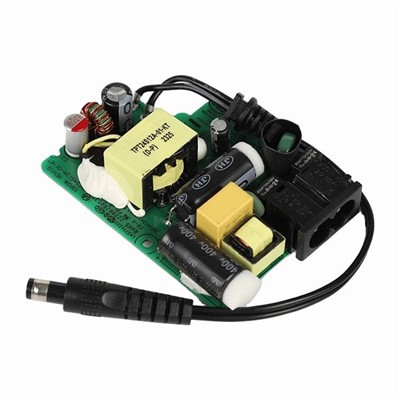

In the realm of power supply solutions for printed circuit boards (PCBs), the choice between linear and switching PCB mount power supplies is a critical decision that can significantly impact the performance, efficiency, and cost of electronic devices. As a seasoned PCB Mount Power Supply supplier, I've witnessed firsthand the diverse needs of our customers and the importance of making an informed choice. In this blog, I'll delve into the characteristics, advantages, and disadvantages of both linear and switching power supplies to help you determine which option is better suited for your specific application.
Understanding Linear PCB Mount Power Supplies
Linear power supplies have been around for decades and are known for their simplicity and low noise output. At their core, linear power supplies use a linear regulator to convert the input voltage to a stable output voltage. This process involves dissipating excess energy as heat, which is a key characteristic that sets linear power supplies apart from their switching counterparts.


How Linear Power Supplies Work
A linear power supply typically consists of a transformer, a rectifier, a filter capacitor, and a linear regulator. The transformer steps down the input AC voltage to a lower level, which is then rectified to DC by the rectifier. The filter capacitor smooths out the DC voltage, reducing ripple. Finally, the linear regulator adjusts the output voltage to a constant level, regardless of changes in the input voltage or load current.
Advantages of Linear Power Supplies
- Low Noise Output: One of the primary advantages of linear power supplies is their low noise output. Since they operate in a continuous mode, they produce very little electrical noise, making them ideal for applications that require a clean power source, such as audio equipment, medical devices, and test and measurement instruments.
- Simple Design: Linear power supplies have a relatively simple design, which makes them easy to understand and implement. They also require fewer components compared to switching power supplies, resulting in lower component costs and a smaller footprint on the PCB.
- Good Transient Response: Linear power supplies can respond quickly to changes in the load current, providing a stable output voltage even under dynamic conditions. This makes them suitable for applications that require a fast and accurate power supply, such as microprocessors and digital circuits.
Disadvantages of Linear Power Supplies
- Low Efficiency: One of the main drawbacks of linear power supplies is their low efficiency. Since they dissipate excess energy as heat, they can waste a significant amount of power, especially when the input-output voltage difference is large. This not only increases the operating cost but also requires additional cooling measures to prevent overheating.
- Limited Output Power: Linear power supplies are typically limited in their output power capabilities. As the power dissipation increases with the output power, it becomes more challenging to dissipate the heat generated by the linear regulator, which can lead to thermal issues and reduced reliability.
- Poor Voltage Regulation at High Loads: Linear power supplies may experience voltage regulation issues at high loads, especially when the input voltage is low. This can result in a drop in the output voltage, which may affect the performance of the connected devices.
Understanding Switching PCB Mount Power Supplies
Switching power supplies have gained popularity in recent years due to their high efficiency and compact size. Unlike linear power supplies, switching power supplies use a switching regulator to convert the input voltage to a stable output voltage. This process involves rapidly switching the input voltage on and off, which allows the power supply to transfer energy more efficiently.
How Switching Power Supplies Work
A switching power supply typically consists of a rectifier, a filter capacitor, a switching regulator, an inductor, and a diode. The rectifier converts the input AC voltage to DC, which is then filtered by the capacitor. The switching regulator controls the flow of current through the inductor by rapidly switching the input voltage on and off. The inductor stores energy when the switch is on and releases it when the switch is off, smoothing out the output voltage. The diode prevents the current from flowing back into the inductor when the switch is off.
Advantages of Switching Power Supplies
- High Efficiency: One of the main advantages of switching power supplies is their high efficiency. Since they transfer energy in a pulsed mode, they can achieve efficiencies of up to 90% or higher, depending on the design and operating conditions. This results in lower power consumption and reduced heat generation, making them more energy-efficient and environmentally friendly.
- Wide Input Voltage Range: Switching power supplies can operate over a wide range of input voltages, making them suitable for use in different regions and applications. They can also tolerate fluctuations in the input voltage without affecting the output voltage, providing a stable power supply even in harsh environments.
- High Power Density: Switching power supplies can deliver a high amount of power in a small package, making them ideal for applications where space is limited. They also generate less heat compared to linear power supplies, which allows for a more compact design and reduces the need for additional cooling measures.
Disadvantages of Switching Power Supplies
- High Electrical Noise: One of the main drawbacks of switching power supplies is their high electrical noise output. Since they operate in a pulsed mode, they can generate significant amounts of electrical noise, which can interfere with the operation of other electronic devices. This requires additional filtering and shielding to reduce the noise level, which can increase the cost and complexity of the design.
- Complex Design: Switching power supplies have a more complex design compared to linear power supplies, which makes them more difficult to understand and implement. They also require more components, such as inductors, capacitors, and diodes, which can increase the component cost and the footprint on the PCB.
- Poor Transient Response: Switching power supplies may have a slower transient response compared to linear power supplies, especially when the load current changes rapidly. This can result in a temporary drop in the output voltage, which may affect the performance of the connected devices.
Which is Better: Linear or Switching PCB Mount Power Supply?
The choice between a linear and switching PCB mount power supply depends on several factors, including the specific application requirements, the input voltage range, the output power requirements, the noise tolerance, and the cost constraints. Here are some general guidelines to help you make an informed decision:
When to Choose a Linear Power Supply
- Low Noise Applications: If your application requires a clean power source with low electrical noise, such as audio equipment, medical devices, or test and measurement instruments, a linear power supply is the better choice. Linear power supplies produce very little electrical noise, making them ideal for applications that are sensitive to noise.
- Low Power Applications: If your application requires a low amount of power, such as a few watts or less, a linear power supply may be sufficient. Linear power supplies are simple and cost-effective for low-power applications, and they can provide a stable output voltage without the need for complex control circuits.
- Applications with Fast Transient Response Requirements: If your application requires a fast and accurate power supply, such as microprocessors or digital circuits, a linear power supply may be a better choice. Linear power supplies can respond quickly to changes in the load current, providing a stable output voltage even under dynamic conditions.
When to Choose a Switching Power Supply
- High Efficiency Applications: If your application requires a high level of efficiency, such as battery-powered devices or energy-efficient appliances, a switching power supply is the better choice. Switching power supplies can achieve efficiencies of up to 90% or higher, which can significantly reduce the power consumption and extend the battery life.
- High Power Applications: If your application requires a high amount of power, such as servers, industrial equipment, or power-hungry electronics, a switching power supply is the better choice. Switching power supplies can deliver a high amount of power in a small package, making them ideal for applications where space is limited.
- Applications with Wide Input Voltage Range Requirements: If your application requires a wide range of input voltages, such as in automotive or industrial applications, a switching power supply is the better choice. Switching power supplies can operate over a wide range of input voltages, making them suitable for use in different regions and applications.
Our Product Offerings
As a leading PCB Mount Power Supply supplier, we offer a wide range of linear and switching power supplies to meet the diverse needs of our customers. Our product portfolio includes Medical Open-Frame Power Supply, Regulated Switching Power Module, and AC-DC Switching Power Supply, among others.
Our power supplies are designed and manufactured to the highest quality standards, ensuring reliable performance and long-term durability. We also offer customized solutions to meet the specific requirements of our customers, including custom output voltages, power ratings, and form factors.
Conclusion
In conclusion, the choice between a linear and switching PCB mount power supply depends on the specific application requirements, the input voltage range, the output power requirements, the noise tolerance, and the cost constraints. Linear power supplies are ideal for applications that require a clean power source with low electrical noise, a simple design, and a fast transient response. Switching power supplies, on the other hand, are better suited for applications that require a high level of efficiency, a wide input voltage range, and a high power density.
As a PCB Mount Power Supply supplier, we understand the importance of providing our customers with the right power supply solutions for their specific applications. Whether you need a linear or switching power supply, we have the expertise and experience to help you make the right choice. Contact us today to discuss your power supply requirements and let us help you find the perfect solution for your project.
References
- Pressman, A. I., & Maccherone, K. (2009). Switching Power Supply Design (3rd ed.). McGraw-Hill.
- Hart, D. W. (2011). Power Electronics: Circuits, Devices, and Applications (3rd ed.). McGraw-Hill.
- Mohan, N., Undeland, T. M., & Robbins, W. P. (2012). Power Electronics: Converters, Applications, and Design (3rd ed.). John Wiley & Sons.