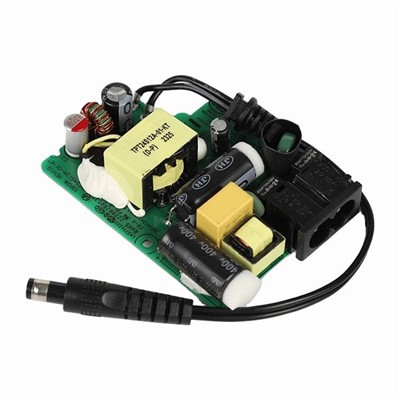

As a supplier of EV Charger 48v, I often get asked about how to check the charging status of a battery with our chargers. In this blog post, I'll share some practical and scientific methods to help you understand the charging process and ensure the safety and efficiency of your battery charging.
Understanding the Basics of a 48V Battery Charging System
Before we dive into the methods of checking the charging status, it's essential to understand the basic components of a 48V battery charging system. A typical 48V battery charging system consists of a 48V battery, an EV Charger 48v, and a connection between them. The charger is designed to convert the AC power from the electrical grid into DC power suitable for charging the battery.
The charging process usually goes through several stages: bulk charging, absorption charging, and float charging. During the bulk charging stage, the charger supplies a high current to quickly charge the battery to about 80 - 90% of its capacity. In the absorption charging stage, the charger reduces the current while maintaining a constant voltage to fully charge the battery. Finally, in the float charging stage, the charger provides a small amount of current to keep the battery fully charged without overcharging it.
Methods to Check the Charging Status
Using the Charger's Indicator Lights
Most of our EV Charger 48v models are equipped with indicator lights that can give you a basic idea of the charging status. These lights usually have different colors and blinking patterns to represent different stages of the charging process.
- Red Light: A steady red light often indicates that the battery is in the bulk charging stage. The charger is supplying a high current to charge the battery, and it may take some time before the battery reaches a higher state of charge.
- Orange or Yellow Light: This might indicate the absorption charging stage. The charger is now reducing the current and working to fully charge the battery.
- Green Light: A green light typically means that the battery is fully charged, and the charger has switched to the float charging mode to maintain the battery's charge.
However, it's important to note that the meaning of these lights can vary depending on the specific model of the charger. Always refer to the user manual for accurate information.
Measuring the Battery Voltage
Another reliable way to check the charging status is to measure the battery voltage. You can use a multimeter to measure the voltage across the battery terminals.
- Bulk Charging Stage: At the beginning of the bulk charging stage, the battery voltage is usually relatively low, around 48 - 50 volts. As the charging progresses, the voltage will gradually increase.
- Absorption Charging Stage: During this stage, the battery voltage will approach the charger's set absorption voltage, which is typically around 54 - 56 volts for a 48V battery.
- Fully Charged: When the battery is fully charged, the voltage will stabilize at the float voltage, which is usually around 52 - 53 volts for a 48V battery.
Keep in mind that the battery voltage can also be affected by factors such as temperature and the battery's state of health. So, it's best to measure the voltage under normal operating conditions and compare it with the expected values.
Monitoring the Charging Current
Monitoring the charging current can also provide valuable information about the charging status. You can use a current meter to measure the current flowing from the charger to the battery.


- Bulk Charging Stage: In the bulk charging stage, the charging current is relatively high. For example, our 100A Battery Charger can supply a high current of up to 100 amps during this stage to quickly charge the battery.
- Absorption and Float Charging Stages: As the battery approaches full charge, the charging current will gradually decrease. During the absorption charging stage, the current will be lower than in the bulk charging stage, and in the float charging stage, the current will be very small, just enough to maintain the battery's charge.
Advanced Monitoring with Smart Chargers
Some of our advanced EV Charger 48v models are equipped with smart charging technology that allows for more detailed monitoring of the charging status. These smart chargers can be connected to a smartphone app or a computer via Bluetooth or Wi - Fi.
- Real - Time Data: Through the app or software, you can access real - time data such as the battery voltage, charging current, state of charge (SOC), and estimated time to full charge. This information can help you better manage the charging process and make informed decisions.
- Historical Data: Smart chargers can also store historical charging data, which can be useful for analyzing the battery's performance over time. You can see patterns in the charging process, identify any potential issues, and take preventive measures.
Importance of Regularly Checking the Charging Status
Regularly checking the charging status of your battery is crucial for several reasons:
- Battery Lifespan: Overcharging or undercharging a battery can significantly reduce its lifespan. By monitoring the charging status, you can ensure that the battery is charged correctly, which will extend its useful life.
- Safety: Incorrect charging can lead to safety hazards such as overheating, short - circuits, or even battery explosions. By keeping an eye on the charging status, you can detect any abnormal conditions early and take appropriate action to prevent accidents.
- Efficiency: Knowing the charging status can help you optimize the charging process. You can avoid leaving the charger connected for longer than necessary, which can save energy and reduce your electricity costs.
Our Product Range for 48V Battery Charging
In addition to our standard EV Charger 48v models, we also offer a range of other chargers that can meet different needs.
- 100A Battery Charger: This high - current charger is suitable for quickly charging large 48V batteries. It can significantly reduce the charging time, making it ideal for applications where fast charging is required.
- 58V Battery Charger: This charger is designed to provide a higher voltage for specific types of 48V batteries that require a higher charging voltage. It can ensure a more efficient and complete charging process.
- Portable Ebike Battery Charger: If you need a charger that is easy to carry around, our portable ebike battery charger is a great option. It's lightweight and compact, making it convenient for charging your ebike's 48V battery on the go.
Contact Us for Purchase and Consultation
If you're interested in our EV Charger 48v products or have any questions about battery charging, we'd love to hear from you. Whether you're a small business owner looking to charge multiple batteries or an individual in need of a reliable charger for your electric vehicle, we have the right solution for you.
Feel free to reach out to us to discuss your specific requirements, and our team of experts will be happy to assist you in finding the best charger for your needs. We can also provide detailed information about our products, pricing, and after - sales service.
References
- Battery University: A comprehensive resource for battery knowledge and charging techniques.
- Charger Manufacturer's User Manuals: These provide detailed information about the specific features and functions of our EV Charger 48v models.