
What is the charging accuracy of an EV Charger 48v?
As a supplier of 48V EV chargers, I've witnessed firsthand the growing demand for reliable and efficient charging solutions in the electric vehicle (EV) market. One of the most critical aspects of any charger is its charging accuracy, which directly impacts the performance, lifespan, and safety of the battery. In this blog post, I'll delve into the concept of charging accuracy for 48V EV chargers, explain why it matters, and discuss the factors that influence it.

Understanding Charging Accuracy
Charging accuracy refers to how precisely a charger can deliver the intended voltage and current to the battery during the charging process. For a 48V EV charger, this means maintaining a consistent output voltage close to 48 volts and controlling the charging current within the specified limits. A high - accuracy charger ensures that the battery is neither under - charged nor over - charged, which is crucial for optimal battery health.
Under - charging occurs when the charger fails to deliver the full amount of energy required to fully charge the battery. This can lead to reduced battery capacity over time, as the battery cells do not reach their maximum state of charge. On the other hand, over - charging can cause excessive heat generation, electrolyte breakdown, and even physical damage to the battery cells, significantly shortening the battery's lifespan and posing a safety risk.
Why Charging Accuracy Matters
- Battery Lifespan: A 48V battery is a significant investment, and its lifespan is directly related to how it is charged. An accurate charger helps to maintain the battery's internal chemistry in a stable state, reducing the rate of degradation. For example, lithium - ion batteries, which are commonly used in EVs, are particularly sensitive to over - charging and under - charging. By providing the correct voltage and current, an accurate charger can extend the battery's useful life by several years.
- Performance: An accurately charged battery can deliver consistent power to the electric vehicle, ensuring smooth acceleration, reliable operation, and maximum range. In contrast, a battery that is not charged correctly may experience voltage drops during use, leading to reduced performance and a shorter driving range.
- Safety: Over - charging can cause the battery to overheat, which may result in thermal runaway, a dangerous condition where the battery temperature rises uncontrollably. This can lead to battery fires or explosions. A charger with high charging accuracy helps to prevent these safety hazards by keeping the charging process within safe limits.
Factors Affecting Charging Accuracy
- Power Supply Stability: The quality of the input power supply can have a significant impact on the charging accuracy of a 48V EV charger. Fluctuations in the mains voltage can cause the charger's output voltage and current to vary, leading to inaccurate charging. To mitigate this, high - quality chargers are equipped with voltage regulation circuits that can compensate for minor power supply variations.
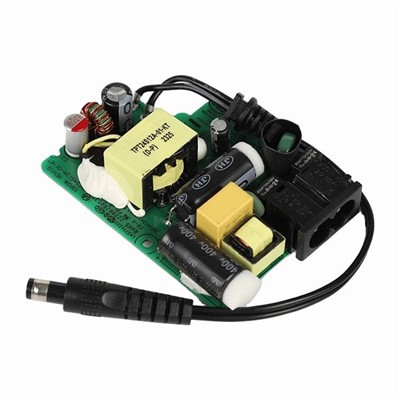
- Charger Design and Components: The internal design of the charger and the quality of its components play a crucial role in determining its charging accuracy. Chargers that use high - precision voltage and current sensors, along with advanced control algorithms, are more likely to provide accurate charging. Additionally, the use of high - quality capacitors, resistors, and other electronic components can help to reduce electrical noise and improve the overall stability of the charger's output.
- Battery Characteristics: Different types of 48V batteries have different charging requirements. For example, lead - acid batteries and lithium - ion batteries have different charging curves, and a charger designed for one type of battery may not be suitable for the other. A good charger should be able to adapt to the specific characteristics of the battery being charged, adjusting the charging voltage and current accordingly.
Our 48V EV Chargers and Charging Accuracy
At our company, we take charging accuracy very seriously. Our 48V EV chargers are designed with the latest technology and high - quality components to ensure precise and reliable charging. We use advanced microcontrollers and sensors to monitor and control the charging process in real - time, adjusting the output voltage and current as needed to match the battery's state of charge.
Our chargers are also equipped with multiple protection mechanisms, such as over - voltage protection, over - current protection, and short - circuit protection, to safeguard the battery and the charger itself. In addition, we offer a range of chargers with different power ratings to meet the diverse needs of our customers, whether they are charging small electric scooters or larger electric vehicles.
If you are looking for a high - quality Electrical Scooter Charger, a 58V Battery Charger, or a 100A Battery Charger, our products are designed to provide accurate and efficient charging.
Conclusion
Charging accuracy is a critical factor in the performance, lifespan, and safety of 48V EV batteries. As a supplier of 48V EV chargers, we are committed to providing our customers with chargers that offer high charging accuracy, reliability, and safety. By understanding the factors that affect charging accuracy and investing in high - quality chargers, EV owners can ensure that their batteries are charged correctly, maximizing their performance and longevity.
If you are interested in learning more about our 48V EV chargers or would like to discuss your specific charging needs, we invite you to contact us for a procurement negotiation. Our team of experts is ready to assist you in finding the best charging solution for your electric vehicle.
References
- Linden, D., & Reddy, T. B. (2002). Handbook of Batteries. McGraw - Hill.
- Pistoia, G. (2010). Lithium - ion Batteries: Advances and Applications. Elsevier.