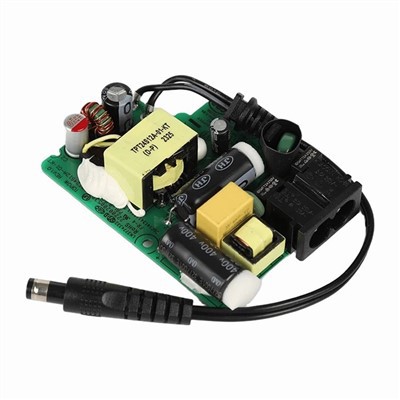

Hey there! As a supplier of AC adapters for PCs, I've been getting a lot of questions about the heat dissipation design of these adapters. So, I thought I'd write this blog to share some insights on what goes into the heat dissipation design of an AC adapter for PCs.
First off, why is heat dissipation so important for an AC adapter? Well, when an AC adapter is converting AC power from the wall outlet to DC power that your PC can use, it generates heat. If this heat isn't dissipated properly, it can cause a bunch of problems. For one, it can reduce the efficiency of the adapter. That means it'll use more power to do the same job, which isn't great for your electricity bill. Plus, excessive heat can shorten the lifespan of the adapter and even damage the internal components.
One of the most common ways to dissipate heat in an AC adapter is through the use of heat sinks. A heat sink is basically a piece of metal, usually aluminum, that's designed to absorb and transfer heat away from the components that are generating it. The heat sink has a large surface area, which allows it to radiate the heat into the surrounding air more effectively.
Let's take a look at how heat sinks work in an AC adapter. Inside the adapter, there are components like transformers and power transistors that generate a lot of heat. These components are usually attached to the heat sink using a thermal compound. The thermal compound helps to improve the thermal conductivity between the component and the heat sink, ensuring that the heat is transferred efficiently.
Once the heat is transferred to the heat sink, it starts to radiate into the air. To enhance this process, some heat sinks have fins. These fins increase the surface area of the heat sink, which means more heat can be radiated away. Think of it like a radiator in a car. The more fins it has, the better it can cool the engine.
Another important aspect of heat dissipation design is ventilation. Most AC adapters have small vents or holes in their casing. These vents allow air to flow in and out of the adapter, carrying away the heat. The design of these vents is crucial. They need to be placed in a way that promotes natural convection. Natural convection is the process where warm air rises and cool air moves in to replace it.
For example, if the vents are placed at the bottom and the top of the adapter, the warm air inside the adapter will rise and escape through the top vents, while cool air will be drawn in through the bottom vents. This creates a continuous flow of air, which helps to keep the adapter cool.
Now, let's talk about the materials used in the casing of the AC adapter. The casing plays a role in heat dissipation too. Some adapters use plastic casings, which are lightweight and inexpensive. However, plastic isn't a very good conductor of heat. So, if the adapter generates a lot of heat, a plastic casing might not be the best choice.
On the other hand, some adapters use metal casings. Metal is a better conductor of heat than plastic, so it can help to transfer the heat from the inside of the adapter to the outside more effectively. But metal casings also have their drawbacks. They're heavier and more expensive than plastic casings, and they can also be a safety hazard if they're not properly insulated.
At our company, we offer a range of AC adapters for PCs with different heat dissipation designs to meet the needs of our customers. For example, our 24w Power Adapter is designed for low-power PCs and has a simple yet effective heat dissipation system. It uses a small heat sink and has well-placed vents to ensure proper ventilation.
If you have a more powerful PC, you might be interested in our 50w Power Adapter. This adapter generates more heat, so it has a larger heat sink with more fins and a more advanced ventilation design.
We also have the Wifi Router Power Adapter, which is designed specifically for wifi routers. These routers often need a stable power supply, and proper heat dissipation is essential to ensure their reliability.
When it comes to choosing an AC adapter for your PC, it's important to consider the heat dissipation design. A well-designed adapter will not only last longer but also perform better. If you're not sure which adapter is right for you, feel free to reach out to us. We have a team of experts who can help you choose the best adapter for your needs.
In addition to the heat sink and ventilation, some advanced AC adapters also use fans for heat dissipation. Fans can provide forced air cooling, which is much more effective than natural convection. However, fans also have some disadvantages. They can be noisy, and they consume a small amount of power themselves. So, they're usually only used in high-power adapters where the heat generation is significant.
The placement of the fan is also important. It needs to be positioned in a way that it can blow air directly over the heat sink and the components that are generating the heat. Some adapters have a fan at the bottom, while others have it at the side. The choice of fan placement depends on the overall design of the adapter and the layout of the internal components.
We're constantly working on improving our heat dissipation designs. We use the latest technologies and materials to make our adapters more efficient and reliable. We also conduct rigorous testing to ensure that our adapters can withstand different environmental conditions and usage scenarios.
If you're in the market for an AC adapter for your PC, don't just focus on the power output and the price. Pay attention to the heat dissipation design too. A good heat dissipation design can make a big difference in the performance and lifespan of your adapter.
If you have any questions or if you're interested in purchasing our AC adapters, please don't hesitate to contact us. We're always happy to help you find the right solution for your power needs. We can also provide you with more detailed information about the heat dissipation design of our adapters and how it can benefit your PC.


References
- Electronics Cooling Handbook, McGraw - Hill
- Power Electronics: Converters, Applications, and Design, John Wiley & Sons