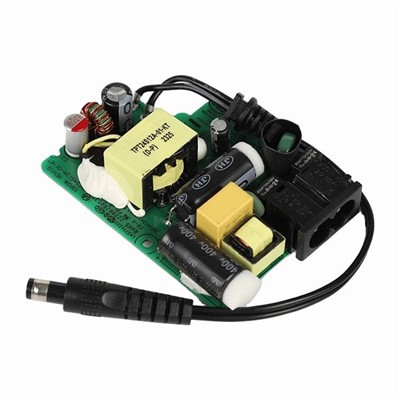

The output current capacity of a dual rail power supply is a critical parameter that significantly influences its performance and suitability for various applications. As a leading supplier of dual rail power supplies, we understand the importance of this specification and are committed to providing high - quality products with optimized current capacities.
Understanding Dual Rail Power Supplies
A dual rail power supply is designed to provide two different voltage outputs, typically a positive and a negative voltage relative to a common ground. This configuration is essential in many electronic circuits, especially those that require both positive and negative power sources to operate correctly. For example, in audio amplifiers, dual rail power supplies are used to bias the amplifier stages, allowing for accurate reproduction of both positive and negative halves of an audio signal.
Factors Affecting Output Current Capacity
-
Component Design and Quality
The components used in a dual rail power supply play a crucial role in determining its output current capacity. High - quality transistors, diodes, and capacitors can handle larger currents without overheating or experiencing significant voltage drops. Our Heavy - Duty Switching Power Module is engineered with top - grade components, enabling it to deliver a high and stable output current. The design of the power supply's circuitry also matters. A well - designed circuit layout can minimize resistance and inductance, which in turn reduces power losses and allows for more efficient current delivery. -
Thermal Management
Heat is a major enemy of power supplies. As the output current increases, so does the power dissipation within the power supply, leading to higher temperatures. Effective thermal management is essential to maintain the output current capacity and prevent component failure. Our power supplies are equipped with advanced heat sinks and cooling fans, which help to dissipate heat quickly and efficiently. This ensures that the power supply can operate at its maximum current capacity for extended periods without overheating. -
Power Rating
The power rating of a dual rail power supply is directly related to its output current capacity. A higher power - rated power supply can generally provide a larger output current. For instance, our 250W Dual Output Power Module is capable of delivering a substantial output current due to its relatively high power rating. However, it's important to note that the output current capacity is also affected by the voltage levels of the two rails. According to the power formula (P = VI) (where (P) is power, (V) is voltage, and (I) is current), for a given power rating, a lower voltage rail can provide a higher output current.
Measuring Output Current Capacity
The output current capacity of a dual rail power supply is typically specified by the manufacturer. It is usually given as the maximum continuous current that each rail can supply under normal operating conditions. To measure the actual output current, a current - measuring device such as an ammeter can be used. When measuring, it's important to ensure that the power supply is operating within its specified temperature and load conditions.
Applications and Output Current Requirements
-
Telecommunications
In the telecommunications industry, dual rail power supplies are widely used to power various equipment such as base stations and network switches. Our Telecom PSU is specifically designed to meet the demanding requirements of this industry. Telecommunication equipment often requires a stable and reliable power supply with a relatively high output current capacity to support the operation of multiple components. For example, a base station may need to power multiple radio frequency modules, which require a significant amount of current to transmit and receive signals effectively. -
Audio Equipment
Audio amplifiers, mixers, and other audio equipment rely on dual rail power supplies to provide the necessary power for signal processing and amplification. The output current capacity requirements for audio equipment vary depending on the power rating of the amplifier. High - power audio amplifiers, such as those used in large concert venues, require a dual rail power supply with a large output current capacity to drive the speakers and produce high - quality sound.

-
Test and Measurement Instruments
Test and measurement instruments, such as oscilloscopes and signal generators, also use dual rail power supplies. These instruments need a precise and stable power supply to ensure accurate measurements. The output current capacity requirements for test and measurement instruments are usually lower compared to other applications, but the stability and accuracy of the power supply are of utmost importance.
Matching the Output Current Capacity to Your Needs
When selecting a dual rail power supply, it's crucial to match the output current capacity to your specific application requirements. If the output current capacity is too low, the power supply may not be able to provide enough power for your equipment to operate correctly, leading to performance issues or even component damage. On the other hand, if the output current capacity is too high, you may end up paying for a more expensive power supply than you actually need.
To determine the appropriate output current capacity, you need to consider the power requirements of your equipment. Calculate the total power consumption of all the components that will be powered by the dual rail power supply, and then use the power formula (P = VI) to estimate the required output current for each rail. It's also a good idea to add a safety margin to account for any potential power surges or fluctuations.
Conclusion
The output current capacity of a dual rail power supply is a vital specification that determines its performance and suitability for different applications. At our company, we offer a wide range of dual rail power supplies with various output current capacities to meet the diverse needs of our customers. Whether you are in the telecommunications, audio, or test and measurement industry, we have the right power supply for you.
If you are interested in learning more about our dual rail power supplies or have specific requirements for your application, we encourage you to contact us for a detailed discussion. Our team of experts is ready to assist you in selecting the most suitable power supply and providing you with the best possible solution.
References
- Horowitz, P., & Hill, W. (1989). The Art of Electronics. Cambridge University Press.
- Floyd, T. L. (2010). Principles of Electric Circuits: Conventional Current Version. Pearson.