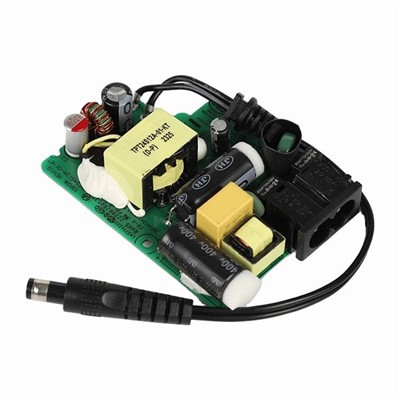

The power factor of an LED driver power board is a crucial parameter that significantly impacts the efficiency and performance of LED lighting systems. As a leading supplier of LED Driver Power Boards, I've witnessed firsthand the importance of understanding this concept for both manufacturers and end - users.
Understanding Power Factor
Power factor (PF) is a measure of how effectively electrical power is being used in an AC (alternating current) circuit. In an ideal world, all the electrical power supplied to a device would be used for useful work. However, in real - world scenarios, due to the presence of reactive components such as inductors and capacitors in electrical circuits, some of the power is wasted.
The power factor is defined as the ratio of real power (P), which is the power that actually does useful work (like lighting up an LED), to apparent power (S). Apparent power is the product of the voltage (V) and current (I) in an AC circuit, i.e., (S = V\times I). Real power is given by (P=V\times I\times\cos\varphi), where (\varphi) is the phase angle between the voltage and current waveforms. So, the power factor (PF=\frac{P}{S}=\cos\varphi).
A power factor of 1 (or 100%) means that all the electrical power supplied to the device is being used for useful work, and there is no reactive power. On the other hand, a power factor less than 1 indicates that some of the power is being wasted in the form of reactive power.
Why Power Factor Matters in LED Driver Power Boards
Energy Efficiency
LED lighting is known for its energy - saving capabilities. However, if the power factor of the LED driver power board is low, a significant amount of electrical energy is wasted. This not only increases the electricity bill for the end - user but also goes against the goal of energy conservation. For large - scale lighting installations such as in commercial buildings or streetlights, a low power factor can result in substantial energy losses over time.
Power Grid Impact
When a large number of devices with low power factor are connected to the power grid, they can cause problems for the grid operators. Low - power - factor devices draw more current from the grid than necessary for the amount of real power they consume. This increased current can lead to voltage drops, overheating of transformers and transmission lines, and reduced overall efficiency of the power grid. Utilities often charge industrial and commercial customers based on their power factor, so having a high - power - factor LED driver power board can help customers avoid additional charges.
Compliance with Standards
Many countries and regions have established standards and regulations regarding the power factor of electrical devices, including LED lighting products. For example, in the European Union, the ErP (Energy - related Products) Directive sets requirements for the power factor of LED drivers. To ensure market access and compliance, LED driver power board manufacturers need to design and produce boards with a high power factor.
Factors Affecting the Power Factor of LED Driver Power Boards
Circuit Design
The circuit topology of the LED driver power board plays a crucial role in determining its power factor. There are different types of LED driver circuits, such as non - isolated and isolated topologies. Some circuits, like the boost PFC (Power Factor Correction) circuit, are specifically designed to improve the power factor. The boost PFC circuit works by adjusting the current waveform to be in phase with the voltage waveform, thereby increasing the power factor.
Component Selection
The choice of components in the LED driver power board also affects the power factor. For example, the quality and characteristics of the capacitors and inductors used in the circuit can impact the phase relationship between the voltage and current. High - quality components with low equivalent series resistance (ESR) and appropriate capacitance and inductance values can help improve the power factor.
Load Characteristics
The load connected to the LED driver power board, i.e., the LEDs themselves, can also influence the power factor. Different types of LEDs have different electrical characteristics, and the number and arrangement of LEDs in the lighting fixture can affect the overall load on the driver. For example, if the LEDs have a non - linear load characteristic, it can make it more challenging to achieve a high power factor.
Improving the Power Factor of LED Driver Power Boards
Power Factor Correction (PFC)
As mentioned earlier, PFC circuits are commonly used to improve the power factor of LED driver power boards. There are two main types of PFC: passive PFC and active PFC.
Passive PFC uses passive components such as inductors and capacitors to correct the power factor. It is relatively simple and inexpensive but can only achieve a moderate improvement in the power factor, typically up to around 0.9. Active PFC, on the other hand, uses active components such as transistors and control circuits to adjust the current waveform. Active PFC can achieve a power factor close to 1 (up to 0.99) and is more suitable for high - performance LED driver power boards.
Advanced Circuit Topologies
Manufacturers are constantly researching and developing new circuit topologies to improve the power factor of LED driver power boards. For example, some new topologies combine multiple functions such as power factor correction, voltage regulation, and current control in a single circuit, resulting in more compact and efficient LED drivers.
Our LED Driver Power Board Offerings
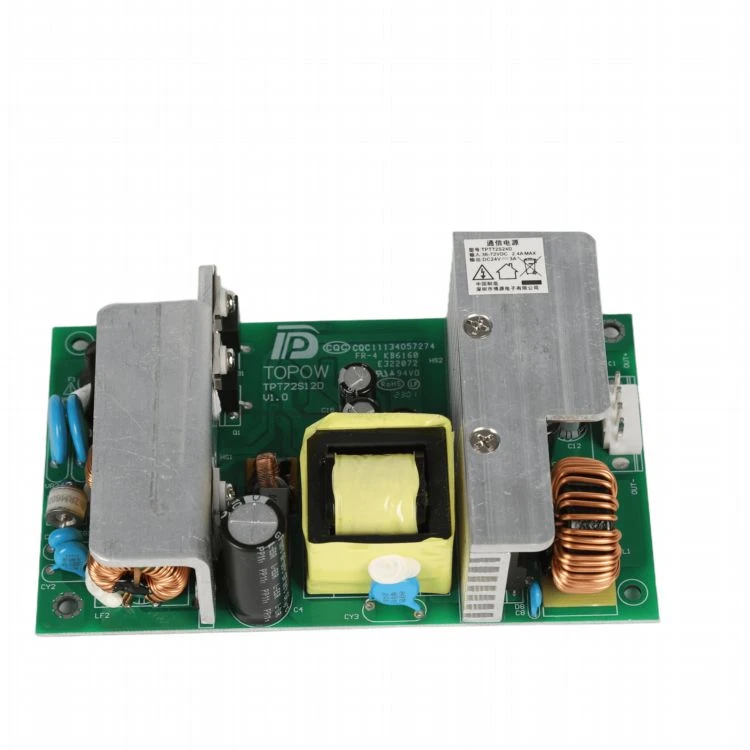
As a supplier of LED Driver Power Boards, we offer a wide range of products with high power factor. Our boards are designed with the latest circuit topologies and use high - quality components to ensure excellent power factor performance.
We have Regulated Switching Power Module that provides stable output voltage and high power factor. These modules are suitable for various LED lighting applications, from small - scale residential lighting to large - scale commercial installations.
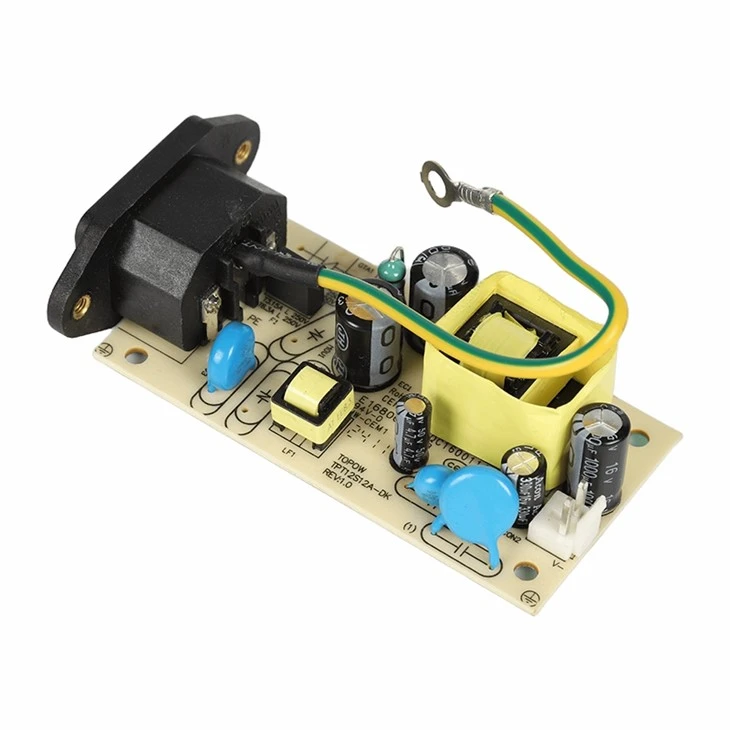
Our 12V3A Bare Board is another popular product. It is designed for easy integration into different LED lighting fixtures and offers a high power factor, ensuring energy - efficient operation.
We also offer AC - DC Switching Power Supply with advanced power factor correction technology. These power supplies are capable of converting AC power from the mains into DC power suitable for LEDs while maintaining a high power factor.
Conclusion
The power factor of an LED driver power board is a critical parameter that affects energy efficiency, power grid impact, and compliance with standards. As an LED Driver Power Board supplier, we understand the importance of providing products with high power factor. Our commitment is to offer innovative and high - quality LED driver power boards that meet the needs of our customers and contribute to a more energy - efficient and sustainable future.
If you are interested in our LED driver power boards or have any questions about power factor and LED lighting, please feel free to contact us for procurement and further discussion. We are ready to provide you with the best solutions for your LED lighting projects.
References
- National Electrical Manufacturers Association (NEMA). "Power Factor Basics."
- International Electrotechnical Commission (IEC). "Standards for LED Lighting Products."
- ErP (Energy - related Products) Directive, European Union.