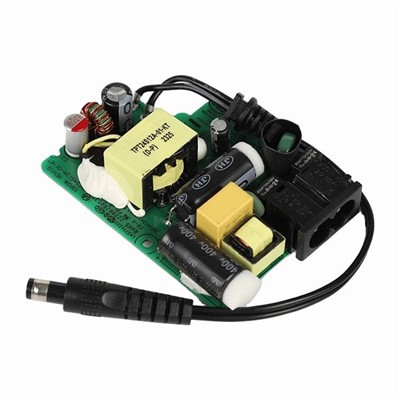

As a supplier of 58V battery chargers, I often receive inquiries from customers regarding the compatibility of our chargers with batteries that have high internal resistance. This topic is not only relevant to our product offerings but also crucial for understanding the intricacies of battery charging. In this blog post, I will delve into the question: Can a 58V battery charger charge a battery with a high internal resistance?
Understanding Internal Resistance in Batteries
Before we explore the compatibility of a 58V battery charger with high - resistance batteries, it's essential to understand what internal resistance is. Internal resistance is an inherent property of a battery that represents the opposition to the flow of electric current within the battery itself. It is caused by various factors such as the chemical composition of the battery, the design of its electrodes, and the state of charge.

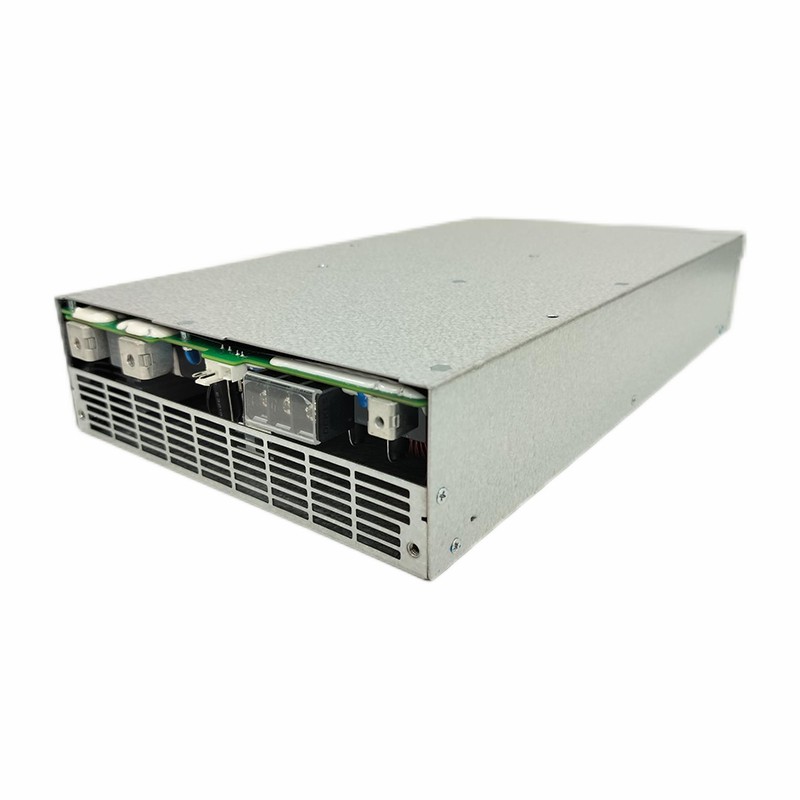
A battery with high internal resistance can pose several challenges. When current flows through a battery with high internal resistance, a significant amount of energy is dissipated as heat according to the formula (P = I^{2}R), where (P) is the power dissipated, (I) is the current, and (R) is the internal resistance. This heat generation can lead to a decrease in battery efficiency, reduced lifespan, and in extreme cases, can even cause safety hazards such as overheating and thermal runaway.
How a 58V Battery Charger Works
Our 58V Battery Charger is designed to provide a regulated voltage of 58V to charge compatible batteries. The charger typically goes through several stages during the charging process. Initially, it may supply a constant current to the battery to quickly bring it to a certain state of charge. As the battery voltage approaches the charger's output voltage, the charger switches to a constant - voltage mode to prevent overcharging.
The charger also incorporates various safety features such as over - current protection, over - voltage protection, and temperature monitoring. These features are designed to ensure that the charging process is safe and efficient, regardless of the battery's condition.
Charging a Battery with High Internal Resistance
When it comes to charging a battery with high internal resistance using a 58V battery charger, several factors need to be considered.
Voltage and Current Limitations
A 58V battery charger is designed to provide a specific voltage output. If the battery has a high internal resistance, the charger may struggle to deliver the necessary current to charge the battery effectively. According to Ohm's law (V = IR), where (V) is the voltage, (I) is the current, and (R) is the resistance. For a given voltage (V) from the charger, a high internal resistance (R) will result in a lower current (I).
In some cases, the charger may be able to supply a limited amount of current, but the charging process will be extremely slow. The charger may also detect an abnormal charging condition due to the high resistance and may shut down or enter a protective mode to prevent damage to the charger or the battery.
Heat Generation
As mentioned earlier, charging a battery with high internal resistance can lead to significant heat generation. The 58V battery charger's temperature monitoring system may detect this excessive heat and reduce the charging current or even stop the charging process altogether. This is a safety mechanism to prevent the battery from overheating, which could lead to a fire or explosion.
Battery Compatibility
Not all batteries with high internal resistance are suitable for charging with a 58V battery charger. Some batteries may have a specific charging profile that requires a different voltage or current regime. For example, certain types of lithium - ion batteries with high internal resistance may require a charger with a more sophisticated charging algorithm to ensure safe and efficient charging.
Potential Solutions
If you have a battery with high internal resistance and want to use our 58V battery charger, there are a few potential solutions.
Pre - conditioning the Battery
One approach is to pre - condition the battery to reduce its internal resistance. This can be done by performing a series of slow charge - discharge cycles. By slowly charging and discharging the battery, you can help to improve the battery's internal chemistry and reduce the resistance. However, this process can be time - consuming and may not be effective for all types of batteries.
Using a Higher - Current Charger
In some cases, using a 100A Battery Charger may be a viable option. A higher - current charger can potentially overcome the high internal resistance of the battery and deliver a sufficient amount of current to charge the battery more quickly. However, it's important to note that using a higher - current charger also increases the risk of overheating and other safety issues, so it should be done with caution.
Real - World Applications
In the context of electric vehicles, batteries with high internal resistance can be a common problem. For example, older EV batteries or batteries that have been subjected to extreme temperatures may develop high internal resistance over time. Our EV Charger 48v and 58V battery chargers are often used in EV charging applications. However, when dealing with high - resistance batteries, it's crucial to follow the appropriate charging procedures to ensure the safety and longevity of the battery.
Conclusion
In conclusion, while a 58V battery charger can technically attempt to charge a battery with high internal resistance, there are significant challenges and limitations. The charger may struggle to deliver the necessary current, and the charging process may be slow, inefficient, and potentially unsafe due to heat generation.
If you are facing issues with charging a battery with high internal resistance, we recommend consulting with our technical support team. Our experts can provide you with personalized advice based on your specific battery type and charging requirements.
Whether you are in the market for a reliable 58V battery charger or need assistance with charging high - resistance batteries, we are here to help. Contact us today to discuss your procurement needs and let us find the best charging solution for you.
References
- Battery Technology Handbook, John Wiley & Sons
- Electrical Engineering Principles, Pearson Education
- Journal of Power Sources, various issues on battery charging and internal resistance