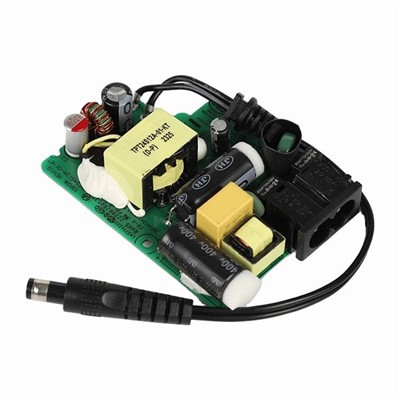

As a supplier of 58V battery chargers, I've witnessed firsthand the critical role these chargers play in powering various devices. The charging process of a 58V battery charger is a complex yet fascinating interplay of technology and engineering. In this blog, I'll delve into the intricacies of how a 58V battery charger controls the charging process, shedding light on the mechanisms that ensure safe, efficient, and reliable charging.
Understanding the Basics of Battery Charging
Before we dive into the specifics of a 58V battery charger, it's essential to understand the fundamental principles of battery charging. Batteries store electrical energy through a chemical reaction, and the charging process involves reversing this reaction to replenish the battery's energy. However, charging a battery is not as simple as connecting it to a power source. Overcharging can lead to battery damage, reduced lifespan, and even safety hazards, while undercharging can result in insufficient battery capacity.
To prevent these issues, a battery charger must carefully control the charging process, adjusting the voltage and current based on the battery's state of charge, temperature, and other factors. This is where the advanced control systems in a 58V battery charger come into play.
The Charging Stages of a 58V Battery Charger
A typical 58V battery charger employs a multi - stage charging process to optimize the charging of the battery. These stages are designed to provide the right amount of energy at the right time, ensuring the battery is charged safely and efficiently.
1. Constant - Current (CC) Stage
The charging process usually begins with the constant - current stage. In this stage, the charger supplies a fixed current to the battery, regardless of the battery's voltage. This is important because when the battery is deeply discharged, it can accept a relatively high current without overheating or suffering damage.
The charger's control system monitors the charging current and adjusts the output voltage to maintain a constant current flow. As the battery charges, its voltage gradually increases. Once the battery voltage reaches a predefined level, the charger transitions to the next stage.
2. Constant - Voltage (CV) Stage
After the constant - current stage, the charger switches to the constant - voltage stage. In this stage, the charger maintains a constant output voltage while gradually reducing the charging current. As the battery approaches full charge, its internal resistance increases, causing the charging current to decrease naturally.
The constant - voltage stage is crucial for preventing overcharging. By keeping the voltage constant, the charger ensures that the battery does not receive too much energy, which could lead to overheating and damage. The charger continues to supply a decreasing current until the charging current drops below a certain threshold, indicating that the battery is fully charged.
3. Trickle Charge Stage
Once the battery is fully charged, the charger may enter the trickle charge stage. This stage provides a small, continuous current to the battery to compensate for self - discharge and keep the battery at its full capacity. The trickle charge current is typically very low, just enough to maintain the battery's charge without causing any harm.
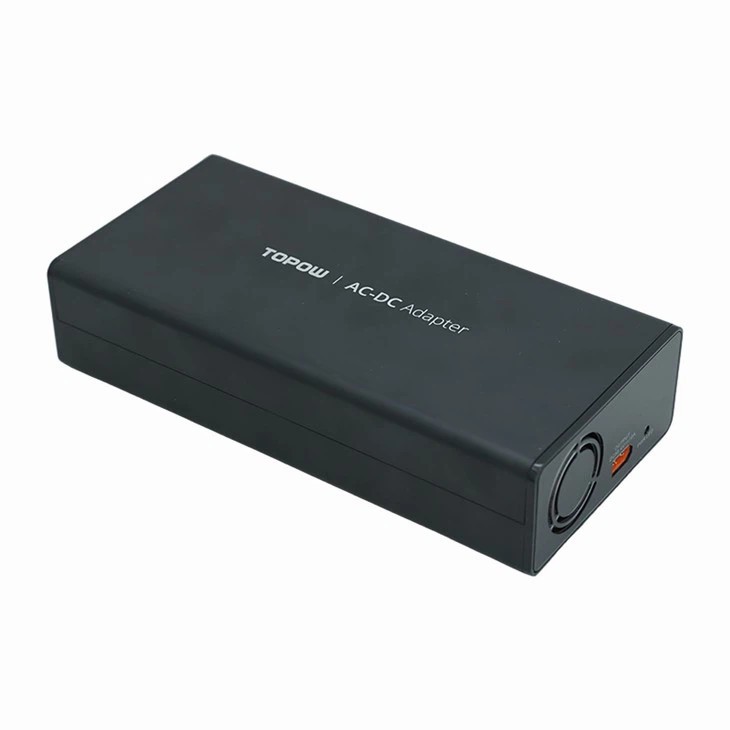

Control Systems in a 58V Battery Charger
To implement these charging stages effectively, a 58V battery charger relies on several control systems.
Microcontroller - Based Control
Modern 58V battery chargers often use a microcontroller as the central control unit. The microcontroller is programmed to monitor various parameters such as battery voltage, charging current, and temperature. It uses this information to make real - time decisions about the charging process, such as when to switch between charging stages.
For example, if the battery temperature exceeds a safe limit during charging, the microcontroller can reduce the charging current or even stop the charging process to prevent damage to the battery. Similarly, if the battery voltage reaches the upper limit during the constant - voltage stage, the microcontroller can adjust the output voltage to maintain a safe charging environment.
Feedback Loops
Feedback loops are another essential component of the control system in a 58V battery charger. A feedback loop is a mechanism that continuously compares the actual output of the charger (such as voltage or current) with a desired setpoint. If there is a difference between the actual output and the setpoint, the feedback loop adjusts the charger's operation to correct the error.
For instance, in the constant - current stage, the charger uses a current feedback loop to ensure that the charging current remains constant. The current sensor measures the actual charging current, and the feedback loop adjusts the output voltage of the charger to keep the current at the desired level.
Safety Features in a 58V Battery Charger
In addition to controlling the charging process, a 58V battery charger is equipped with several safety features to protect the battery and the user.
Over - Voltage Protection
Over - voltage protection is designed to prevent the battery from being exposed to a voltage higher than its rated voltage. If the charger's output voltage exceeds a safe limit, the over - voltage protection circuit will automatically shut off the charger or reduce the output voltage to a safe level.
Over - Current Protection
Over - current protection safeguards the battery and the charger from excessive current flow. If the charging current exceeds a predefined limit, the over - current protection circuit will limit the current or stop the charging process to prevent overheating and damage.
Short - Circuit Protection
Short - circuit protection is essential to prevent damage to the charger and the battery in case of a short - circuit. When a short - circuit occurs, the short - circuit protection circuit quickly detects the abnormal current flow and shuts off the charger to prevent further damage.
Applications of 58V Battery Chargers
58V battery chargers are used in a wide range of applications. One of the most common applications is in Electrical Scooter Charger. Electric scooters often use 58V batteries, and a reliable charger is essential to ensure the proper functioning and longevity of the battery.
Another application is in some industrial equipment that requires a 58V power source. These chargers can provide a stable and efficient charging solution for the batteries used in such equipment.
Our 58V Battery Charger Offerings
As a supplier, we offer a range of high - quality 58V Battery Charger products. Our chargers are designed with the latest technology and safety features to ensure optimal charging performance. We also provide 100A Battery Charger options for applications that require a higher charging current.
If you're in the market for a reliable 58V battery charger, we'd love to have a conversation with you. Whether you're a manufacturer of electric scooters, an industrial equipment provider, or simply looking for a charger for your personal use, our team of experts can help you find the right solution for your needs. Contact us today to start the procurement discussion and take advantage of our high - quality charging products.
References
- Linden, D., & Reddy, T. B. (2002). Handbook of Batteries. McGraw - Hill.
- Kuo, B. C. (2002). Automatic Control Systems. Prentice Hall.