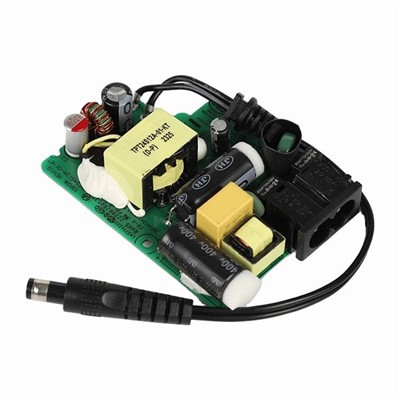

As a reputable supplier of 58V battery chargers, I've witnessed firsthand the critical role these chargers play in various applications, from electric vehicles to industrial equipment. One of the most common questions I encounter is how a 58V battery charger can effectively handle different battery capacities. In this blog post, I'll delve into the technical aspects of this process, exploring the mechanisms and technologies that enable our chargers to adapt to a wide range of battery sizes.
Understanding Battery Capacity
Before we dive into the details of how a 58V battery charger works with different battery capacities, it's essential to understand what battery capacity means. Battery capacity is typically measured in ampere-hours (Ah) or milliampere-hours (mAh). It represents the amount of charge a battery can store and deliver over a specific period. For example, a 10Ah battery can theoretically supply a current of 1 ampere for 10 hours or 10 amperes for 1 hour.
The Challenge of Different Battery Capacities
When it comes to charging batteries, one size does not fit all. Different battery capacities require different charging currents and charging times. Overcharging a battery can lead to reduced battery life, overheating, and even safety hazards. On the other hand, undercharging a battery can result in incomplete charging, reducing the battery's performance and runtime.
How Our 58V Battery Chargers Adapt
Our 58V battery chargers are designed with advanced charging algorithms and intelligent control systems that allow them to adapt to different battery capacities effectively. Here's how:
Constant Current Charging
In the initial stage of charging, our chargers use a constant current charging method. The charger supplies a fixed current to the battery, regardless of its capacity. This current is carefully selected to ensure that the battery charges safely and efficiently. For smaller capacity batteries, the constant current charging stage may be relatively short, while for larger capacity batteries, it may take longer.
Constant Voltage Charging
Once the battery reaches a certain voltage level, the charger switches to the constant voltage charging mode. In this mode, the charger maintains a constant voltage across the battery terminals while gradually reducing the charging current. This helps to prevent overcharging and ensures that the battery is fully charged without causing any damage.
Adaptive Charging Algorithms
Our chargers are equipped with adaptive charging algorithms that continuously monitor the battery's voltage, current, and temperature. Based on this information, the charger adjusts the charging parameters in real-time to optimize the charging process. For example, if the battery temperature rises too high, the charger may reduce the charging current to prevent overheating.
Battery Capacity Detection
Some of our advanced chargers are capable of detecting the battery's capacity automatically. This allows the charger to adjust the charging parameters even more accurately, ensuring that the battery is charged safely and efficiently.
Benefits of Our 58V Battery Chargers
By using our 58V battery chargers, customers can enjoy several benefits:
Extended Battery Life
Our chargers' intelligent charging algorithms help to prevent overcharging and undercharging, which can significantly extend the battery's lifespan. This means that customers can get more use out of their batteries and save money in the long run.
Fast and Efficient Charging
Our chargers are designed to charge batteries quickly and efficiently, reducing downtime and increasing productivity. Whether you're charging a small battery for a portable device or a large battery for an electric vehicle, our chargers can get the job done in a timely manner.
Safety and Reliability
Safety is our top priority. Our chargers are equipped with multiple safety features, such as overcurrent protection, overvoltage protection, and short-circuit protection, to ensure that the charging process is safe and reliable.
Applications of Our 58V Battery Chargers
Our 58V battery chargers are suitable for a wide range of applications, including:
Electric Vehicles
With the increasing popularity of electric vehicles, our 58V battery chargers are an ideal choice for charging electric vehicle batteries. Whether you're charging a small electric scooter or a large electric car, our chargers can provide a fast and efficient charging solution.
Industrial Equipment
Many industrial equipment, such as forklifts, pallet jacks, and floor scrubbers, use 58V batteries. Our chargers can be used to charge these batteries, ensuring that the equipment is always ready for use.
Renewable Energy Systems
In renewable energy systems, such as solar power systems and wind power systems, 58V batteries are often used to store energy. Our chargers can be used to charge these batteries, helping to ensure that the energy stored in the batteries is used efficiently.
Conclusion
In conclusion, our 58V battery chargers are designed to handle different battery capacities effectively. By using advanced charging algorithms and intelligent control systems, our chargers can adapt to the specific needs of each battery, ensuring that it is charged safely, efficiently, and quickly. Whether you're a manufacturer of electric vehicles, industrial equipment, or renewable energy systems, or you're an individual looking for a reliable battery charger, our 58V battery chargers are the perfect choice.


If you're interested in learning more about our 58V battery chargers or would like to discuss your specific charging needs, please don't hesitate to contact us. We're always happy to help you find the right charging solution for your application.
References
- Battery Charging Basics, Battery University
- Charging Strategies for Lithium-Ion Batteries, IEEE Transactions on Industrial Electronics