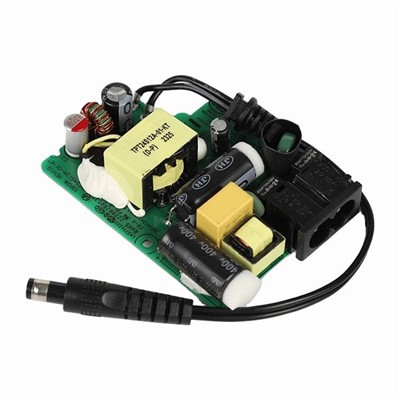

As a supplier of Telecom PSUs (Power Supply Units), I've witnessed firsthand the transformative impact of intelligent control technology on our industry. In this blog, I'll explore how intelligent control technology is revolutionizing Telecom PSUs, enhancing their performance, efficiency, and reliability.
1. Understanding Telecom PSUs
Telecom PSUs are critical components in telecommunications systems, providing the necessary power to ensure the smooth operation of various devices such as routers, switches, and base stations. A reliable and efficient power supply is essential for maintaining uninterrupted communication services. Our company offers a range of high - quality Telecom PSU products designed to meet the diverse needs of the telecommunications industry.
2. Basics of Intelligent Control Technology
Intelligent control technology encompasses a set of advanced algorithms and systems that enable PSUs to adapt to changing conditions, optimize performance, and self - diagnose issues. It often involves the use of microcontrollers, sensors, and communication interfaces to monitor and manage the power supply in real - time.
2.1 Adaptive Voltage Regulation
One of the key features of intelligent control technology is adaptive voltage regulation. Traditional PSUs typically provide a fixed output voltage, which may not be optimal for all operating conditions. With intelligent control, the PSU can adjust the output voltage based on the load requirements. For example, when the load is light, the PSU can reduce the output voltage to save energy. Conversely, when the load increases, it can quickly boost the voltage to ensure stable power delivery. Our 250W Dual Output Power Module is equipped with this intelligent adaptive voltage regulation technology, which significantly improves energy efficiency and reduces power consumption.
2.2 Load Balancing
In telecommunications systems, multiple devices may be powered by a single PSU or a group of PSUs. Intelligent control technology enables load balancing among different power sources. By continuously monitoring the load on each power supply, the system can distribute the load evenly, preventing overloading of individual PSUs. This not only extends the lifespan of the PSUs but also enhances the overall reliability of the power supply system. Our Dual Channel Industrial Power Board is designed with intelligent load - balancing capabilities, ensuring stable and efficient power distribution.
3. Enhanced Monitoring and Diagnosis
Intelligent control technology allows for comprehensive monitoring and diagnosis of the PSU's performance.
3.1 Real - Time Monitoring
Sensors integrated into the PSU can collect data on various parameters such as voltage, current, temperature, and power consumption. This data is then transmitted to a monitoring system, where it can be analyzed in real - time. Operators can access this information remotely, enabling them to monitor the health of the PSU from anywhere. For example, if the temperature of the PSU exceeds a certain threshold, an alarm can be triggered, alerting the operators to take preventive measures.
3.2 Fault Diagnosis
In addition to real - time monitoring, intelligent control technology can perform fault diagnosis. By analyzing the collected data, the system can detect potential faults early and provide detailed diagnostic information. This helps in quickly identifying and resolving issues, reducing downtime and maintenance costs. For instance, if a short - circuit is detected, the PSU can automatically shut down to prevent damage to other components, and the diagnostic system can pinpoint the exact location of the fault.


4. Improved System Integration
Intelligent control technology facilitates seamless integration of Telecom PSUs into larger telecommunications systems.
4.1 Communication Protocols
Modern PSUs with intelligent control are often equipped with communication interfaces such as Modbus, CAN bus, or Ethernet. These interfaces allow the PSU to communicate with other devices in the system, such as network management systems or remote monitoring stations. Through these communication protocols, the PSU can receive control commands and transmit status information, enabling centralized control and management of the power supply system.
4.2 Compatibility with Smart Grids
As the demand for energy - efficient and sustainable power solutions grows, Telecom PSUs need to be compatible with smart grids. Intelligent control technology enables PSUs to interact with the smart grid, adjusting their power consumption based on the grid's requirements. For example, during peak demand periods, the PSU can reduce its power consumption to support the stability of the grid.
5. Energy Efficiency and Sustainability
In today's world, energy efficiency and sustainability are of utmost importance. Intelligent control technology plays a crucial role in achieving these goals for Telecom PSUs.
5.1 Power Factor Correction (PFC)
Intelligent PSUs are often equipped with advanced power factor correction technology. A high power factor means that the PSU can convert the input power more efficiently, reducing the amount of reactive power and minimizing energy losses. This not only saves energy but also reduces the strain on the electrical infrastructure.
5.2 Energy - Saving Modes
Intelligent control allows the PSU to enter energy - saving modes when the load is low. For example, the PSU can reduce its standby power consumption or adjust its operating frequency to optimize energy use. These energy - saving features contribute to a more sustainable and environmentally friendly power supply solution.
6. Future Trends
The development of intelligent control technology for Telecom PSUs is an ongoing process, and several future trends are worth noting.
6.1 Artificial Intelligence and Machine Learning
The integration of artificial intelligence (AI) and machine learning (ML) algorithms into intelligent control systems is expected to further enhance the performance of Telecom PSUs. AI and ML can analyze large amounts of data collected from the PSU and the surrounding environment to predict potential faults, optimize power management, and improve overall system efficiency.
6.2 Internet of Things (IoT) Connectivity
With the increasing adoption of IoT technology in the telecommunications industry, Telecom PSUs will likely become more connected. IoT - enabled PSUs can communicate with other IoT devices, providing more detailed information about power consumption and system status. This connectivity will enable more intelligent and automated power management solutions.
7. Contact for Procurement and Collaboration
If you are interested in our Telecom PSUs and the intelligent control technology that powers them, we welcome you to contact us for procurement and collaboration opportunities. Our team of experts is ready to provide you with detailed product information, technical support, and customized solutions to meet your specific needs.
References
- "Power Electronics Handbook", Third Edition, by M. H. Rashid
- "Telecommunications Power Systems Engineering", by R. C. Dorf
- Industry reports on intelligent power supply technology for telecommunications