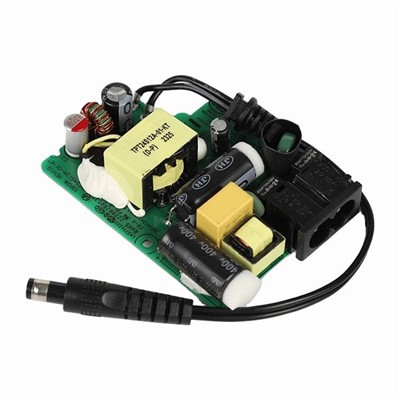

As a supplier of EV Charger 48v, I often receive inquiries from customers about whether our 48V charger can charge lithium - ion batteries. This is a crucial question, especially as the demand for electric vehicles (EVs) and lithium - ion batteries continues to rise. In this blog post, I'll explore this topic in detail, providing scientific insights and practical advice.
Understanding Lithium - Ion Batteries and 48V Chargers
Lithium - ion batteries are widely used in various applications, from small consumer electronics to large - scale electric vehicles. They are favored for their high energy density, long cycle life, and relatively low self - discharge rate. However, charging lithium - ion batteries requires careful consideration of voltage, current, and charging algorithms to ensure safety and longevity.
A 48V charger, as the name suggests, is designed to output a nominal voltage of 48 volts. The output voltage of a charger is a critical factor when it comes to charging batteries. Different types of batteries have specific voltage requirements for charging. For lithium - ion batteries, the charging voltage needs to be precisely controlled to avoid overcharging or undercharging, both of which can lead to reduced battery performance and safety risks.
Voltage Compatibility
The nominal voltage of a lithium - ion battery can vary depending on its configuration. A single lithium - ion cell typically has a nominal voltage of around 3.6 - 3.7 volts. To achieve a 48V battery pack, multiple cells are usually connected in series. For example, a 48V lithium - ion battery pack may consist of 13 or 14 cells in series (13 x 3.7V = 48.1V or 14 x 3.6V = 50.4V).
When using a 48V charger to charge a lithium - ion battery, it's essential to ensure that the charger's output voltage is compatible with the battery's charging requirements. In most cases, a 48V charger has an output voltage that is slightly higher than 48V during the charging process to fully charge the battery. A common output voltage for a 48V charger is around 54 - 58V. This is because the battery's voltage increases as it charges, and the charger needs to provide a higher voltage to push the charge into the battery until it reaches its full capacity.
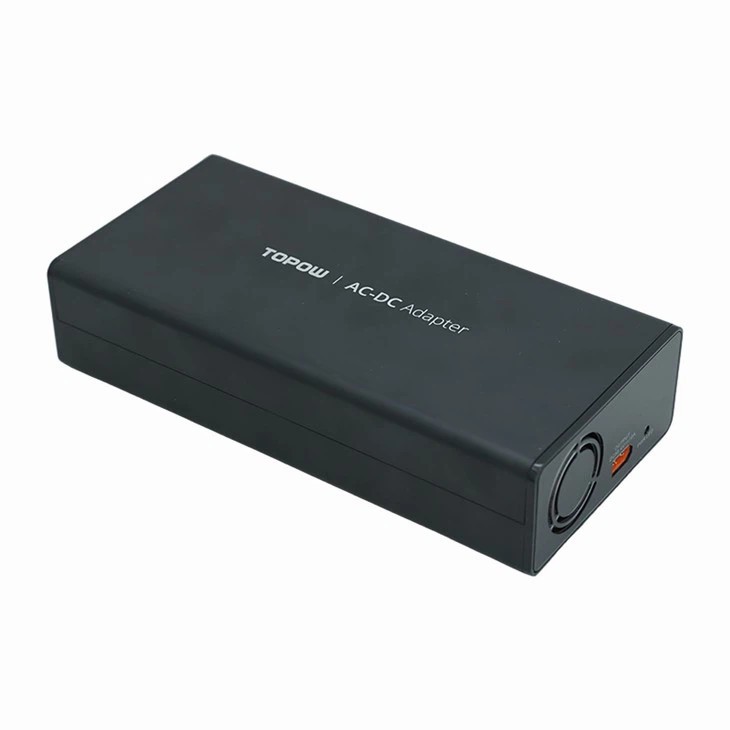
Our EV Charger 48v is designed with a carefully regulated output voltage to ensure compatibility with most 48V lithium - ion battery packs. It can provide a stable charging voltage within the safe range for lithium - ion batteries, preventing overcharging and ensuring a long - lasting battery life.

Charging Current and Algorithm
In addition to voltage, the charging current and algorithm are also important factors. The charging current determines how quickly the battery charges. A higher current can charge the battery faster, but it also generates more heat, which can be harmful to the battery if not properly managed.
Our 48V chargers are equipped with intelligent charging algorithms that adjust the charging current based on the battery's state of charge. During the initial stage of charging, when the battery is at a low state of charge, the charger provides a relatively high current to quickly replenish the battery's energy. As the battery approaches full charge, the charger gradually reduces the current to prevent overcharging and protect the battery.
Safety Considerations
Safety is of utmost importance when charging lithium - ion batteries. Overcharging can cause the battery to overheat, leading to thermal runaway, which is a dangerous condition that can result in fire or explosion. Our EV Charger 48v is equipped with multiple safety features, such as over - voltage protection, over - current protection, and short - circuit protection. These features ensure that the charging process is safe and reliable, even in the event of a malfunction.
Compatibility with Different Applications
Our 48V chargers are suitable for a wide range of applications that use 48V lithium - ion batteries. For example, they are commonly used in electric scooters. Electric scooters are becoming increasingly popular as a convenient and eco - friendly mode of transportation. Our Electrical Scooter Charger is a type of 48V charger specifically designed for electric scooters. It can provide a fast and safe charging solution for electric scooter batteries, ensuring that the scooters are always ready for use.
Comparing with 58V Battery Chargers
Some customers may wonder about the difference between a 48V charger and a 58V Battery Charger. While both can be used to charge lithium - ion batteries, the main difference lies in their output voltage. A 58V charger has a higher output voltage, which means it can charge the battery faster. However, not all 48V lithium - ion battery packs are compatible with a 58V charger. Using a charger with an output voltage that is too high can damage the battery.
Our 48V chargers are a more versatile option as they are compatible with a wider range of 48V lithium - ion battery packs. They provide a balanced approach between charging speed and battery safety, making them suitable for most applications.
Conclusion
In conclusion, a 48V charger can charge lithium - ion batteries, but it's crucial to ensure voltage compatibility, use the right charging current and algorithm, and prioritize safety. As a supplier of EV Charger 48v, we are committed to providing high - quality chargers that meet the diverse needs of our customers. Our chargers are designed with advanced technology and safety features to ensure a reliable and efficient charging experience for 48V lithium - ion batteries.
If you are interested in our EV Charger 48v or have any questions about charging lithium - ion batteries, please feel free to contact us for procurement and further discussion. We look forward to serving you and helping you find the best charging solution for your needs.
References
- Linden, D., & Reddy, T. B. (2002). Handbook of Batteries. McGraw - Hill.
- Berndt, D. (2012). Batteries for Utility Energy Storage. Wiley - VCH.
- Karden, E., & Winter, M. (2010). Lithium - Ion Batteries: Basics, Progress, and Challenges. Springer.