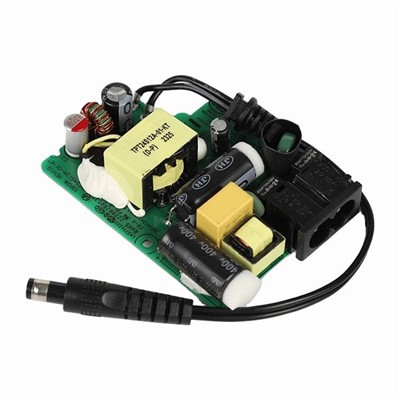

Hey there! I'm a supplier of PoE power supplies, and today I'm gonna walk you through how to configure a PoE power supply. Whether you're a tech newbie or a seasoned pro, this guide should help you get your PoE setup up and running smoothly.
What is PoE?
First things first, let's quickly go over what PoE is. PoE stands for Power over Ethernet. It's a technology that allows electrical power to be transmitted along with data over Ethernet cables. This means you can power devices like IP cameras, wireless access points, and VoIP phones without having to run separate power cables. It's super convenient, especially in large installations where running a bunch of power cables can be a real headache.
Types of PoE Power Supplies
There are a few different types of PoE power supplies out there. The most common ones are PoE injectors and PoE switches.
-
PoE Injectors: These are standalone devices that add PoE functionality to non - PoE Ethernet switches. You connect the injector to your regular switch, and then it injects power into the Ethernet cable that goes to your PoE - enabled device. For example, if you have an existing network switch that doesn't support PoE but you want to power an IP camera, a PoE injector is the way to go. Check out our 90W POE Injector for a high - power option.
-
PoE Switches: These are Ethernet switches that have built - in PoE capabilities. They can both transmit data and supply power to connected devices. PoE switches are great for new network installations where you want to power multiple PoE devices right from the start. Our 60W POE Switch is a solid choice for many small to medium - sized setups.
Step - by - Step Configuration
Now, let's get into the nitty - gritty of configuring a PoE power supply.
Step 1: Plan Your Setup
Before you start plugging things in, you need to plan your network. Figure out which devices will be powered by PoE and where they'll be located. Make sure you have enough power budget for all your devices. Different PoE standards support different power levels. For example, IEEE 802.3af (PoE) can supply up to 15.4 watts per port, while IEEE 802.3at (PoE+) can go up to 30 watts per port.
Step 2: Install the PoE Device
If you're using a PoE injector, connect one end of an Ethernet cable to the data port of your non - PoE switch and the other end to the data input port of the injector. Then, connect another Ethernet cable from the PoE output port of the injector to your PoE - enabled device.
If you're using a PoE switch, just connect your devices directly to the PoE ports on the switch using Ethernet cables.
Step 3: Power On the PoE Device
Once everything is connected, power on the PoE device (either the injector or the switch). Most PoE devices will automatically detect the connected devices and start supplying power.


Step 4: Configure the PoE Settings (Optional)
Some PoE switches allow you to configure advanced settings. You might be able to set the power limit for each port, prioritize power allocation, or enable or disable PoE on specific ports. To do this, you'll usually need to access the switch's web - based management interface. You can do this by typing the switch's IP address into a web browser on a computer that's connected to the same network.
Troubleshooting
Even if you follow all the steps correctly, you might run into some issues. Here are a few common problems and how to fix them:
-
Device Not Powered: First, check all your cable connections to make sure they're secure. Then, check if the PoE device is getting power. If it's a PoE injector, make sure it's plugged in and the power indicator light is on. If it's a PoE switch, check the power supply and the port status lights.
-
Insufficient Power: If your device is not working properly or keeps shutting down, it might be because it's not getting enough power. Check the power requirements of your device and make sure your PoE device can supply enough power. You might need to upgrade to a higher - power PoE injector or switch.
-
Network Connectivity Issues: If your device can't connect to the network, check the network settings on the device and make sure the PoE device is configured correctly. You might also want to check for any network interference or cable damage.
Why Choose Our PoE Power Supplies?
We've been in the PoE power supply business for a while, and we know what it takes to provide high - quality products. Our PoE injectors and switches are reliable, easy to install, and offer great performance. We also provide excellent customer support, so if you have any questions or run into any issues, we're here to help.
Let's Connect
If you're interested in our PoE power supplies or have any questions about configuration or installation, don't hesitate to reach out. We're always happy to have a chat and help you find the right solution for your needs. Whether you're working on a small home network or a large commercial project, we've got you covered.
References
- "Power over Ethernet: Design and Implementation" by Richard Deal
- IEEE 802.3 standards documentation