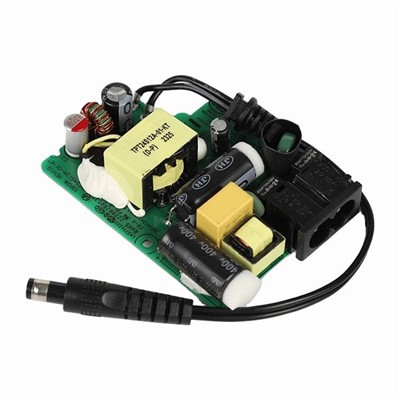

Hey there! As a supplier of 58V battery chargers, I often get asked whether these chargers are affected by voltage fluctuations. It's a valid concern, especially when you're relying on a charger to keep your batteries in tip - top shape. So, let's dig into this topic and find out what's what.
First off, let's understand what voltage fluctuations are. Voltage fluctuations are variations in the electrical voltage supplied to a device. These can happen for a whole bunch of reasons. Sometimes, it's due to issues in the power grid, like when there's a sudden increase or decrease in the demand for electricity. Other times, it could be because of problems with local electrical equipment, such as faulty transformers or damaged power lines.
Now, how do these voltage fluctuations impact a 58V battery charger? Well, a 58V battery charger is designed to convert the incoming electrical power into a specific voltage and current to charge a battery. When the input voltage fluctuates, it can throw a wrench in this process.
If the input voltage is too high, it can cause the charger to overheat. You see, the charger has components that are rated for a certain voltage range. When the voltage goes beyond this range, these components have to work harder, generating more heat. Over time, this can lead to premature wear and tear of the charger's internal parts. For example, the capacitors in the charger might start to degrade faster, and the transistors could also be at risk of damage. This not only shortens the lifespan of the charger but can also pose a safety hazard, as overheating can potentially lead to a fire.
On the other hand, if the input voltage is too low, the charger might not be able to provide the necessary power to charge the battery effectively. The charging process will slow down significantly, and in some cases, the battery might not charge at all. This is because the charger needs a certain minimum voltage to operate its internal circuits and regulate the charging current.
But don't worry! Most modern 58V battery chargers come with built - in protection mechanisms to deal with voltage fluctuations. These chargers are equipped with voltage regulators that can adjust the output voltage and current based on the input voltage. For instance, if the input voltage is a bit high, the voltage regulator will step it down to a safe level before it reaches the battery. Similarly, if the input voltage is low, the regulator will try to boost it to ensure that the charging process can continue.
However, these protection mechanisms have their limits. If the voltage fluctuations are too extreme, they might not be able to keep up. That's why it's still important to have a stable power supply when using a 58V battery charger. You can use a voltage stabilizer to ensure that the input voltage remains within the acceptable range. A voltage stabilizer acts like a buffer between the power grid and the charger, automatically adjusting the voltage to a constant level.
Now, let's talk about the different applications of 58V battery chargers. These chargers are commonly used in electric scooters, electric bikes, and some small - scale electric vehicles. In these applications, a stable charging process is crucial for the performance and longevity of the batteries.


For those of you in the market for other types of chargers, we also offer a 100A Battery Charger. This charger is great for high - power applications where you need to charge large batteries quickly. We also have an Electrical Scooter Charger that's specifically designed to meet the needs of electric scooter owners. And if you're looking for a charger for a 48V electric vehicle, our EV Charger 48v is the perfect choice.
When it comes to choosing a 58V battery charger, there are a few things you should keep in mind. First, make sure to check the charger's input voltage range. This information is usually printed on the charger or in the user manual. A wider input voltage range means that the charger can tolerate more voltage fluctuations. Second, look for chargers with good protection features. As I mentioned earlier, protection mechanisms like over - voltage protection, under - voltage protection, and over - current protection are essential for the safety and reliability of the charger.
In conclusion, while 58V battery chargers can be affected by voltage fluctuations, modern chargers are designed with features to minimize these effects. However, it's still a good idea to take precautions to ensure a stable power supply. Whether you're using a charger for your electric scooter, bike, or vehicle, choosing the right charger and taking care of it will ensure that your batteries stay charged and your devices keep running smoothly.
If you're interested in purchasing our 58V battery chargers or any of our other charging solutions, feel free to reach out to us. We're always happy to discuss your specific needs and provide you with the best charging solution for your requirements. Let's keep those batteries charged and your devices powered up!
References
- Battery Charging Handbook, 3rd Edition
- Electrical Engineering Principles for Non - Electrical Engineers, 2nd Edition