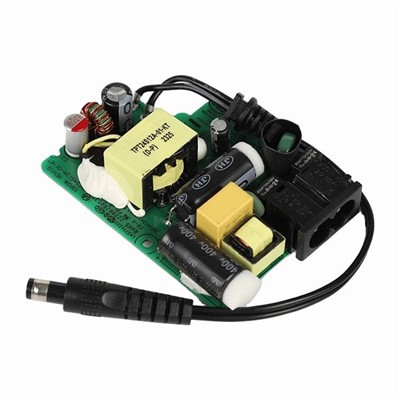

Hey there! As a supplier of 58V battery chargers, I often get asked whether a 58V battery charger is compatible with different battery chemistries. It's a great question, and one that I'm more than happy to dive into.
First off, let's talk about what battery chemistries are. Battery chemistries refer to the different types of chemical reactions that take place inside a battery to produce electricity. The most common battery chemistries you'll come across include lead - acid, lithium - ion, nickel - cadmium (NiCd), and nickel - metal hydride (NiMH). Each of these chemistries has its own unique characteristics, charging requirements, and voltage profiles.
Now, a 58V battery charger is designed to provide a specific output voltage of 58 volts. But just because a charger can supply 58V doesn't mean it's suitable for all battery chemistries.
Let's start with lead - acid batteries. These are the old - school batteries you might find in cars, golf carts, and some backup power systems. Lead - acid batteries typically have a nominal voltage of 2V per cell. A 58V charger might be used for a lead - acid battery bank that consists of multiple cells connected in series. However, lead - acid batteries require a specific charging profile. They need a constant - current charging phase followed by a constant - voltage charging phase. During the constant - current phase, the charger pumps in a fixed amount of current until the battery reaches a certain voltage. Then, in the constant - voltage phase, the charger maintains a steady voltage while the current gradually decreases as the battery charges up. If a 58V charger doesn't have the right charging algorithm for lead - acid batteries, it could overcharge or undercharge the battery, which can significantly reduce the battery's lifespan.
Next up are lithium - ion batteries. Lithium - ion batteries are everywhere these days, from smartphones to electric bikes. They're known for their high energy density, long lifespan, and relatively low self - discharge rate. Lithium - ion batteries come in different chemistries themselves, such as lithium cobalt oxide (LiCoO₂), lithium manganese oxide (LiMn₂O₄), and lithium iron phosphate (LiFePO₄). Each of these lithium - ion chemistries has its own optimal charging voltage and current limits. For example, a LiFePO₄ battery typically has a nominal voltage of 3.2V per cell, and a fully charged voltage of around 3.65V per cell. A 58V charger might be used for a large lithium - ion battery pack made up of multiple cells. But lithium - ion batteries are very sensitive to overcharging and over - discharging. If a 58V charger doesn't have proper protection circuits and a charging profile tailored to the specific lithium - ion chemistry, it can cause safety issues like thermal runaway or even explosion.
Nickel - cadmium (NiCd) and nickel - metal hydride (NiMH) batteries are another story. NiCd batteries were once very popular but have been largely replaced by other chemistries due to their environmental concerns (cadmium is toxic). NiMH batteries are a more eco - friendly alternative. These batteries have a nominal voltage of around 1.2V per cell. A 58V charger would be used for a battery pack with a large number of cells in series. NiCd and NiMH batteries require a different charging approach compared to lead - acid and lithium - ion batteries. They are more tolerant of overcharging to some extent, but overcharging can still cause problems like overheating and reduced battery life. A charger for these batteries needs to be able to detect when the battery is fully charged and adjust the charging process accordingly.
So, is a 58V battery charger compatible with different battery chemistries? In general, the answer is no, at least not without proper adjustments and safety features. A one - size - fits - all approach won't work when it comes to charging different battery chemistries. That's why at our company, we offer a range of chargers designed specifically for different battery types.


For those looking for a reliable charger, we have the Portable Ebike Battery Charger. This charger is perfect for lithium - ion batteries commonly used in electric bikes. It's portable, so you can take it with you on the go, and it has all the necessary safety features to protect your battery.
If you need a high - capacity charger, our 100A Battery Charger is a great option. It can handle large battery banks and is designed to work with different battery chemistries, but with the right settings and safety protocols.
Of course, our star product is the 58V Battery Charger. This charger is engineered to be as versatile as possible while still providing the correct charging profiles for different battery chemistries. It has adjustable settings that allow you to customize the charging process based on the type of battery you're using.
If you're in the market for a battery charger, whether it's a 58V charger or something else, we're here to help. We understand the importance of getting the right charger for your battery to ensure its longevity and performance. Don't hesitate to reach out to us for more information or to start a purchase negotiation. We're always happy to work with you to find the best charging solution for your needs.
References:
- Linden, D., & Reddy, T. B. (2002). Handbook of Batteries. McGraw - Hill.
- Tarascon, J. M., & Armand, M. (2001). Issues and challenges facing rechargeable lithium batteries. Nature, 414(6861), 359 - 367.