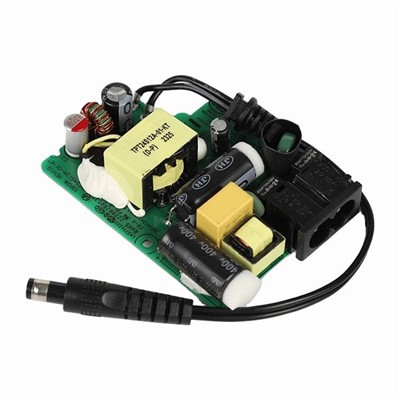

What are the design considerations for a dual rail power supply?
As a supplier of dual rail power supplies, I've witnessed firsthand the critical role these power sources play in a wide range of applications, from sophisticated electronic devices to industrial machinery. Designing a dual rail power supply is a complex process that requires careful consideration of multiple factors to ensure optimal performance, reliability, and safety. In this blog post, I'll delve into the key design considerations that are essential for creating high - quality dual rail power supplies.
Output Voltage and Current Requirements
The first and most fundamental consideration is the output voltage and current requirements of the intended application. Dual rail power supplies typically provide two different voltage levels, usually a positive and a negative voltage, relative to a common ground. For example, in audio amplifiers, a dual rail power supply might provide +15V and - 15V to power the amplifier circuits.
The current requirements depend on the load connected to the power supply. High - power applications such as Server - Grade Power Supply Board may demand high current outputs. It's crucial to accurately calculate the maximum current draw of the load under all operating conditions to ensure that the power supply can handle the load without overheating or experiencing voltage drops.
Regulation and Ripple
Voltage regulation is another vital aspect of dual rail power supply design. A well - regulated power supply maintains a stable output voltage, regardless of changes in the input voltage or load current. Inaccurate voltage regulation can lead to erratic behavior in the connected devices, reduced performance, and even damage.
Ripple is the small amount of AC voltage that is superimposed on the DC output of the power supply. Low ripple is essential, especially in sensitive applications such as medical equipment and audio systems. Excessive ripple can introduce noise into the system, affecting the quality of the output. Designers need to use appropriate filtering techniques, such as capacitors and inductors, to minimize ripple and ensure a clean DC output.
Isolation
Isolation is often a necessary consideration, especially in applications where safety is a concern. Isolated dual rail power supplies provide electrical isolation between the input and output circuits, protecting the user and the connected equipment from electrical hazards. This is particularly important in industrial and medical applications, where a fault in the power supply could have serious consequences.
Isolation can be achieved through the use of transformers. Transformers not only provide isolation but also allow for voltage conversion, enabling the power supply to generate the required output voltages from the input voltage source.
Efficiency
Efficiency is a key performance metric for dual rail power supplies. A high - efficiency power supply converts a larger percentage of the input power into useful output power, reducing energy waste and heat generation. This is not only environmentally friendly but also reduces the need for complex cooling systems, which can add to the cost and size of the power supply.
To improve efficiency, designers can use advanced circuit topologies, such as switch - mode power supply (SMPS) techniques. SMPS power supplies are known for their high efficiency, as they operate by rapidly switching the input voltage on and off, rather than dissipating excess power as heat like linear power supplies.
Thermal Management
Heat generation is an inevitable by - product of power supply operation. Excessive heat can degrade the performance of components, reduce the lifespan of the power supply, and even cause component failure. Therefore, effective thermal management is essential in dual rail power supply design.
Designers can use heat sinks, fans, and other cooling methods to dissipate heat. The layout of components on the printed circuit board (PCB) also plays a crucial role in thermal management. Components that generate a large amount of heat, such as power transistors, should be placed in areas with good airflow and away from heat - sensitive components.
Size and Form Factor
The size and form factor of the dual rail power supply are important considerations, especially in applications where space is limited. Miniaturization is a growing trend in the electronics industry, and power supplies need to keep up with this demand.
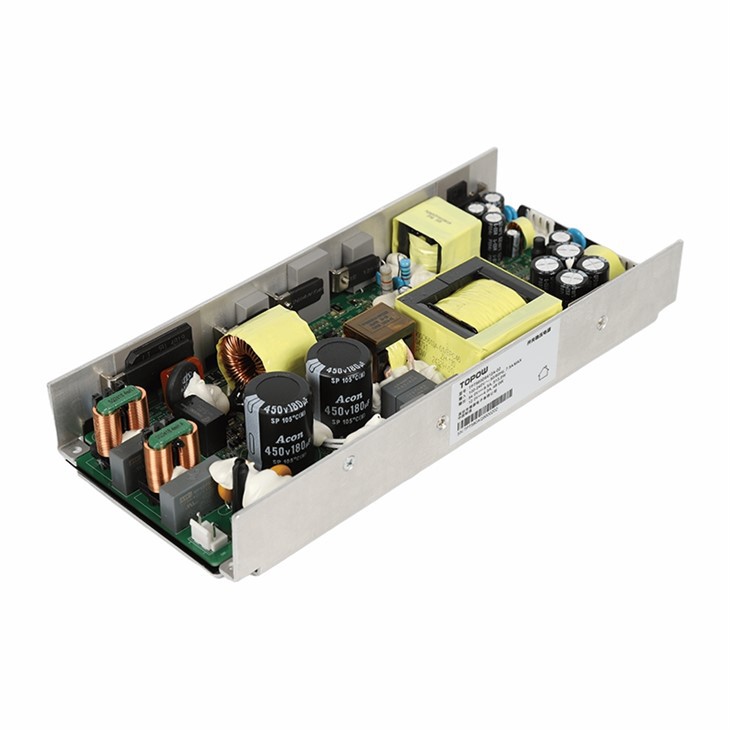

Designers need to optimize the PCB layout and component selection to reduce the size of the power supply without sacrificing performance. For example, surface - mount technology (SMT) components are often used in modern power supplies as they take up less space than through - hole components.
EMI and EMC Compliance
Electromagnetic interference (EMI) and electromagnetic compatibility (EMC) are critical considerations in power supply design. EMI refers to the unwanted electromagnetic signals generated by the power supply, which can interfere with the operation of other electronic devices in the vicinity. EMC, on the other hand, is the ability of the power supply to operate without causing or being affected by EMI.
To ensure EMI and EMC compliance, designers need to use proper shielding, filtering, and grounding techniques. This includes the use of EMI filters, which are designed to suppress high - frequency noise and prevent it from radiating from the power supply.
Redundancy and Fault Tolerance
In some applications, such as data centers and critical industrial processes, reliability is of utmost importance. Dual rail power supplies can be designed with redundancy and fault - tolerance features to ensure continuous operation in the event of a component failure.
Redundancy can be achieved by using multiple power supplies in parallel or by incorporating backup power sources. Fault - tolerance features, such as over - current protection, over - voltage protection, and short - circuit protection, can prevent damage to the power supply and the connected equipment in case of a fault.
Conclusion
Designing a dual rail power supply is a multi - faceted process that requires a comprehensive understanding of electrical engineering principles and the specific requirements of the intended application. By carefully considering factors such as output voltage and current requirements, regulation, isolation, efficiency, thermal management, size, EMI/EMC compliance, and redundancy, we can create high - quality dual rail power supplies that meet the needs of our customers.
If you're in the market for a reliable dual rail power supply, whether it's a Server - Grade Power Supply Board, a Heavy - Duty Switching Power Module, or a 250W Dual Output Power Module, we're here to help. Our team of experts can work with you to understand your specific requirements and provide a customized power supply solution. Contact us today to start the procurement and negotiation process.
References
- Horowitz, P., & Hill, W. (1989). The Art of Electronics. Cambridge University Press.
- Pressman, A. I., & Macdonald, K. (2009). Switching Power Supply Design (3rd ed.). McGraw - Hill.
- Mohan, N., Undeland, T. M., & Robbins, W. P. (2003). Power Electronics: Converters, Applications, and Design (3rd ed.). Wiley.