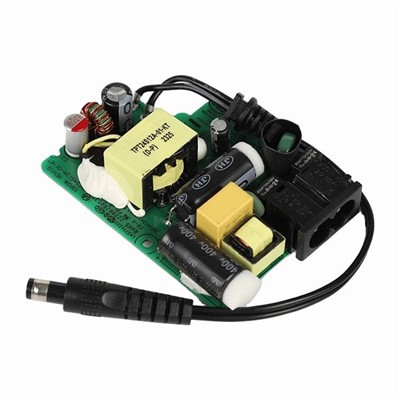

As a supplier of dual rail power supplies, I've witnessed firsthand the many advantages these power sources offer, such as stable voltage output, the ability to power multiple components with different voltage requirements, and enhanced flexibility in complex electronic systems. However, it's essential to have an open and honest discussion about the potential disadvantages that come with using dual rail power supplies. This understanding can help our customers make more informed decisions when choosing the right power solution for their specific needs.
Higher Cost
One of the most significant drawbacks of dual rail power supplies is their cost. Compared to single rail power supplies, dual rail power supplies are more complex in design and construction. They require additional components, such as transformers, regulators, and capacitors, to generate and manage two separate voltage rails. These extra components not only increase the material costs but also the manufacturing time and labor costs.
For example, in a Heavy-Duty Switching Power Module, the need to balance and regulate two voltage outputs adds to the overall complexity. The design must ensure that each rail maintains its specified voltage within a tight tolerance, which often requires more sophisticated control circuits. This complexity drives up the cost of production, and ultimately, the price for the end - user. For budget - conscious projects or applications where cost is a major factor, the higher price of dual rail power supplies can be a significant deterrent.
Increased Size and Weight
The additional components in dual rail power supplies also contribute to their larger size and weight. In applications where space is at a premium, such as in portable electronics or compact industrial control systems, the bulkiness of a dual rail power supply can be a major disadvantage.
A Server - Grade Power Supply Board may need to fit into a standard server rack, where every inch of space matters. The larger size of a dual rail power supply can limit the number of components that can be installed in a given area, or it may require a larger and more expensive enclosure. Moreover, in applications where weight is a concern, such as in aerospace or automotive electronics, the extra weight of a dual rail power supply can have a negative impact on performance and efficiency.
Complexity in Design and Troubleshooting
Designing a system with a dual rail power supply is more complex than using a single rail power supply. Engineers need to carefully consider the power requirements of each component on both rails and ensure that the power supply can handle the load. They also need to account for potential interactions between the two rails, such as cross - talk and voltage fluctuations.
For instance, in a Dual Channel Industrial Power Board, the two channels may be powering different types of loads, and any interference between them can cause malfunctions. Troubleshooting these issues can be time - consuming and challenging. When a problem occurs, it can be difficult to determine whether the issue lies with one rail, the other, or an interaction between the two. This complexity requires a higher level of expertise from the design and maintenance teams, which can increase the overall cost of the project.
Limited Compatibility
Dual rail power supplies may not be compatible with all types of electronic components. Some older or less common components may be designed to work only with a single rail power supply. Using a dual rail power supply in such cases can require additional circuitry or modifications to make the components work properly.
In addition, the output voltages of dual rail power supplies are often fixed or have limited adjustability. This can be a problem if the application requires a specific voltage that is not available from the standard dual rail power supply. In some cases, users may need to purchase a custom - designed power supply, which further increases the cost and lead time.


Higher Power Consumption
Dual rail power supplies generally consume more power than single rail power supplies. The additional components and the need to maintain two separate voltage rails require more energy. This increased power consumption can lead to higher operating costs, especially in applications where the power supply is running continuously.
In data centers, for example, where power efficiency is a top priority, the higher power consumption of dual rail power supplies can contribute to increased electricity bills. Moreover, the additional heat generated by the power supply due to higher power consumption can also pose challenges in terms of thermal management. Adequate cooling systems need to be in place to prevent overheating, which adds to the overall cost and complexity of the system.
Reduced Reliability
The increased complexity of dual rail power supplies can also lead to reduced reliability. With more components, there are more potential points of failure. A single component failure on one rail can affect the performance of the entire power supply and the system it powers.
For example, if a regulator on one of the rails fails, it can cause voltage spikes or drops, which can damage the connected components. In critical applications where reliability is essential, such as in medical equipment or aerospace systems, the reduced reliability of dual rail power supplies can be a major concern.
Electromagnetic Interference (EMI)
Dual rail power supplies are more prone to generating electromagnetic interference (EMI) compared to single rail power supplies. The two separate voltage rails and the associated circuitry can create electromagnetic fields that can interfere with other electronic components in the system.
This EMI can cause malfunctions in nearby sensitive equipment, such as radio receivers or communication devices. To mitigate EMI, additional shielding and filtering components are often required, which add to the cost and size of the power supply.
Despite these disadvantages, dual rail power supplies still have their place in many applications. They offer unique benefits that make them indispensable in certain scenarios, such as in audio amplifiers, analog circuits, and some types of industrial control systems. At our company, we understand the trade - offs involved in using dual rail power supplies, and we are committed to providing our customers with the best possible solutions.
If you are considering a dual rail power supply for your project, we encourage you to reach out to us. Our team of experts can help you evaluate whether a dual rail power supply is the right choice for your specific needs. We can also provide you with detailed information about our products, including the Heavy - Duty Switching Power Module, Server - Grade Power Supply Board, and Dual Channel Industrial Power Board. Contact us today to start a discussion about your power supply requirements and explore how we can help you overcome the challenges associated with dual rail power supplies.
References
- "Power Supply Design Handbook" by Marty Brown
- "Electronic Circuit Design: Volume 1 - Analog and Digital Fundamentals" by Thomas L. Floyd
- Industry whitepapers on power supply technology and applications