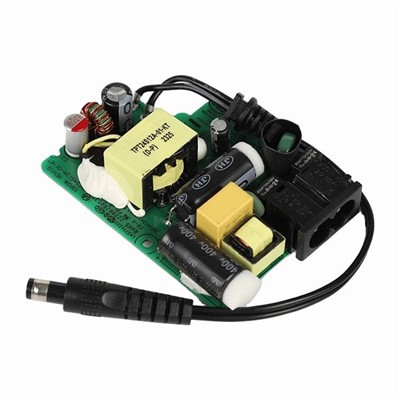

As a supplier of PoE (Power over Ethernet) power supplies, I've witnessed firsthand the numerous benefits that PoE technology brings to the table, such as simplified installation, cost - effectiveness, and centralized power management. However, it's important to have an honest and comprehensive discussion about the disadvantages of PoE power supplies. This knowledge will help our customers make informed decisions when choosing the right power solutions for their specific needs.
Limited Power Capacity
One of the most significant drawbacks of PoE power supplies is their limited power capacity. Different PoE standards offer varying levels of power delivery. For instance, the early IEEE 802.3af standard can only provide up to 15.4 watts of power, while the more advanced IEEE 802.3at (PoE+) can deliver up to 30 watts. The latest IEEE 802.3bt standard extends the power limit to 90 watts.


While 90 watts might seem sufficient for many devices, there are high - power - consuming devices such as some large - scale wireless access points, high - definition PTZ cameras, and industrial equipment that require more power. For example, some specialized surveillance cameras with advanced features like high - resolution video recording, night vision, and pan - tilt - zoom capabilities may need power beyond the 90 - watt limit. In such cases, PoE power supplies fall short, and alternative power sources, like dedicated AC power adapters, have to be used. This not only adds complexity to the installation but also increases costs as additional wiring and power infrastructure are required. If you're considering a high - power application, you may explore our 90W POE Injector, but be aware of its upper - bound power limitations.
Distance Limitations
PoE power supplies are also subject to distance limitations. The power and data transmission over Ethernet cables degrades over longer distances. According to the Ethernet standards, the maximum recommended length for Cat5e, Cat6, and Cat6a cables is typically 100 meters. As the distance between the PoE power source (such as a PoE switch or injector) and the powered device increases, the available power at the device end decreases.
This is due to the resistance of the Ethernet cable, which causes power losses in the form of heat. For example, if you try to power a device located 90 meters away from a PoE switch, the power reaching the device may be significantly less than the power output of the switch. This can lead to unstable operation of the powered device, intermittent connectivity issues, or even complete device failure. In large - scale installations, such as warehouses, campuses, or industrial facilities, where devices may need to be placed far apart, the distance limitation of PoE can be a major hurdle. To mitigate this, additional network infrastructure, such as signal repeaters or boosters, may be required, which adds to the overall cost and complexity of the system.
Compatibility Issues
Compatibility is another area where PoE power supplies can present challenges. There are multiple PoE standards in the market, including IEEE 802.3af, 802.3at, and 802.3bt. Not all devices are compatible with all standards. For example, an older device designed for the 802.3af standard may not be able to receive power from an 802.3bt - compliant PoE switch.
Moreover, some non - standard or proprietary PoE devices may not work well with standard PoE power sources. This can result in power - related issues, such as over - powering or under - powering the device. Over - powering can damage the device, while under - powering can cause it to malfunction or operate at a reduced performance level. When integrating new devices into an existing PoE network, careful consideration must be given to the compatibility of the devices and the PoE power supply. Our 60W POE Switch adheres to specific standards, and customers need to ensure that their devices are compatible with these standards to avoid any compatibility - related problems.
Heat Dissipation Problems
PoE power supplies generate heat during operation, especially when delivering high levels of power. The power losses in the form of heat occur both in the PoE power source (e.g., a PoE switch) and in the Ethernet cables. Excessive heat can have a negative impact on the performance and lifespan of the PoE equipment.
In a PoE switch, high temperatures can cause the internal components to degrade faster, leading to increased failure rates. For example, the capacitors in the power supply section of the switch may dry out or lose their capacitance over time due to high heat, which can result in power supply instability. In addition, the heat generated in the Ethernet cables can also affect the data transmission quality, leading to errors and packet loss.
To address heat dissipation issues, proper ventilation and cooling mechanisms are required. This may involve installing fans in the PoE switch enclosures or ensuring adequate airflow in the network cabinets. However, these additional cooling measures add to the cost and complexity of the installation. For instance, a large - scale data center with multiple PoE switches may need a sophisticated cooling system to maintain the optimal operating temperature, which can be a significant expense.
Single - Point - of - Failure Risk
In a PoE - based network, a single PoE power source, such as a PoE switch, often powers multiple devices. This creates a single - point - of - failure risk. If the PoE switch malfunctions or experiences a power outage, all the devices connected to it will lose power and stop functioning.
For example, in a small office network where a single PoE switch powers all the wireless access points, IP phones, and security cameras, a failure of the switch will result in a complete loss of network connectivity, communication, and surveillance capabilities. To mitigate this risk, redundant power sources and backup systems can be implemented. However, this again adds to the cost and complexity of the network infrastructure. For smaller businesses or installations with budget constraints, implementing redundancy may not be a feasible option.
Cost Considerations in Some Scenarios
Although PoE power supplies are generally considered cost - effective in many applications due to the elimination of separate power cables, there are scenarios where they can be more expensive. For small - scale installations with only a few devices, the cost of a PoE switch or injector may be relatively high compared to using individual AC power adapters.
For example, if you only need to power two or three IP cameras in a home or small office, the cost of purchasing a PoE switch and the associated Ethernet cables may be higher than simply using dedicated AC power adapters for each camera. Additionally, the cost of upgrading an existing non - PoE network to a PoE - enabled network can be significant. This includes the cost of replacing non - PoE switches with PoE switches, as well as the cost of any necessary network infrastructure upgrades. Our POE Injector 30w is a cost - effective option for some applications, but it's important to carefully evaluate the overall cost in different scenarios.
Despite these disadvantages, PoE power supplies still offer many advantages in terms of simplicity, flexibility, and centralized management. If you're facing challenges with powering your network devices and are unsure whether PoE is the right solution for you, we're here to help. Our team of experts can provide personalized advice and solutions based on your specific requirements. Whether you need to overcome power limitations, distance issues, or compatibility challenges, we have the knowledge and products to support you. Contact us to discuss your needs and explore the best power solutions for your project.
References
- IEEE Standards Association. IEEE 802.3af, IEEE 802.3at, and IEEE 802.3bt standards documentation.
- Ethernet Alliance. Technical resources on Ethernet cable specifications and power transmission.
- Industry whitepapers on PoE technology and its applications.