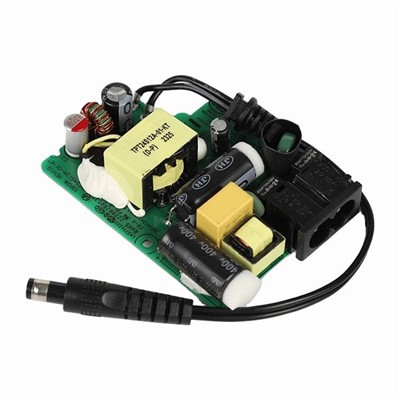

Designing a Telecom Power Supply Unit (PSU) for 5G applications is a complex yet rewarding endeavor. As a Telecom PSU supplier, I've witnessed firsthand the rapid evolution of 5G technology and the unique power requirements it brings. In this blog post, I'll share my insights on how to design a Telecom PSU that meets the demands of 5G applications.
Understanding the Power Requirements of 5G Applications
5G technology is characterized by its high data rates, low latency, and massive device connectivity. These features place significant demands on the power supply system. For instance, 5G base stations require more power to support the increased data traffic and the operation of advanced radio frequency (RF) components. Additionally, the need for high reliability and efficiency is crucial to ensure uninterrupted service and reduce operational costs.
To design a suitable PSU, it's essential to understand the specific power requirements of 5G equipment. This includes determining the voltage levels, current ratings, and power consumption profiles. 5G base stations typically operate at DC voltages in the range of 48V to 54V, and they require high - power output to support multiple RF transceivers and digital signal processing units.
Key Design Considerations
Efficiency
Efficiency is a top priority in 5G PSU design. A high - efficiency PSU can significantly reduce energy consumption and heat generation. This not only lowers operational costs but also extends the lifespan of the equipment. To achieve high efficiency, advanced power conversion topologies such as resonant converters and switched - mode power supplies (SMPS) can be employed. These topologies minimize power losses during the conversion process.
Reliability
Reliability is non - negotiable in 5G applications. A single power failure can disrupt the entire network, leading to significant financial losses and customer dissatisfaction. Redundancy is a common strategy to enhance reliability. By incorporating redundant power modules and power paths, the PSU can continue to operate even if one component fails. For example, a N + 1 redundancy configuration can be used, where N is the number of power modules required to meet the normal load, and an additional module provides backup.
Thermal Management
The high power density of 5G PSU results in significant heat generation. Effective thermal management is essential to maintain the performance and reliability of the PSU. Heat sinks, fans, and liquid cooling systems can be used to dissipate heat. The design should ensure proper airflow within the PSU enclosure to prevent hotspots. Additionally, thermal sensors can be integrated to monitor the temperature and adjust the cooling system accordingly.
Size and Form Factor
With the increasing demand for compact 5G equipment, the size and form factor of the PSU are important considerations. The PSU should be designed to fit into the limited space available in base stations and other 5G devices. Miniaturization techniques such as using high - density circuit boards and integrated power modules can help reduce the size of the PSU without sacrificing performance.
Component Selection
Power Semiconductors
Power semiconductors play a crucial role in the power conversion process. For 5G PSU, high - performance MOSFETs and IGBTs are commonly used. These devices should have low on - resistance and fast switching speeds to minimize power losses. Additionally, they should be able to withstand high voltages and currents.
Capacitors and Inductors
Capacitors and inductors are used for energy storage and filtering in the PSU. High - quality capacitors with low equivalent series resistance (ESR) are required to ensure stable voltage output. Inductors should have high saturation current ratings to handle the high - current loads in 5G applications.
Control ICs
Control ICs are responsible for regulating the output voltage and current of the PSU. They should have high - precision control algorithms to ensure accurate and stable power delivery. Some control ICs also offer features such as over - voltage protection, over - current protection, and thermal shutdown.
Our Product Offerings
As a Telecom PSU supplier, we offer a range of products that are suitable for 5G applications. Our Heavy - Duty Switching Power Module is designed to provide high - power output with high efficiency. It features advanced power conversion topologies and high - quality components, making it ideal for 5G base stations.
Our Dual Channel Industrial Power Board offers dual - channel output, which can be used to power different components in 5G equipment. It has a compact form factor and excellent thermal management capabilities.
The Server - Grade Power Supply Board is another product in our portfolio. It is designed to meet the high - reliability requirements of 5G applications. With redundant power paths and advanced protection features, it ensures uninterrupted power supply to critical 5G systems.


Design Process
The design process of a Telecom PSU for 5G applications typically involves the following steps:
Requirements Gathering
The first step is to gather the power requirements of the 5G equipment. This includes working closely with the equipment manufacturers to understand their specific needs, such as voltage levels, current ratings, and power consumption profiles.
Topology Selection
Based on the requirements, an appropriate power conversion topology is selected. This may involve choosing between different types of SMPS, such as buck converters, boost converters, or flyback converters.
Component Selection
After the topology is selected, the appropriate components are chosen. This includes power semiconductors, capacitors, inductors, and control ICs. The components should be carefully selected to ensure they meet the performance, reliability, and cost requirements.
Circuit Design and Simulation
Once the components are selected, the circuit design is carried out. Computer - aided design (CAD) tools are used to design the PCB layout. Simulation software is also used to verify the performance of the circuit before it is fabricated.
Prototyping and Testing
A prototype of the PSU is fabricated based on the design. The prototype is then tested under various operating conditions to ensure it meets the design specifications. Any issues identified during testing are addressed, and the design is refined accordingly.
Mass Production
After the prototype has been successfully tested, the PSU is ready for mass production. Quality control measures are implemented during the production process to ensure the consistency and reliability of the products.
Conclusion
Designing a Telecom PSU for 5G applications requires a deep understanding of the power requirements, key design considerations, and component selection. By focusing on efficiency, reliability, thermal management, and size, a high - performance PSU can be developed. As a Telecom PSU supplier, we are committed to providing innovative and reliable power solutions for 5G applications.
If you are interested in our products or have specific requirements for your 5G power supply needs, we encourage you to contact us for a detailed discussion and potential procurement. We are ready to work with you to design and supply the most suitable Telecom PSU for your 5G projects.
References
- "Power Electronics Handbook", Third Edition, edited by Muhammad H. Rashid
- "5G Mobile Networks: A Systems Approach" by Thomas Bonald, Jean - Yves Le Boudec, and others
- Industry whitepapers on 5G power supply requirements from leading 5G equipment manufacturers.