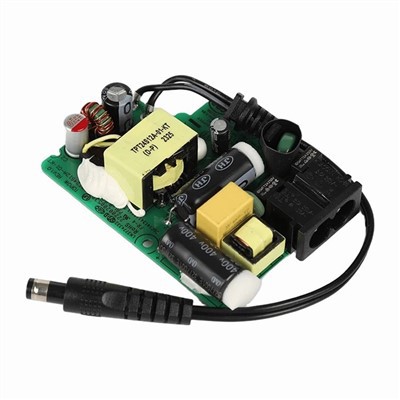

Hey there! As a supplier of desktop power adapters, I often get asked about the standard size of these essential gadgets. It's a question that many people, from tech enthusiasts to regular users, are curious about. So, let's dive right in and explore what the standard size of a desktop power adapter is all about.
First off, it's important to understand that there isn't a one - size - fits - all answer when it comes to the standard size of a desktop power adapter. The size can vary based on several factors, such as the power output, the type of desktop it's designed for, and the manufacturer's design choices.
Power Output and Size
Power output is a major determinant of the size of a desktop power adapter. Generally speaking, the higher the power output, the larger the adapter tends to be. This is because more power requires more components and a larger transformer to handle the electricity flow.
For example, a 24w Power Adapter is usually relatively small. It's suitable for some low - power desktops or devices that don't need a lot of energy to operate. These adapters are often compact and lightweight, making them easy to carry around if you need to move your desktop setup.
On the other hand, high - power adapters, say those with 300W or more, are much bulkier. They have to accommodate larger heat sinks to dissipate the heat generated during operation and more complex circuitry to handle the high voltage and current. These adapters are typically used for high - end gaming desktops or workstations that require a lot of power to run multiple high - performance components simultaneously.
Physical Dimensions
When we talk about the physical dimensions of a desktop power adapter, we're looking at its length, width, and height. Again, these can vary widely.
The length of a typical desktop power adapter can range from a few inches to over a foot. Smaller adapters might be around 3 - 4 inches in length, while larger ones can be 10 inches or more. The width usually falls between 2 - 5 inches, and the height can be anywhere from 1 - 3 inches.
Some manufacturers design their adapters to be as compact as possible, especially for products aimed at consumers who are on the go or have limited space. These adapters might have a more streamlined shape and be designed to fit easily into a backpack or a small bag.
In contrast, adapters for industrial or heavy - duty desktops might be larger and more robust. They are built to withstand more wear and tear and are often designed to be placed in a fixed location, like a server room or a professional workspace.
Connector Sizes
Another aspect of the "size" of a desktop power adapter is the size of its connectors. The power cord connector that plugs into the wall outlet is usually a standard size, depending on the region. For example, in the United States, the common plug has two flat prongs and sometimes a round grounding prong.
The connector that plugs into the desktop is also important. There are different types of connectors, such as barrel connectors, which come in various diameters. The size of the barrel connector is crucial because it needs to fit securely into the power input port of the desktop. A connector that is too large or too small won't work properly and could even damage the device.
Standard Sizes for Different Use Cases
Let's break it down further based on different use cases.
Daily Use Desktop Power Adapter
For a Daily Use Desktop Power Adapter, which is used for regular office work, web browsing, and light multimedia tasks, the power output is usually in the range of 60 - 120W. These adapters are generally medium - sized. They are not too bulky but still have enough power to keep your desktop running smoothly. The physical dimensions are usually manageable, making them easy to place on a desk or tuck away in a corner.
Home Use Desktop Power Adapter
A Home Use Desktop Power Adapter can vary more widely in size. If it's for a basic home desktop used for family entertainment and simple computing, a lower - power adapter like a 45 - 90W one might be sufficient. These are often small and unobtrusive. However, if you have a home gaming setup or a home server, you'll need a higher - power adapter, which will be larger and more powerful.
Why Does Size Matter?
You might be wondering why the size of a desktop power adapter is such a big deal. Well, there are a few reasons.
First, portability is a major factor. If you need to move your desktop around, a smaller and lighter power adapter is much more convenient. You can easily take it with you to a friend's place or on a business trip.
Second, space is important, especially in small workspaces or home offices. A large power adapter can take up a lot of desk space or block other outlets if it's too bulky. A smaller adapter allows you to make the most of your available space.
Finally, heat dissipation is related to size. Larger adapters usually have better heat dissipation capabilities because they have more room for heat sinks and ventilation. This can lead to a longer lifespan for the adapter and more stable performance for your desktop.
Our Offerings
As a desktop power adapter supplier, we understand the importance of getting the right size for your needs. We offer a wide range of power adapters, from small 24W ones to high - power 500W adapters. Our products are designed with quality and performance in mind, and we ensure that each adapter meets the highest standards of safety and reliability.


Whether you're looking for a compact adapter for daily use or a powerful one for your gaming rig, we've got you covered. Our team of experts can help you choose the right adapter based on your specific requirements.
Contact Us for Procurement
If you're interested in purchasing desktop power adapters for your business or personal use, we'd love to hear from you. We offer competitive prices, fast shipping, and excellent customer service. Don't hesitate to reach out to us for more information or to start a procurement discussion. We're here to make sure you get the perfect power adapter for your desktop.
References
- Electronics Engineering textbooks on power supply design.
- Industry reports on desktop power adapter trends.
- Manufacturer specifications of various desktop power adapters.