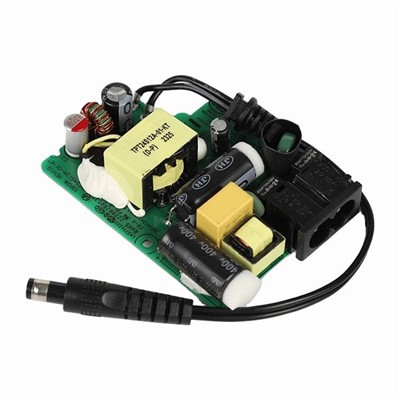

Hey there! As a supplier of PoE power supplies, I've seen firsthand the growing popularity of Power over Ethernet (PoE) technology in large - scale networks. It's an amazing solution that simplifies the installation and management of network devices by delivering both data and power over a single Ethernet cable. But like any technology, it comes with its fair share of challenges. In this blog, I'll break down some of the main hurdles you might face when using a PoE power supply in a large - scale network.
Power Budget Limitations
One of the most significant challenges is dealing with power budget limitations. In a large - scale network, you've got multiple devices like IP cameras, wireless access points, and VoIP phones, all relying on the PoE power supply. Each device has its own power requirement, and if you're not careful, you can quickly exceed the power budget of your PoE switch or injector.
For example, let's say you have a 60W POE Switch. It can only supply a total of 60 watts of power to all the connected devices. If you connect high - power devices like some advanced wireless access points that need 20 - 30 watts each, you'll run out of power quickly. This can lead to devices not functioning properly or even shutting down completely.
To overcome this, you need to do a detailed power calculation before setting up your network. Make a list of all the devices you want to connect and their power requirements. Then, choose a PoE power supply that can handle the total power load. Sometimes, you might even need to use multiple PoE switches or 90W POE Injector to distribute the power evenly across the network.
Distance Constraints
Another challenge is the distance limitation. PoE technology has a maximum distance that it can effectively transmit power and data over an Ethernet cable. Typically, the standard Ethernet cable (Cat5e or Cat6) can support PoE up to about 100 meters.
In a large - scale network, especially in a big office building or a campus - wide setup, you might need to connect devices that are located far apart. If the distance between the PoE power source and the device exceeds the 100 - meter limit, the power and data transmission can degrade significantly. You might experience slow data speeds, intermittent connections, or even complete loss of power.
To deal with this, you can use signal boosters or repeaters. These devices can extend the range of the PoE signal. However, they add complexity to the network and also increase the cost. Another option is to use fiber optic cables in combination with PoE media converters. Fiber optic cables can transmit data over much longer distances, and the media converters can convert the fiber optic signal back to an Ethernet signal with PoE support.
Compatibility Issues
Compatibility is a major headache when it comes to PoE in large - scale networks. There are different PoE standards, such as IEEE 802.3af (PoE), IEEE 802.3at (PoE+), and IEEE 802.3bt (4PPoE). Each standard has a different power output and voltage level.
If you mix and match devices that support different PoE standards, you can run into problems. For example, if you connect a device that only supports the older IEEE 802.3af standard to a PoE+ switch, it might not receive the correct amount of power. On the other hand, if you try to power a high - power device that requires PoE+ with an IEEE 802.3af switch, it won't work at all.


To avoid compatibility issues, you need to make sure that all the devices in your network support the same PoE standard. Before purchasing any new devices, check their PoE compatibility specifications. It's also a good idea to use PoE power supplies that are backward - compatible, so they can support devices with different standards.
Heat Dissipation
In a large - scale network, PoE power supplies can generate a significant amount of heat. PoE switches and injectors have to convert and distribute power, and this process produces heat. If the heat is not dissipated properly, it can damage the components of the PoE power supply and reduce its lifespan.
High temperatures can also affect the performance of the connected devices. For example, a wireless access point might experience slower data speeds or more frequent drop - outs if it's operating in a hot environment.
To manage heat dissipation, you need to ensure proper ventilation in the network cabinets where the PoE power supplies are installed. You can use fans or air - conditioning systems to keep the temperature down. Some PoE switches also come with built - in heat sinks or cooling mechanisms to help dissipate the heat more effectively.
Network Management and Monitoring
Managing and monitoring a large - scale PoE network is no easy feat. With so many devices connected, it can be difficult to keep track of the power consumption, device status, and any potential issues.
If a device suddenly stops working or there's a power outage in a particular area of the network, it can be challenging to identify the root cause quickly. You need to have a good network management system in place that can monitor the power usage of each device, detect faults, and provide real - time alerts.
Some PoE switches and power supplies come with built - in management features, such as SNMP (Simple Network Management Protocol) support. This allows you to remotely monitor and configure the PoE devices. You can also use third - party network management software to get a more comprehensive view of the entire network.
Cost Considerations
Implementing PoE in a large - scale network can be costly. The initial investment in PoE switches, injectors, and compatible devices is higher compared to traditional non - PoE solutions. For example, a POE Injector 30w might cost more than a regular Ethernet injector.
In addition to the hardware cost, there are also ongoing costs associated with power consumption, maintenance, and network management. PoE devices generally consume more power than non - PoE devices, which can increase your electricity bill.
However, it's important to consider the long - term benefits of PoE. It can save you money on installation costs because you don't need to run separate power cables for each device. It also simplifies network management, which can reduce labor costs in the long run.
Conclusion
Using a PoE power supply in a large - scale network has its challenges, but with proper planning and management, these challenges can be overcome. By addressing power budget limitations, distance constraints, compatibility issues, heat dissipation, network management, and cost considerations, you can build a reliable and efficient PoE - enabled network.
If you're planning to set up a large - scale PoE network or facing any of these challenges in your existing network, I'd love to help. As a PoE power supply supplier, I have the expertise and the right products to meet your needs. Contact me to discuss your requirements and let's find the best PoE solution for your network.
References
- "Power over Ethernet: Design and Implementation" by Andrew Tanenbaum
- IEEE 802.3af, IEEE 802.3at, and IEEE 802.3bt standards documentation